
Last updated November 15, 2026
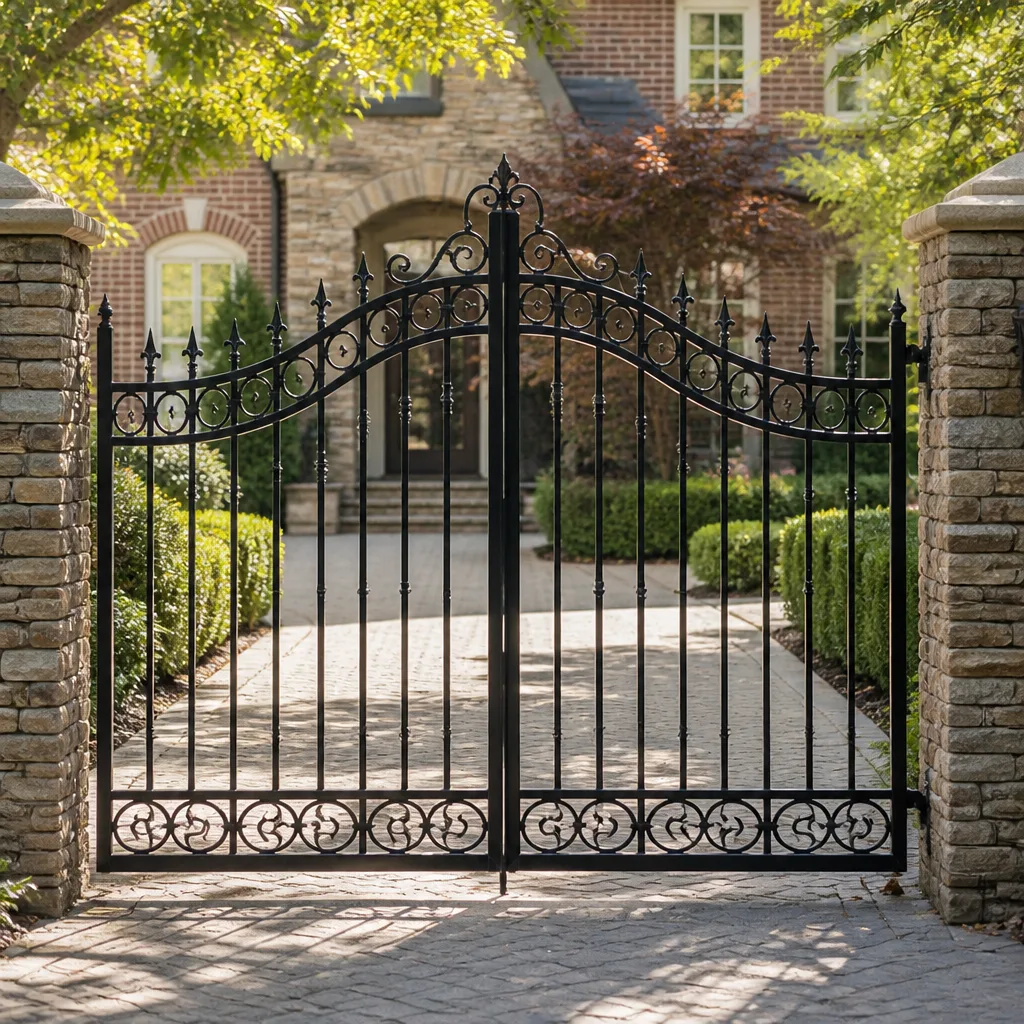 Wrought iron
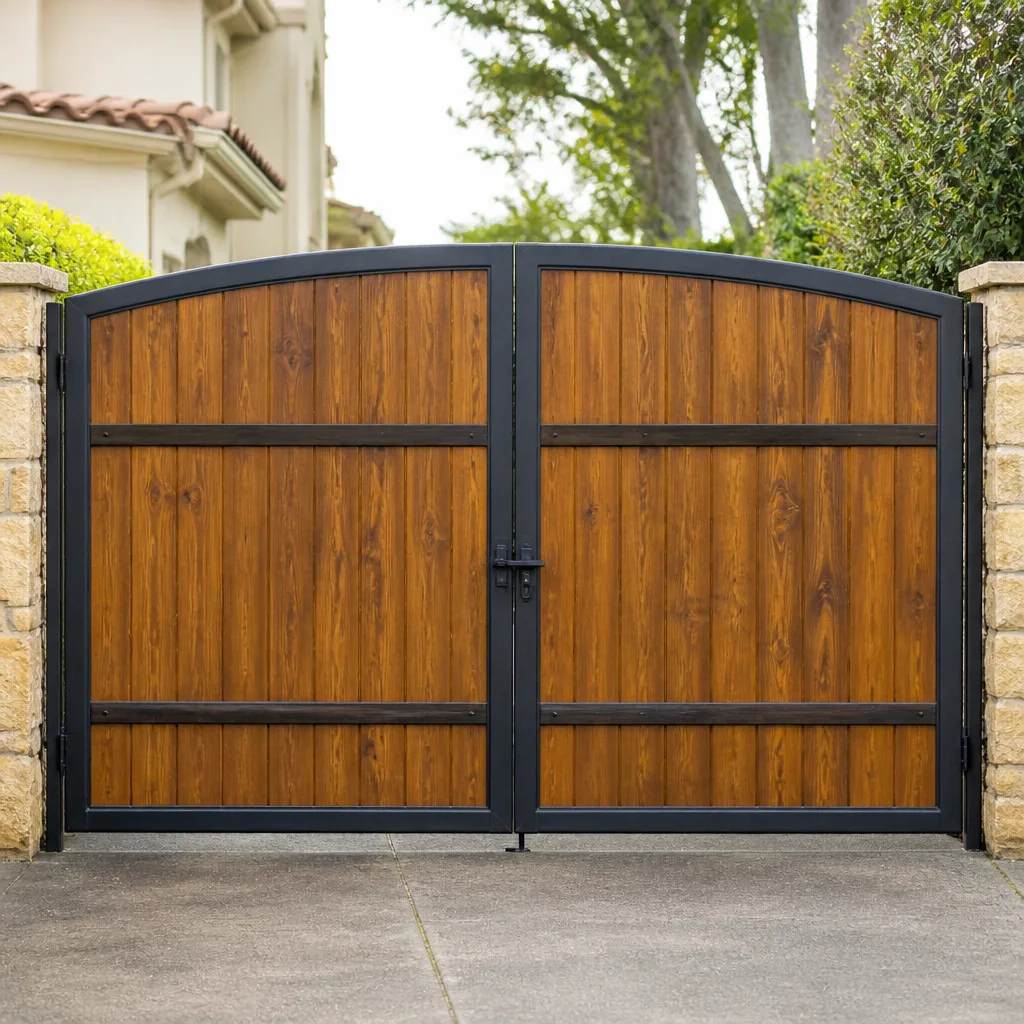 Wood & steel frame
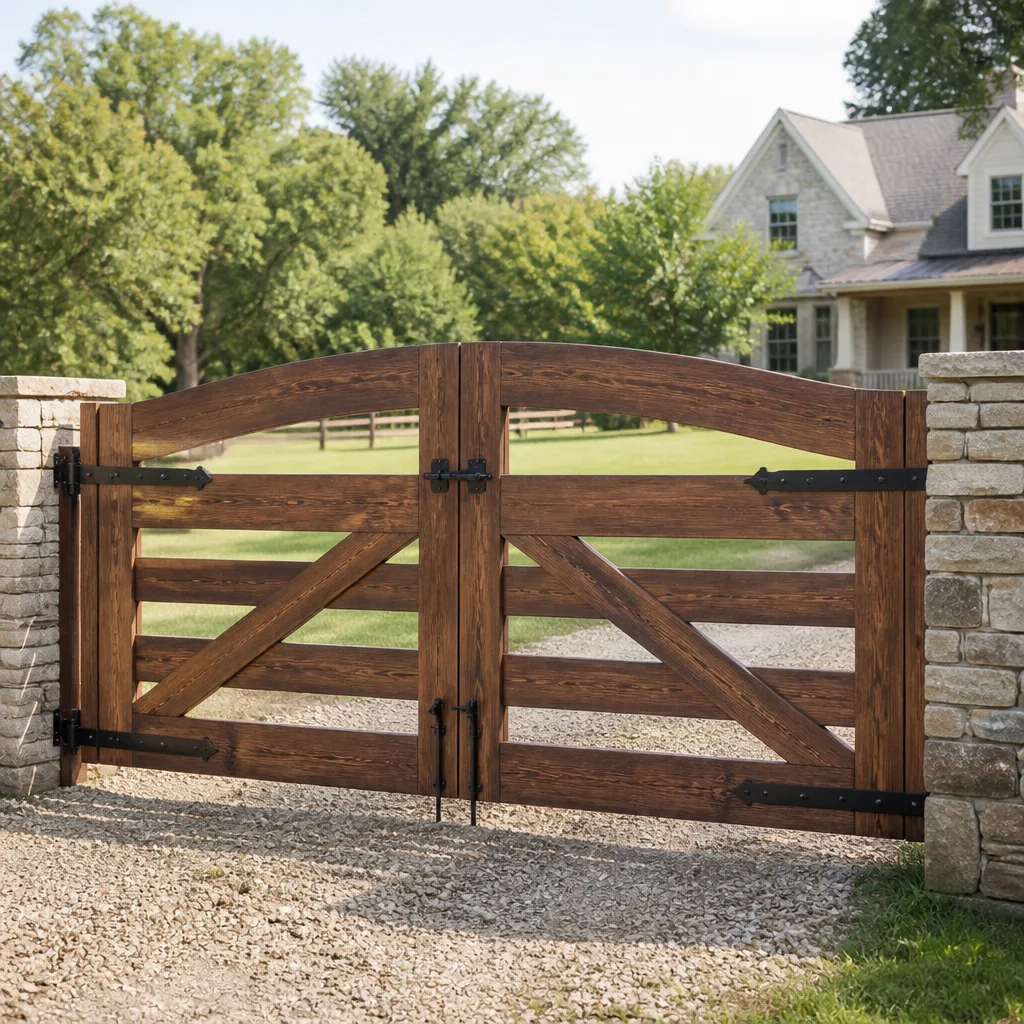 Farm & ranch
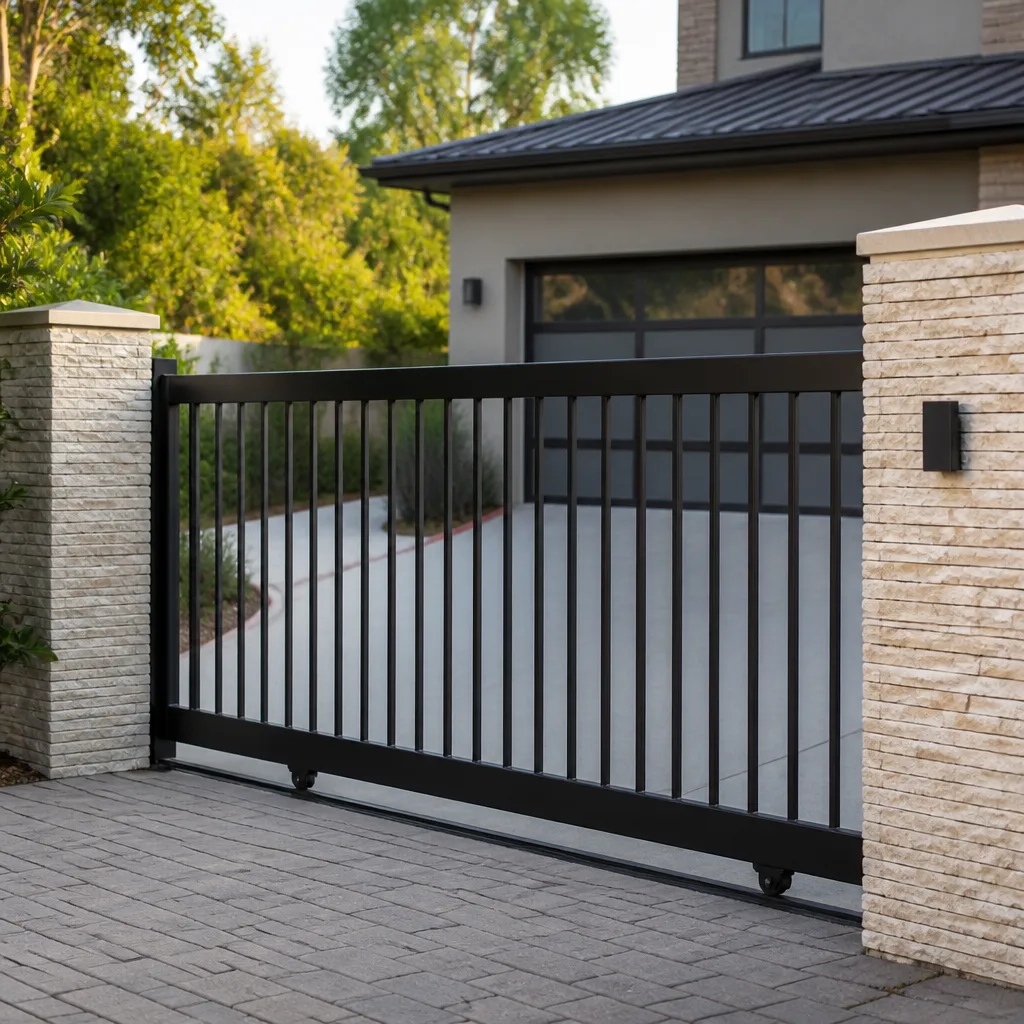 Sliding driveway gates
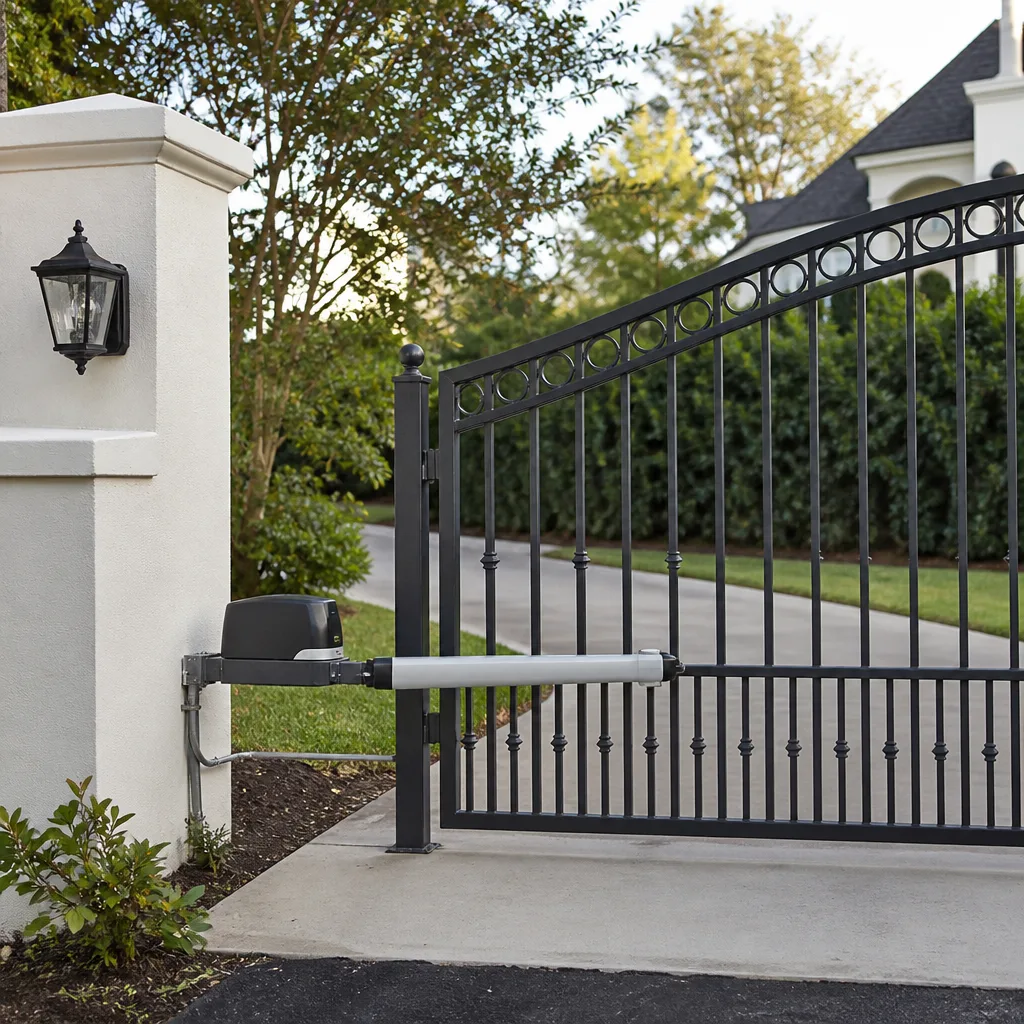 LiftMaster operators
Free on-site gate assessment - hinges, posts, and your LiftMaster or Nice gate operator checked before anything is quoted
The assessment is free and the quote is the invoice.
Get your free estimateGate Repair Warning Signs: A Davie Homeowner’s Reference Guide
A gate that reverses after two feet of travel and a gate that reverses the moment it starts moving have almost nothing in common. One is usually a sensor problem. The other is usually a load or control-board problem. Yet both get described to technicians the same way: “it’s reversing on its own.” That single sentence sends plenty of homeowners down the wrong repair path, sometimes toward parts they didn’t need. This guide maps observable symptoms to their most likely causes by gate type, so you can describe what you’re actually seeing and get an honest diagnosis. Davie homeowners, this one’s written with our local conditions in mind.
Quick Answer
Most gate failures announce themselves days or weeks before the gate stops working entirely. The three earliest warning signs are uneven travel, extra noise at the same point in every cycle, and a safety sensor that needs a reset more than once a week. Catching any of these early keeps a repair in the “replace one component” range instead of the “rebuild the operator” range.
Styles & brands we work with
- Wrought iron
- Wood & steel frame
- Farm & ranch
- Sliding driveway gates
- LiftMaster operators
Table of Contents
- Mapping Symptoms to Causes by Gate Type
- Telling an Access Control Failure from an Operator Failure
- Warning Signs Specific to South Florida Conditions
- Mechanical Failure vs. Power or Programming Issues
- Hinge Fatigue and Post Shift: The Visual Clues
- What Your Safety Sensors Are Telling You
- Repair or Replace? Deciding Honestly
- How to Report a Problem So the Diagnosis Is Right the First Time
Mapping Symptoms to Causes by Gate Type
The same symptom means different things depending on what kind of gate you own. A gate that won’t open is not one problem, it’s four different problems depending on whether you have a swing operator, a slide operator, a barrier arm, or a pedestrian gate. Here’s how we sort them.
Swing Operator Gates
- Reverses partway through opening: most often a binding hinge, a worn actuator arm, or a safety sensor triggered by an obstruction in the swing arc.
- Reverses immediately at the start: usually a load-sensing or current-sensing trip in the operator, often from a failing motor winding or a control board that’s misreading amp draw.
- Drifts partway closed after opening: worn limit switches that no longer register the open position.
- Lags or hesitates before moving: power supply sag, a weak battery in a backup system, or a worn start capacitor.
- Grinding or chatter during travel: hinge wear or a loose actuator mount.
Slide Operator Gates
- Slows going one direction but not the other: a wheel, roller, or track issue rather than the operator itself.
- Stalls at the same spot every cycle: a bent track section, a shifted concrete pad, or debris in the guide.
- Runs but doesn’t move the gate: a slipping clutch, a stripped gear, or in some brands a chain tensioner failure. FAAC and BFT slide operators in particular give clear symptoms before total failure.
- Closes then immediately reopens: a safety loop or photoelectric sensor triggered as the gate crosses the threshold.
Barrier Arm Gates
Barrier arms are common at HOAs and commercial entries around Davie. When the arm rises but won’t come down, the cause is usually the loop detector or a mechanical stop. When the arm comes down but won’t rise, check the motor brake and the counterbalance spring in the housing before assuming the operator is dead. An arm that doesn’t sit level at rest often points to a fatigued counterbalance spring.
Pedestrian Gates
Pedestrian gates fail differently because the load is lighter. A stuck pedestrian gate is almost always a lock mechanism, a closer arm, or a power issue rather than a motor. If your pedestrian gate is tied to the main gate’s access controller, a failure on both at the same time points back to the controller, not to either gate.
If you have any of the above symptoms, it’s worth learning what gate repair actually covers before you assume the worst. Most of what we see in Davie falls into the first three categories and is repairable.
Telling an Access Control Failure from an Operator Failure
Before you call anyone, two quick tests will tell you whether the problem sits in the access system or in the motor and control board. This saves you from paying for a diagnosis that could have been answered from your driveway.
Test 1: The Manual Release Test
- Put the operator into manual release mode using the key or lever on the unit.
- Open the gate by hand. It should move with moderate resistance and stay where you leave it.
- If it moves easily: the mechanical gate is fine and the problem is in the operator or power.
- If it binds, grinds, or swings shut on its own: the problem is mechanical and no amount of remote programming will fix it.
Test 2: The Bypass Test
- Press the manual open button on the operator itself (not the remote, not the keypad).
- If the gate opens from the operator but not from the remote or keypad: the failure is in the access control layer (receiver, keypad, phone entry, or loop).
- If the gate doesn’t respond at all from any input: the failure is in the operator, the control board, or the power supply.
- If the gate responds from some inputs but not others: you’re chasing an access control problem, which is usually the cheaper of the two to fix.
Access control failures are common on Linear and Viking systems where the receiver has lost pairing or a keypad battery has died quietly. Operator failures are more common as units age and capacitors, limit switches, and control boards start to wear. We work on both sides of that line, which is why our electric gate repair work always starts with these same two tests before anything gets ordered.
Warning Signs Specific to South Florida Conditions
Gates in Davie live in a specific climate: high humidity, heavy summer rain, and warm temperatures nearly year-round. That shapes what fails and how you’ll see it. Three local signals stand out.
Rust Bleed on Welds
A small orange stain running down from a weld seam is the earliest sign of steel fatigue under the paint. The stain itself isn’t the problem. The problem is that the metal under that seam is losing thickness and the weld is the first point to go. Left alone, rust bleed on a gate post weld turns into a cracked weld, then a sagging gate. Rolling a magnet across the seam helps: if it won’t stick, the metal has already thinned.
Photoelectric Sensor Fogging from Humidity
Safety sensors fail here more often than in drier climates because condensation builds up on the lens housing. The symptom is intermittent, not constant: the gate usually works in the morning and short-cycles in the afternoon or after rain. If your sensors need wiping off more than once a month just to work, that’s a sign the housing seals are gone and the sensors need replacing, not just cleaning.
Oxidation on Control Board Terminals
Open a control box on a gate that’s been in Davie humidity for a few years and you’ll often find a fine greenish film on the terminal screws. That film is oxidation and it raises electrical resistance. Symptoms look like a motor that “sometimes works” or a remote that “usually works.” It isn’t a remote problem. It’s a connection problem, and it’s fixed at the terminal, not the transmitter. FAAC control boards in particular are prone to terminal oxidation when the enclosure seal has aged out.
If you see any of these, don’t wait for the gate to stop working. Book a look, and get a written estimate before any parts get ordered. That’s how we handle every call across Davie and the surrounding neighborhoods.
Mechanical Failure vs. Power or Programming Issues
Half of the “dead gate” calls we get are one of these two problems. The fix is very different, and the cost is very different. Here are the observable clues that separate them.
Clues That Point to Mechanical Failure
- Noise. Mechanical failures make noise: grinding, squealing, clicking, or knocking, always at the same point in travel.
- Uneven travel. The gate moves faster or slower at one part of the arc or run than another.
- Physical drag. When released to manual, the gate doesn’t move freely.
- Visible wear. Worn hinges, bent track, cracked weld, or a dragged gate bottom.
- Intermittent but pattern-based. The gate works until it hits the same load point, then quits.
Clues That Point to Power or Programming
- Silence. No noise at all, no attempt to move.
- No lights on the control board.
- Gate works by remote but not by keypad, or vice versa (access control, but often sits in this category too).
- Limit positions have drifted: the gate now stops short or opens too far.
- Something changed after a power event, a new remote was added, or a storm rolled through.
Programming problems are actually the easiest to miss and the easiest to over-diagnose. A gate that reverses immediately after closing often just needs its travel limits re-taught. A gate that won’t respond to a single remote often just needs the receiver re-paired. If your gate was working fine yesterday and silent today, with no new noise and no change in how it moves by hand, you’re probably in power or programming territory. That’s a different visit than a motor swap, and a good technician will recognize it before pulling parts off the truck.
Hinge Fatigue and Post Shift: The Visual Clues
The most expensive gate repair is the one that follows a post that’s already moved. Hinge wear and post shift start small and stay visible for a long time before they become structural. These are the cues to watch.
Hinge Fatigue
- Gate sags at the latch end. Line a level on the closed gate. If the far end sits lower than the hinge end, the hinge pin is worn or the hinge plate has bent.
- Gap changes throughout the swing. Stand at the latch side and swing the gate slowly. A changing gap tells you the hinges are no longer aligned.
- Metal dust. A small pile of gray dust under a hinge is worn steel. That’s a hinge that needs replacing soon.
- Wobble. With the gate at half-open, push gently up and down. Any wobble at the hinge is play in the pin.
Post Shift
- Cracks in the concrete around the post base. Not every crack is a problem, but radiating cracks are.
- Gate swings wrong on its own. A gate that used to sit level now drifts open or closed from a slight incline.
- Gap between post and gate changed. Measure the gap between the post and gate at the top and bottom. It should be roughly the same over time.
- Hinge anchor bolts loose. Grab a bolt head and try to turn it by hand. If it spins freely, the anchor has loosened and the post is likely moving under load.
Any one of these is worth fixing before the operator starts compensating. Once the control board has been taught limits against a shifted post, the operator is being asked to do work it wasn’t designed for, and a motor problem tends to follow. We see this one often in Davie after heavy summer rain, when soil around a post shifts under saturated ground.
What Your Safety Sensors Are Telling You
Safety sensors exist to stop the gate before it hits a person, vehicle, or pet. When they start misbehaving, they get blamed for every other problem. Here’s how to tell a genuine sensor failure from a wiring or alignment issue.
Sensor Symptoms and What They Mean
- Sensor gets “kicked” by a shadow or headlights: the receiver is seeing reflections, usually from an object too close to the beam path. Reposition the sensor or clear the obstruction.
- Sensor trips only at certain times of day: sun angle is hitting the receiver. Not a sensor failure, but a placement problem that gets worse as the sun shifts seasonally.
- Sensor works sometimes and not others: loose wiring or a corroded connector at the sensor or at the control board.
- Sensor LED won’t light at all: power isn’t reaching the sensor. Check the wire run and the control board output.
- Sensor LED on the receiver flickers while nothing is moving: receiver going bad, or a reflection off a nearby gate panel.
The Vehicle Test
- Put a vehicle in the gate’s path and run the gate manually at slow speed.
- If the gate reverses on contact: the primary safety edge is fine.
- If the gate touches the vehicle and keeps coming: the safety edge needs replacing before the gate is used again.
- If the gate reverses before contact but only with the vehicle present: the photoelectric sensors are working as designed.
Testing the safety systems is the one check most homeowners skip. If your gate has been “working fine” but the safety edge hasn’t been tested in a year, that’s the highest-priority item on your list. It’s also the item we never skip on a repair, regardless of what the customer originally called about.
Repair or Replace? Deciding Honestly
Repair is the first answer, not the only answer. A few situations justify replacement rather than repair, and it’s worth knowing which side of that line your gate falls on before anyone quotes you a new system.
Where Repair Is Almost Always the Right Call
- One component has failed on an otherwise healthy system (motor, control board, sensors, receiver).
- The gate structure and posts are sound.
- The operator is a brand still supported in the trade, which covers everything we work on: LiftMaster, FAAC, BFT, Linear, Viking, Ghost Controls, DoorKing, Elite, and Mighty Mule.
- Cosmetic wear (paint, minor rust, a sticky hinge) is the only complaint.
Where Replacement Starts to Make Sense
- Post failure. A cracked or shifted post support is a structural fix, and sometimes a rebuild is the more honest answer than repeatedly welding a failing connection.
- Repeated control board failures with no root cause found. That points to underlying wiring or power issues that can cost more to chase than to replace.
- An obsolete system where replacement parts are no longer available and custom fabrication costs more than new hardware.
- The gate has outgrown its operator: heavier panels have been added, or gate usage has changed (more vehicles, longer hours) beyond the original design.
Our position is simple: we work on the gate you have. If it can be repaired, we repair it. If a component is genuinely at the end of its life and repair costs more than a replacement on the same system, we’ll tell you. That’s the honest version of the conversation, and it’s why we handle installation alongside repair: no second call, no second contractor, no gap between “the gate is broken” and “the gate is working.”
How to Report a Problem So the Diagnosis Is Right the First Time
The most useful thing a homeowner can do before calling is describe the symptom precisely. A technician on a phone call needs specific words to plan the visit. Here’s the reporting checklist we use.
- Name the gate type: swing, slide, barrier arm, or pedestrian. If you don’t know, describe how it moves.
- Name the brand if you can find it: the operator usually has a label on the housing. FAAC, BFT, Linear, Viking, LiftMaster, Ghost Controls, DoorKing, Elite, and Mighty Mule all look different and fail differently.
- Describe exactly when the problem happens: at the start of travel, mid-travel, at the close, or after a power blip.
- Say whether it’s been gradual or sudden: “it’s been getting slower for a month” tells us something very different than “it worked last night and doesn’t today.”
- Test by hand first: release the gate and report whether it moves freely. One word (“freely” or “binds”) saves an entire step.
- Note any recent changes: new remote, new keypad code, storm, power outage, or landscaping work near the gate.
- Take a photo of the operator label and the control board if you can safely open the enclosure. Send it in.
Those seven facts usually let us tell the difference between an access control failure, a mechanical issue, an operator problem, and a programming reset from the first conversation. Our technicians have up to 11 years of experience on exactly this kind of sorting, across every brand and system type we work on. If your gate needs a look from a specialist who already knows the equipment, our main page is where Gate Repair Davie starts.
Common Mistakes to Avoid
- Assuming a reversing gate is a safety sensor problem. Half the time it’s a load or control board issue, especially when it reverses immediately at the start rather than mid-travel. Diagnosing it as a sensor problem can lead to replacing sensors that were working fine.
- Pushing a gate that’s binding by hand to “see if it works.” A binding gate under forced movement can crack a weld or bend a hinge pin, and in Davie’s humidity a small crack turns into a rust issue fast. Fix the bind, don’t fight it.
- Ignoring rust bleed on a weld seam. A small orange stain doesn’t fix itself. Left a season, the metal under the seam thins and the weld fails at the worst time.
- Replacing the remote when the receiver is the problem. If the remote doesn’t work but the manual open button does, the fault is on the receiver side, not the remote. Buying new remotes doesn’t fix a failing receiver.
- Skipping the safety edge test after a repair. Getting the gate moving again isn’t the same as getting it working safely. The safety edge test belongs at the end of every repair, not as an optional extra.
- Letting a post shift for a season before addressing it. A post that’s started moving will keep moving. Small corrections early cost far less than a post replacement or full gate rebuild later.
- Hiring someone who only wants to sell a new system. If the first quote is a full replacement without any diagnosis of the existing components, that’s a red flag. Repair is often the right call, and a specialist should be able to say so.
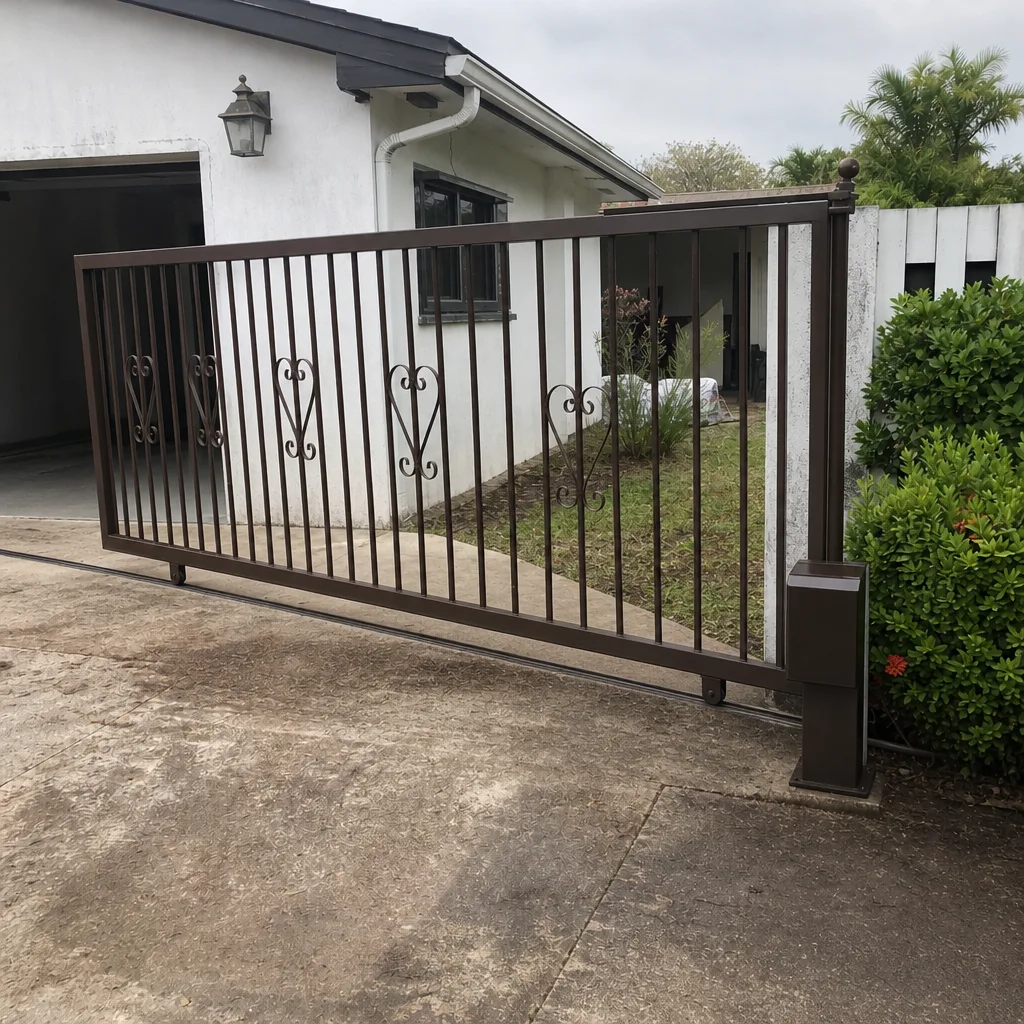
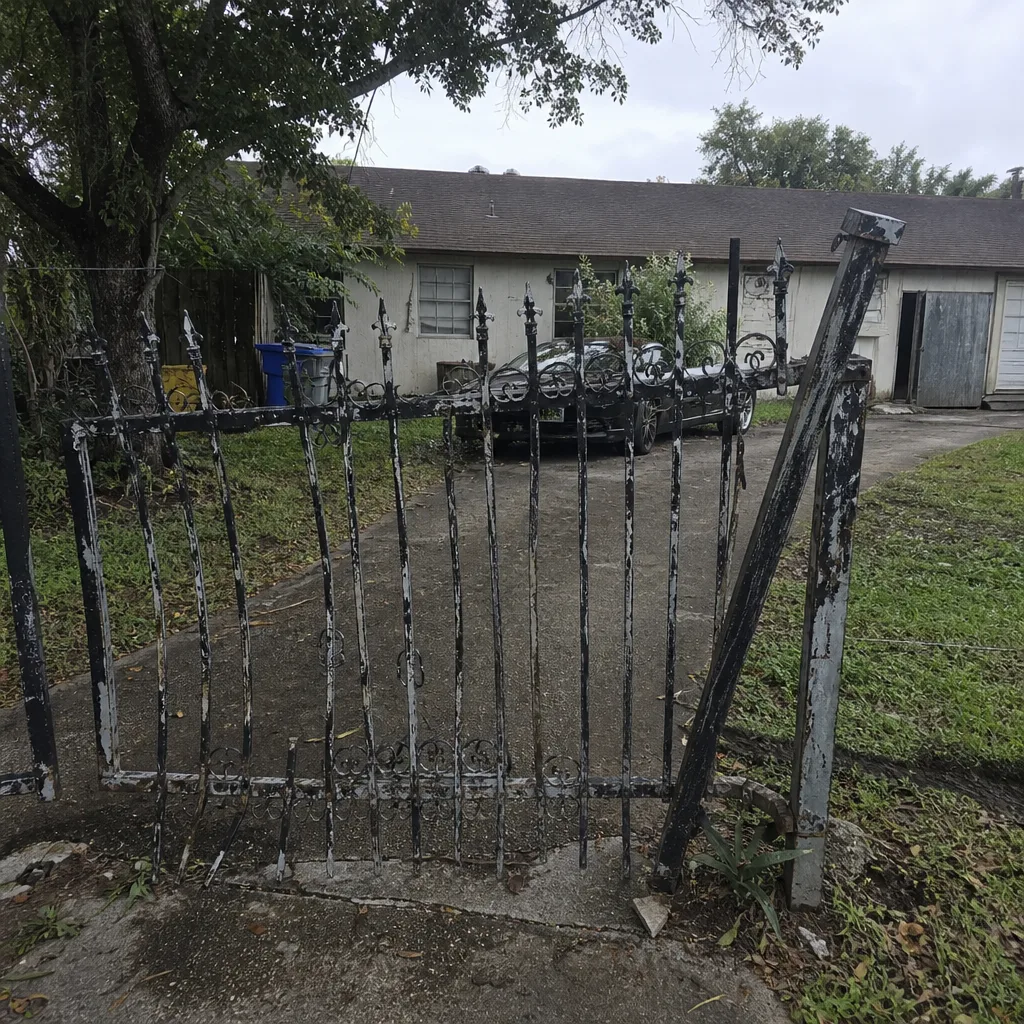
See the difference
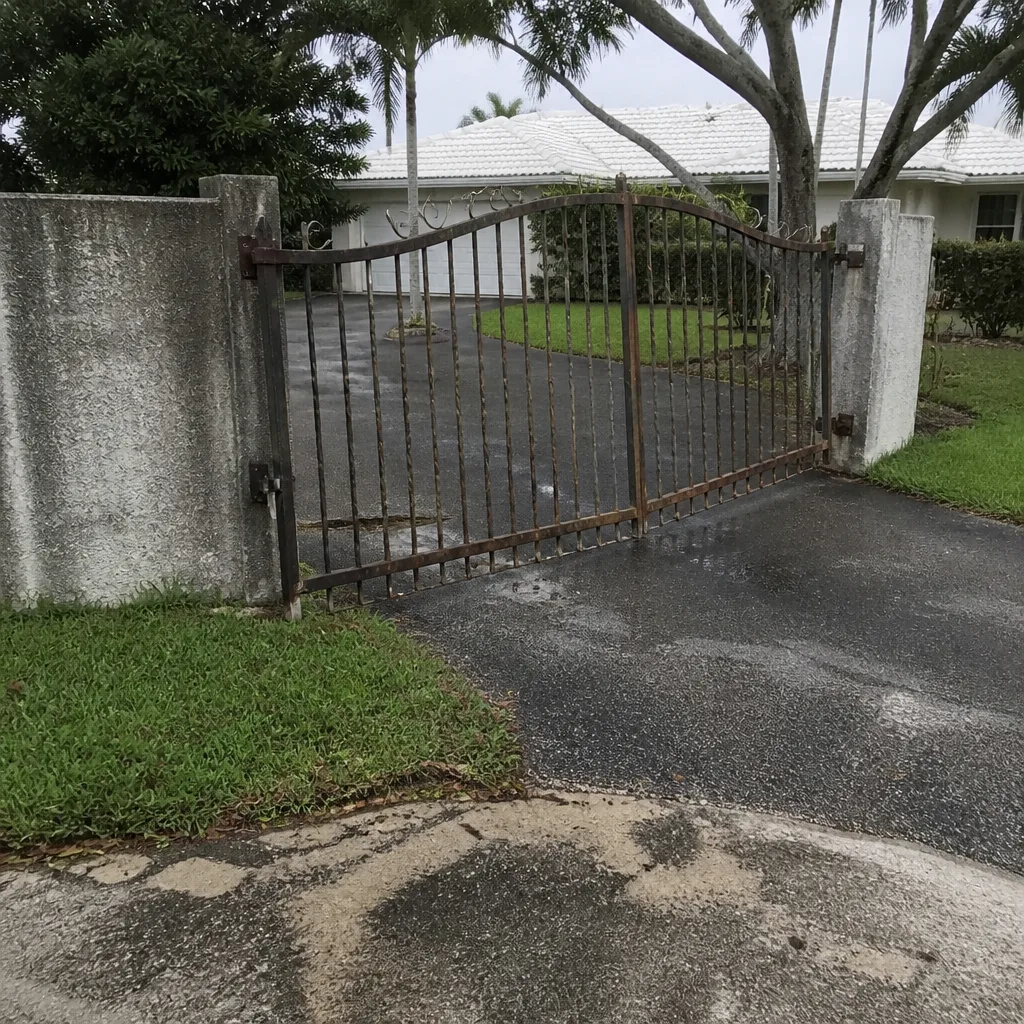 Before
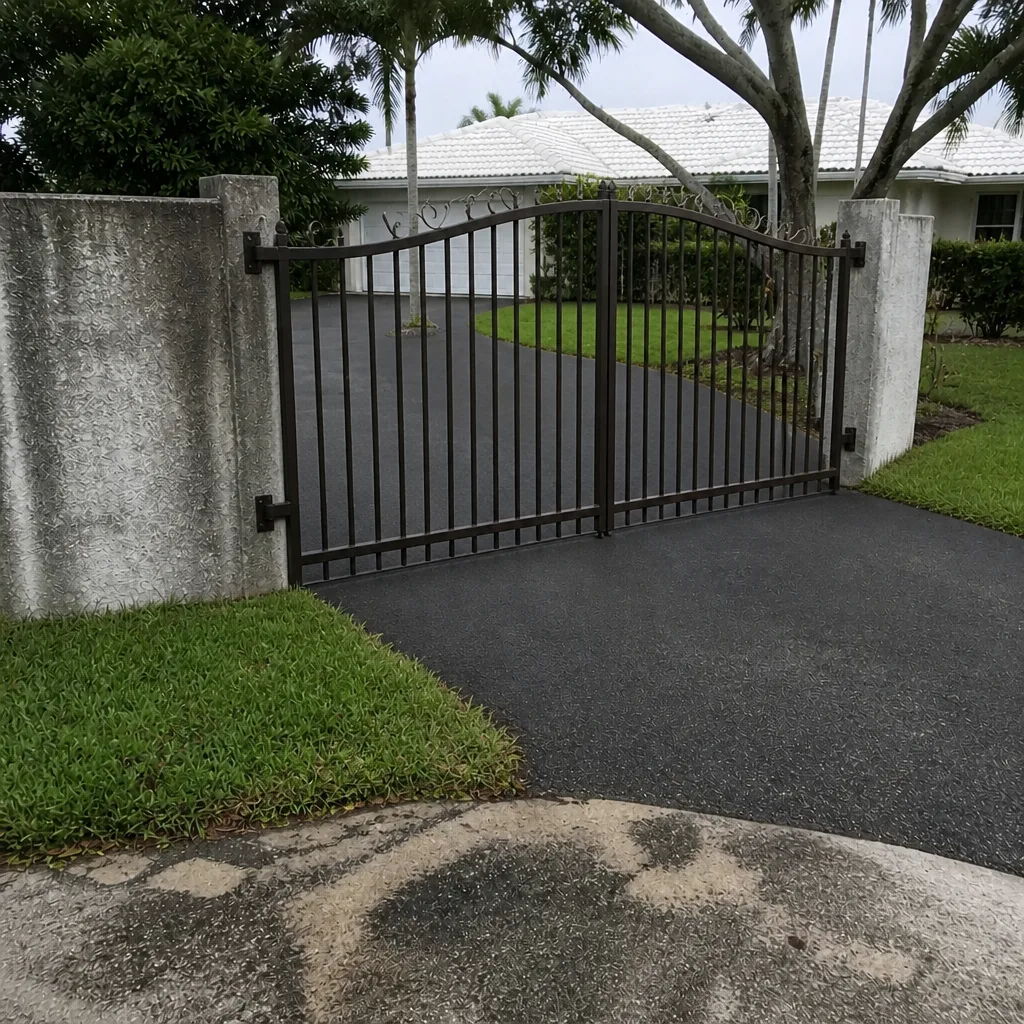 After
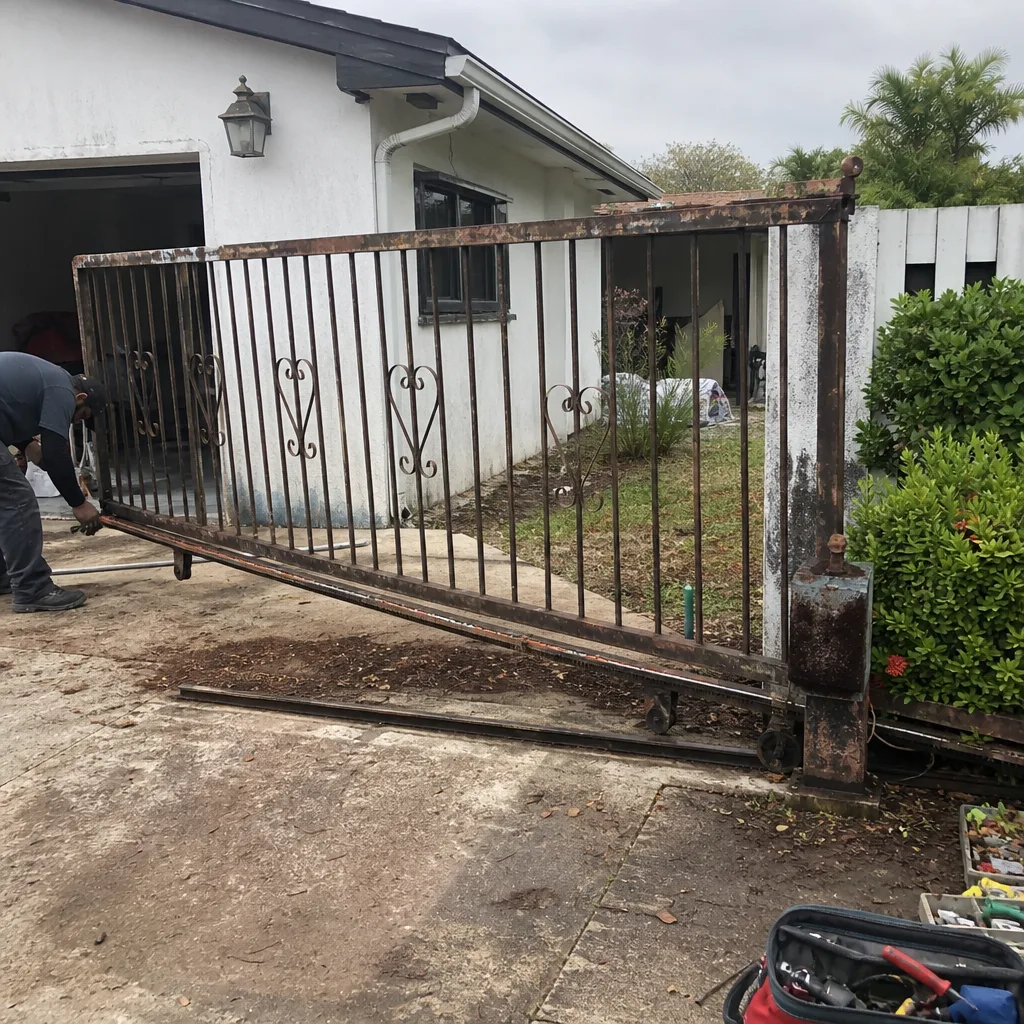 Before
 After
 Before
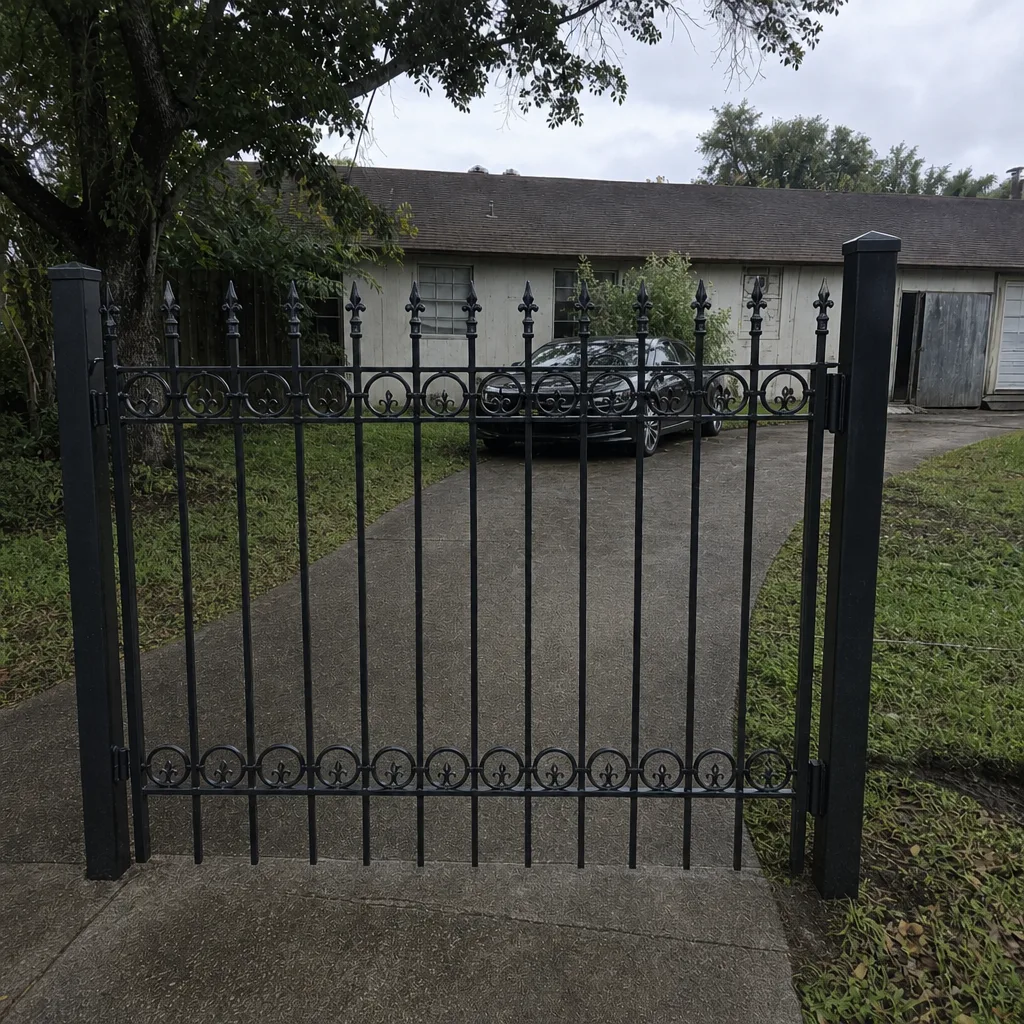 After
When to Call a Professional
Some things you can check yourself. Others shouldn’t be touched. Call a professional if the gate reverses unpredictably, if the safety edge has failed its vehicle test, if the control board shows no lights and the reset procedure hasn’t revived it, if you see rust bleed, post movement, or a weld crack, or if the power run to the operator needs inspection. Electrical work inside a gate control enclosure is not a DIY job: line voltage, backup batteries, and control board diagnostics all sit on the wrong side of the safety line for homeowner repair. Same for anything involving the safety edges: if the gate touches a vehicle or person without reversing, stop using it until a technician has looked. Gate Repair Davie offers free estimates in Davie. Call (877) 802-1841. We answer 24/7. Fast dispatch from 7am to 7pm, Sunday through Friday. The price is quoted and agreed in writing before any work starts.
Frequently Asked Questions
If the gate makes no noise at all, doesn’t move, and worked fine before a power outage or a remote change, it usually just needs a reset or re-pairing. If the gate makes any noise, moves unevenly, or binds when released to manual, it needs a repair visit. Try the manual release and the bypass tests in this guide before calling, and describe what happened. Call (877) 802-1841 for an exact quote. Estimates are free.
Not always. If your gate reverses mid-travel, it’s usually a sensor or obstruction. If it reverses immediately at the start of movement, it’s usually a load or control board issue. The distinction matters because the fixes are different. A technician who knows the brand (LiftMaster, FAAC, BFT, Linear, Viking, Ghost Controls, DoorKing, Elite, or Mighty Mule) can usually tell from the symptom description before arriving. Call (877) 802-1841 for an exact quote. Estimates are free.
Most repairs, including sensor replacements, hinge work, limit switch adjustments, and receiver re-pairing, are completed in a single visit. Repairs that require ordering a control board, motor, or custom-fabricated part take longer because the part has to be sourced. We give a written estimate for the job before any work starts, so you know the scope before you commit. Call (877) 802-1841 for an exact quote. Estimates are free.
We work on the gate you have. Our technicians are experienced with nine major gate brands, covering residential-grade systems like Mighty Mule and Ghost Controls through commercial-grade equipment like FAAC, BFT, and DoorKing. You don’t need to find a dealer for a specific brand. We diagnose and repair the system you own. Call (877) 802-1841 for an exact quote. Estimates are free.
A motor that’s failing usually shows three signals first: extra noise at one point in travel, sluggish movement in one direction, and a gate that needs to be pushed or nudged to start. Left alone, motor failure tends to follow, sometimes with a burned-out control board behind it. If you notice any of these, book a look before it stops entirely. Call (877) 802-1841 for an exact quote. Estimates are free.
Repair work usually doesn’t need a permit, but full replacement, structural post work, or electrical changes often do. Most cities require a permit for this kind of work, so check with the town or county building department before scheduling a replacement. We can point you in the right direction on the scope of work, but the permit itself is a homeowner responsibility. Call (877) 802-1841 for an exact quote. Estimates are free.
The Bottom Line
Gate failures are rarely sudden. They’re gradual, visible, and specific to the type of system you own. Learn to spot the four big categories (travel problems, noise, power and programming issues, and structural movement), and you’ll describe what you’re seeing accurately enough for a specialist to diagnose on the first visit. Test the safety edge at least once a year. Don’t fight a binding gate by hand. Don’t assume a reversing gate is a sensor problem. And don’t let a specialist sell you a replacement when a repair is the honest answer. Our technicians have up to 11 years of experience on exactly this kind of work, and we’re here to get your gate working again. Call (877) 802-1841 for a free estimate. We answer 24/7. Fast dispatch from 7am to 7pm, Sunday through Friday.
Written by the team at Gate Repair Davie.