
Last updated November 15, 2026
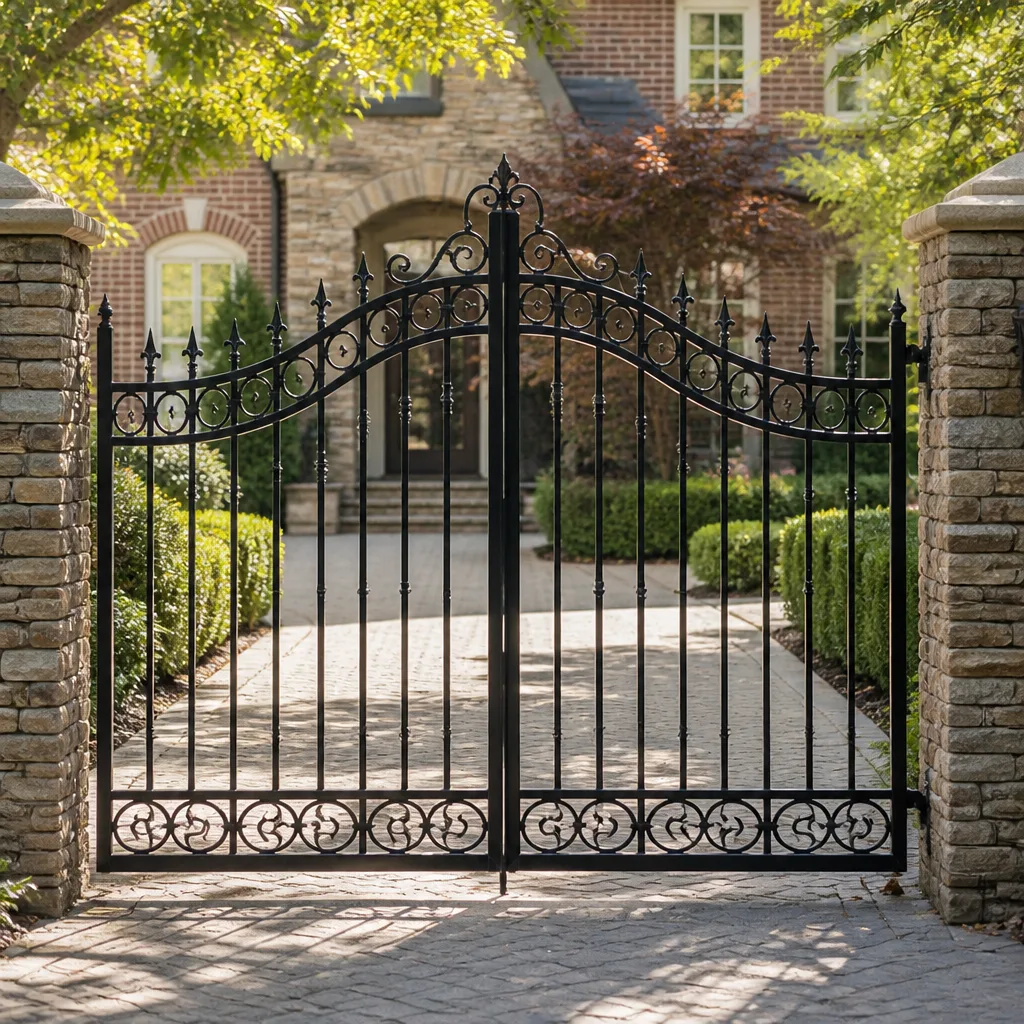 Wrought iron
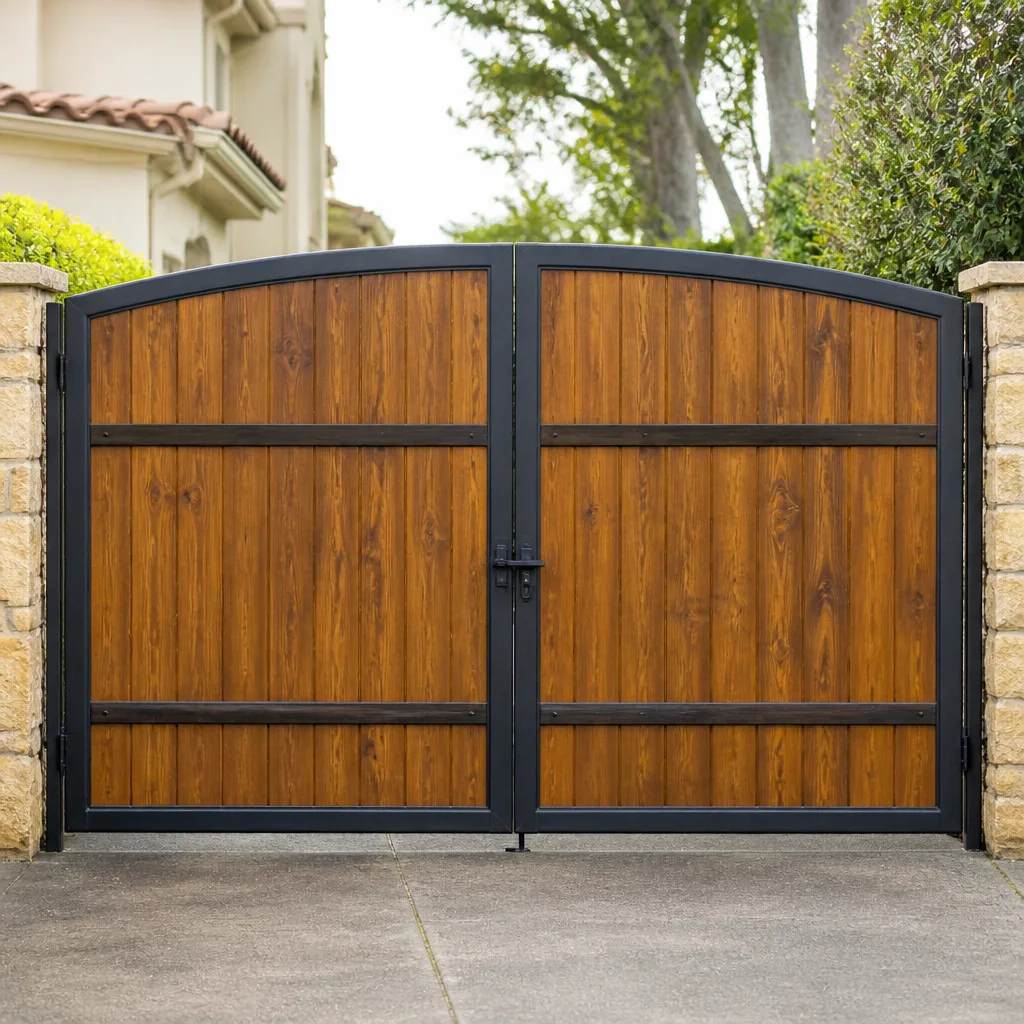 Wood & steel frame
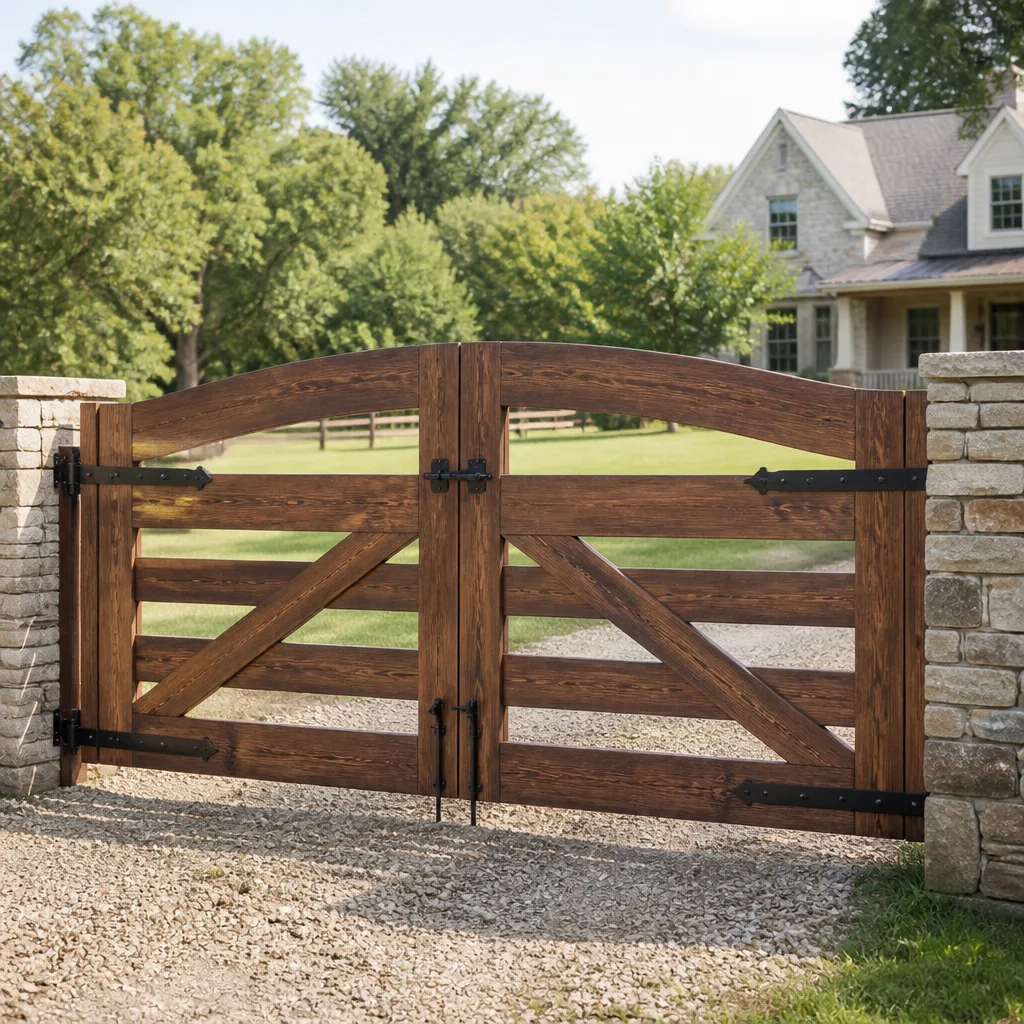 Farm & ranch
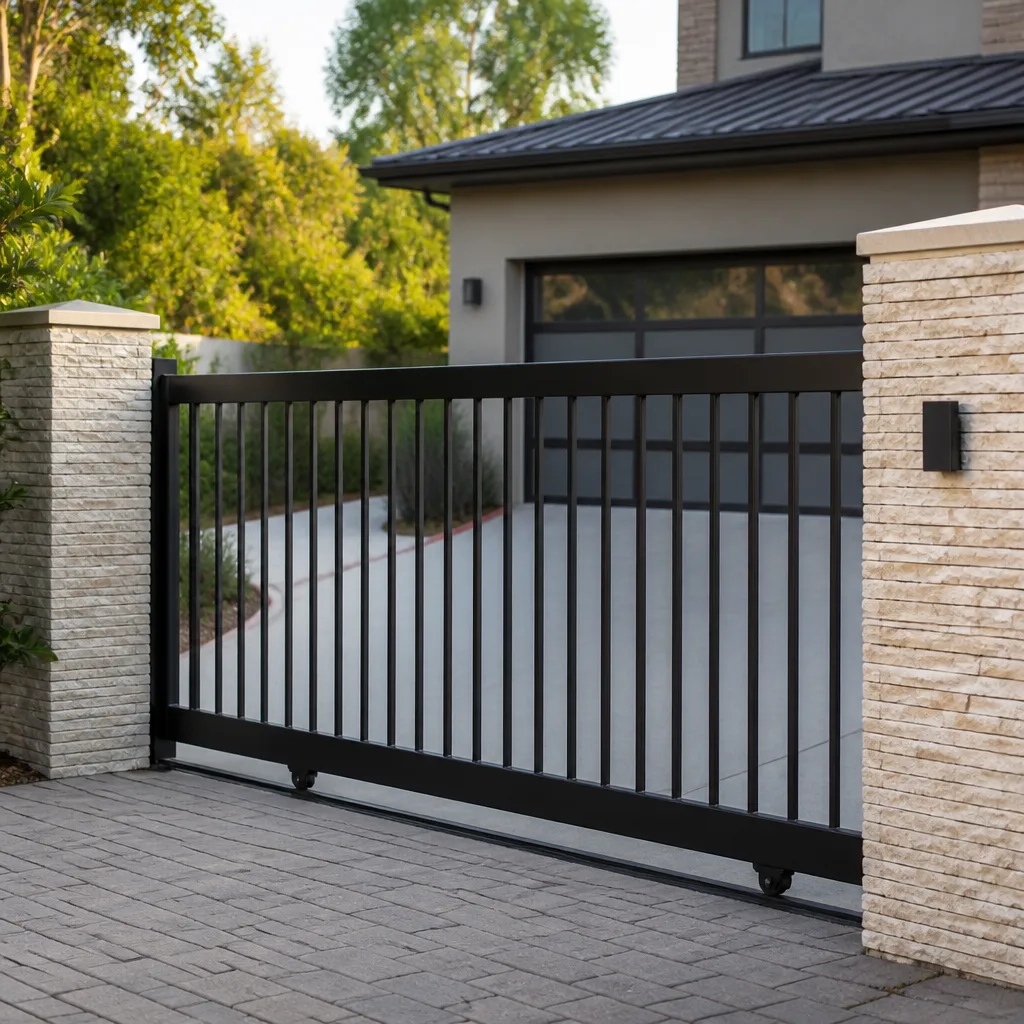 Sliding driveway gates
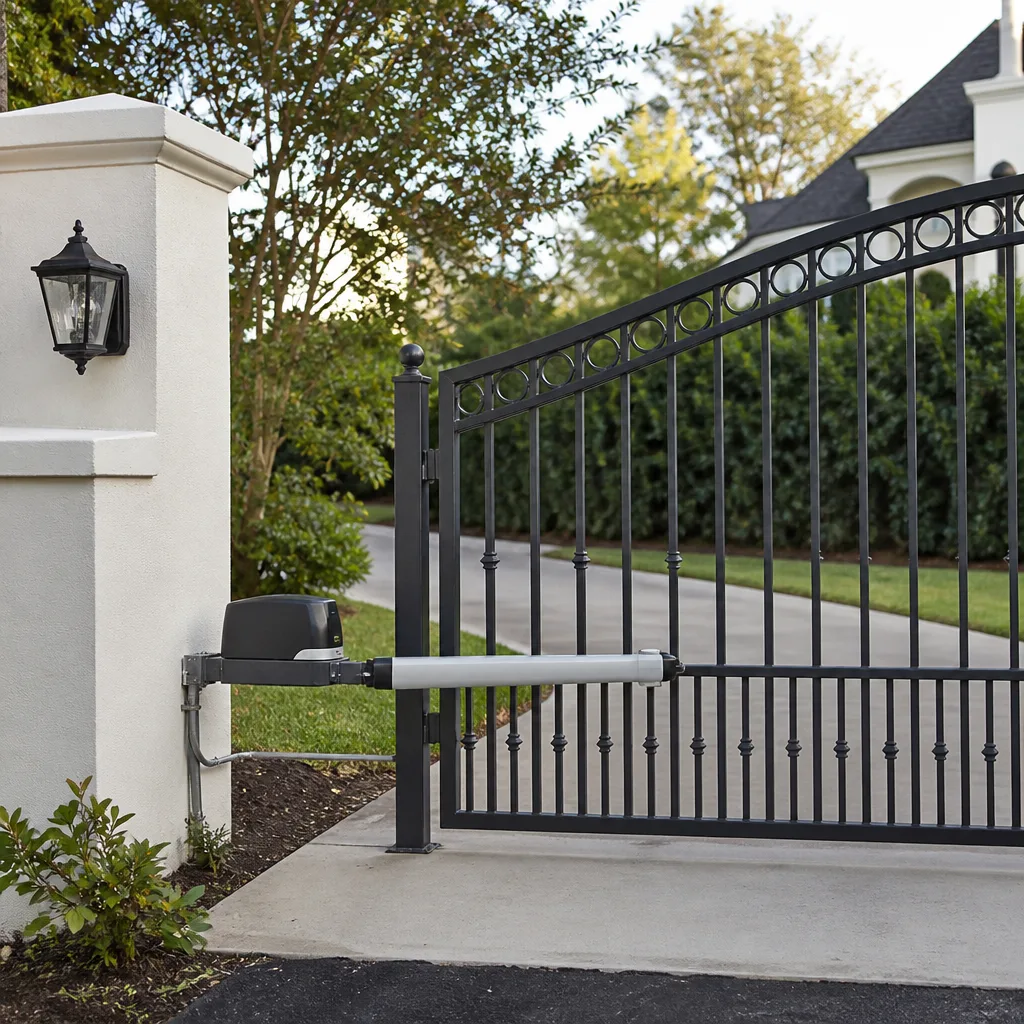 LiftMaster operators
Free on-site gate assessment - hinges, posts, and your LiftMaster or Nice gate operator checked before anything is quoted
The assessment is free and the quote is the invoice.
Get your free estimateSeasonal Gate Repair Care for Davie: Year-Round Homeowner’s Guide
Most seasonal gate care advice you’ll read online was written for a climate that has four roughly equal seasons. Davie doesn’t work that way. We have a dry season, a hurricane season, and two transition months where the humidity swings back and forth and the damage hidden all summer finally shows up. In our experience, more gate operators fail in October and November than at any other point on the calendar, and almost none of those failures trace back to a storm. The stress builds quietly through the wet months, then surfaces when the weather changes. This guide lays out the real Davie calendar for gate care, what to check in each window, and when a gate in Davie needs a technician rather than a homeowner with a screwdriver.
Quick Answer
Seasonal gate care in Davie follows a Florida calendar, not a spring-summer-fall-winter one: hurricane prep in May, a post-storm inspection in October, a corrosion and UV watch through the dry season from January into March, and extra attention during the May-June and October-November humidity swings when operators are most likely to fail. Check the gate monthly, service the operator annually, and call a technician when a gate stalls, reverses, or moves unevenly.
Styles & brands we work with
- Wrought iron
- Wood & steel frame
- Farm & ranch
- Sliding driveway gates
- LiftMaster operators
Table of Contents
- The Real Davie Gate Calendar
- How to Prep a Gate Operator Before Hurricane Season
- Post-Storm Inspection: What to Check Before You Restore Power
- The Transition Months Most Guides Miss
- How Davie Heat and Humidity Affect Different Operator Types
- Dry Season: UV, Solar Panels, and Sealant Failures
- A Monthly Walk-Around Checklist
- Why Brand Knowledge Matters for Repair, Not Replacement
The Real Davie Gate Calendar
If you plan gate care around a northern calendar, you’ll always be a step behind. Here’s what actually matters in Davie across the year:
- January to March (dry season): Low humidity and strong sun combine to crack sealant, dry out lubricants, and stress anything plastic or rubber. This is the season to inspect and seal.
- April (pre-season settle): Heat builds, the ground stays relatively dry, and it’s the easiest time to service moving parts before the rains begin.
- May (hurricane prep): The month to make sure the gate is ready to be locked open or manual before a named storm.
- June to September (wet and hurricane season): Constant humidity and driving rain find every seal, every control-board housing, and every loose hinge.
- October (post-storm inspection): Storm damage is fresh, and the season’s heat damage starts to surface.
- November (the seasonal pivot): Humidity drops sharply, thermal cycling reverses, and stressed components fail. In our experience this is the quiet failure month.
- December (settle and test): Run the gate through a full cycle and catch what the dry air is about to expose.
Nothing on this calendar involves frozen ground or snow loads. That simplicity is deceptive. A gate in Davie avoids winter ice but faces eight or nine months of heat and humidity that wear motors, seals, and control boards faster than most of the country. If you’re a homeowner, HOA manager, or commercial property owner in Davie, planning around these windows gives you a real edge on the gate’s lifespan.
How to Prep a Gate Operator Before Hurricane Season
There is a right way to prep an automatic gate for a hurricane, and a wrong way that causes more damage than the storm. The most common mistake is locking the operator and leaving it on standby. If the gate can’t move freely, the wind pressure has nowhere to go and ends up in the operator arm, the hinges, or the frame.
Here’s the sequence we recommend in the spring, before the first named storm forms:
- Read the operator manual. Every brand handles manual release differently. A Linear and a DoorKing release in different ways, and forcing the wrong lever strips gears.
- Practice the manual release before you need it. Walk through the release procedure once in calm weather. If the gate won’t move freely by hand, it needs a service visit before the season starts.
- Know the difference between “locked open” and “manual.” Most residential swing and slide gates should be released to manual and secured, or locked open if your fabricator designed it that way. Never leave a gate locked closed on an energized operator in a hurricane.
- Check the operator housing. Water in the housing fails more operators than wind does. Confirm the enclosure gasket is intact and the control board is dry before the rains arrive.
- Test the safety sensors, loops, and photo-eyes. Storm debris often knocks these out of alignment, and a gate that reverses at the wrong moment is a hazard.
- Photograph the gate from several angles. If damage happens, you’ll have a clean record of its pre-storm condition.
If you’re not sure whether your gate has been set up in manual correctly, a technician can show you the release and confirm the operator is ready. That free estimate visit is far cheaper than a bent arm after the first storm.
Post-Storm Inspection: What to Check Before You Restore Power
After a named storm passes, the temptation is to flip the breaker and see if the gate still works. Don’t. Restoring power to a damaged operator is how a small repair turns into a control-board replacement, and on some equipment it’s a safety risk. Inspect first, then power up.
Follow this sequence after any significant storm:
- Turn the breaker off at the panel. Leave it off until you finish the walk-around.
- Walk the gate’s travel path by hand. Look for downed branches, standing water, or debris that would jam the gate. Clear it before proceeding.
- Check the posts and hinges for movement. Push gently against each post. If the gate sways independently, the footing may be compromised and a technician should assess it before the operator is re-engaged.
- Inspect the operator housing for water. Open the cover, look for pooled water, and smell for burning or a hot, ozone-like odor around the control board.
- Confirm the safety loops and sensors are dry and aligned. Water in the loop cut is a common hidden failure after heavy rain.
- Only then restore power and cycle once. Watch the gate through a full open and close. If it stutters, reverses early, or stalls, stop and call a tech.
One note on gate versus garage door: a gate has no torsion spring, so you’re never dealing with the high-tension spring risk that garage door owners face. The real hazards on a gate are the operator wiring, the weight of the leaf if a hinge fails, and a slide gate that comes off its track. If you ever see the gate hanging off the track or a post is loose, keep people clear and call a technician. That’s the correct call for a trained pro, not a weekend project.
The Transition Months Most Guides Miss
Here’s the part of the calendar that gets ignored. In Davie, gate operators tend to fail in October and November, and again briefly in May and June. The storms get blamed, but the actual cause is the humidity swing. Components that have been running hot and wet for months are already at their endurance limit. When the air dries out, the thermal cycling reverses, tolerances shift, and old capacitors, tired motors, and weakened seals finally give up.
The May-to-June window is a milder version of the same story. Dry spring suddenly gives way to daily afternoon rain, and anything that had been quietly weakening shows up.
What can you actually do about it? A few cheap habits make a real difference:
- Cycle the gate once a week through the transition months. You’ll notice a developing problem before it becomes a stuck gate.
- Listen, don’t just watch. A motor that sounds different than it did a month ago is telling you something.
- Watch for slow reverses or early stopping. These usually mean the control board is misreading a safety input, not that the gate itself is broken.
- Book a service visit in April or September rather than waiting for a failure in October.
This is the difference between reactive and proactive gate care in Davie. A gate that’s been checked in September almost never surprises you in November. If your system has a Linear or Viking operator from a builder install, these are exactly the models we see fail in the transition months because their control logic is sensitive to voltage and safety-loop changes.
How Davie Heat and Humidity Affect Different Operator Types
Not every operator suffers the same way in Davie’s climate. Knowing which type you have helps you predict what’s likely to fail, and how to get in front of it.
Hydraulic operators
Hydraulic units, common on estate and commercial gates, rely on fluid that changes viscosity with temperature. In Davie’s summer, hydraulic fluid thins slightly, and in the dry season it thickens. Seals take the pressure difference. Most hydraulic failures we see are slow leaks at the seal, oil weeping on the arm, or a unit that hesitates on cold mornings. Annual checks catch the leak before the motor has been starved.
Electromechanical operators
Electromechanical arms and slide operators, including many FAAC, BFT, and LiftMaster systems, are more tolerant of heat but far more sensitive to moisture. In Davie’s humid summer, condensation inside the control housing is a bigger threat than the heat itself. The other weakness is gears and limit switches, which get worn down by gates that have been slightly out of alignment for a long time.
Solar-powered operators
Solar operators like some Ghost Controls systems work well in Davie, but the dry season is when solar output drops for a different reason: UV degrades the panel’s protective coating, dust and pollen settle on the surface, and battery capacity fades as the battery ages. If your gate starts stalling in March or April, check the panel surface and battery health before assuming the motor is going.
Whatever the operator, understanding it well enough to service any brand is what matters. We work on the gate you have, not the brand we’d prefer to sell. That’s why electric electric gate repair is treated as its own specialty rather than an add-on.
Dry Season: UV, Solar Panels, and Sealant Failures
From January through March, Davie gets sun, low humidity, and the cleanest weather of the year. It’s also the season most likely to expose slow damage. Three things need attention:
- Sealant on posts and hinges. UV dries out the flexible sealants around post bases and hinge plates, and the first summer rain enters the crack. A five-minute sealant check in February saves a hinge replacement in July.
- UV degradation on control boards. Control boards exposed to direct sun yellow and crack. Check the board is fully inside its housing and the lid seal is intact.
- Solar panel efficiency. Clean the panel surface, check for micro-cracks, and if the operator hesitates on low-cycle days, have the battery tested before the summer rains arrive.
- Lubricant refresh. Hinges, tracks, and the operator arm’s pivot points dry out faster in low humidity. A proper application of the lubricant your operator manual specifies prevents most dry-season squeaks and stutter.
This is also the season we recommend checking the gate against the property line and the driveway grade. Post footing movement shows up in dry soil more clearly than after a rain. If the gate is drifting, a technician can spot it in January and fix it long before the next storm season.
A Monthly Walk-Around Checklist
You don’t need to be a technician to catch most gate problems early. A ten-minute walk-around each month catches the majority of issues before they become failures.
- Cycle the gate once and listen. Does it sound like it did last month?
- Watch the travel path. Does the gate move smoothly, or does it sway, catch, or drag?
- Push each post gently. Should be solid. Any rock means footing or hardware.
- Test the safety sensors and loops. Pass a hand or object through the beam. The gate should reverse.
- Check the operator housing. Dry inside, intact gasket, no rust or water marks.
- Inspect the battery backup or solar panel. Surface clean, no cracks, no warning LEDs.
- Look at sealant around posts, hinges, and the control box. Cracks and gaps get resealed.
- Test the remote, keypad, and any intercom. Notice if any have become unreliable.
If anything on this list fails, note it and get it looked at. Problems compound quickly during the summer months. Caught early, most are straightforward repairs. Left for a season, they turn into motor or board replacements.
Why Brand Knowledge Matters for Repair, Not Replacement
Whether your gate runs on a DoorKing from a gated community, a Ghost Controls operator from a DIY install, or a LiftMaster from a home builder’s setup, repair should always come before replacement. The right question is not “what’s the newest model?” but “what does this specific system need to keep working?”
Our technicians have up to 11 years of experience working with the major gate brands, including Linear, Viking, Ghost Controls, DoorKing, FAAC, BFT, LiftMaster, Elite, and Mighty Mule. That’s not a list to show off. It’s the reason we can diagnose what’s actually wrong instead of guessing, and the reason you don’t get upsold on a replacement when a board or a sensor is the real culprit.
When a system is past repair, we handle gate repair and full Gate Repair Davie installation under one roof, so you’re not calling a second contractor when the answer is a new gate. That’s what full lifecycle coverage looks like. If you’re in Davie and you want a specialist who shows up knowing the brand, not learning it, we take that seriously. Estimates are free, and the price is quoted and agreed before any work starts.
Common Mistakes to Avoid
- Locking the gate closed on a live operator during a hurricane. Wind pressure ends up in the operator arm and hinges instead of the moving gate, which is how a repairable system becomes a full replacement.
- Restoring power before inspecting after a storm. Water inside a control housing and a live board are a dangerous combination. Turn the breaker off, walk the path, check the housing, then restore power.
- Waiting for an October failure instead of an April service. The transition months are the cheapest time to fix a gate in Davie because everything is still intact and nothing has failed yet.
- Using the wrong lubricant. Some gates want a specific grease, and a random spray can attract dust and gum up the track. Check the operator manual.
- Ignoring small sealant cracks in the dry season. By July, that tiny crack is a wet hinge plate and a repair bill. Reseal in January and March.
- Assuming a stalled gate means a new motor. A control board, limit switch, safety loop, or battery backup is often the real issue. That’s why diagnosis before replacement matters.
- Patching a bent post instead of fixing the footing. The operator can’t do its job if the gate’s geometry is wrong, and patching the symptom just extends the stress on the motor.
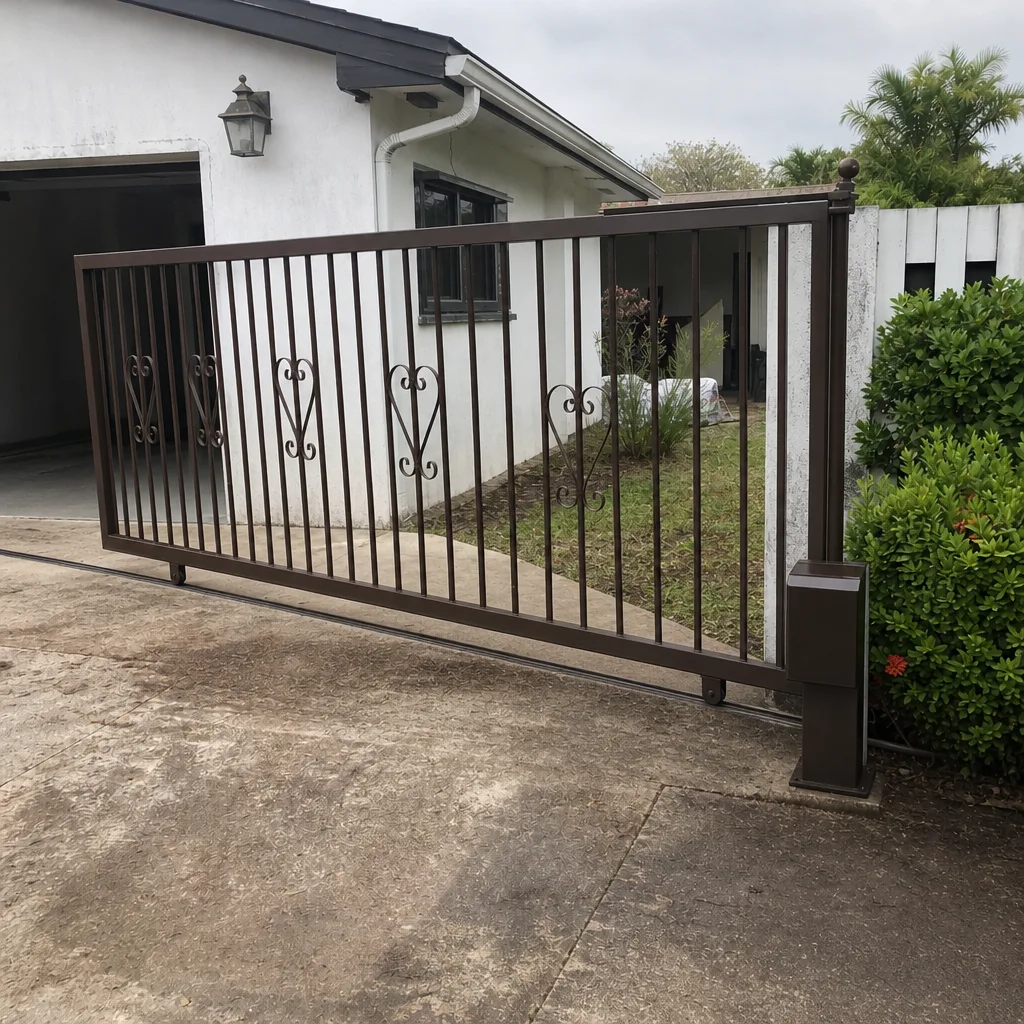
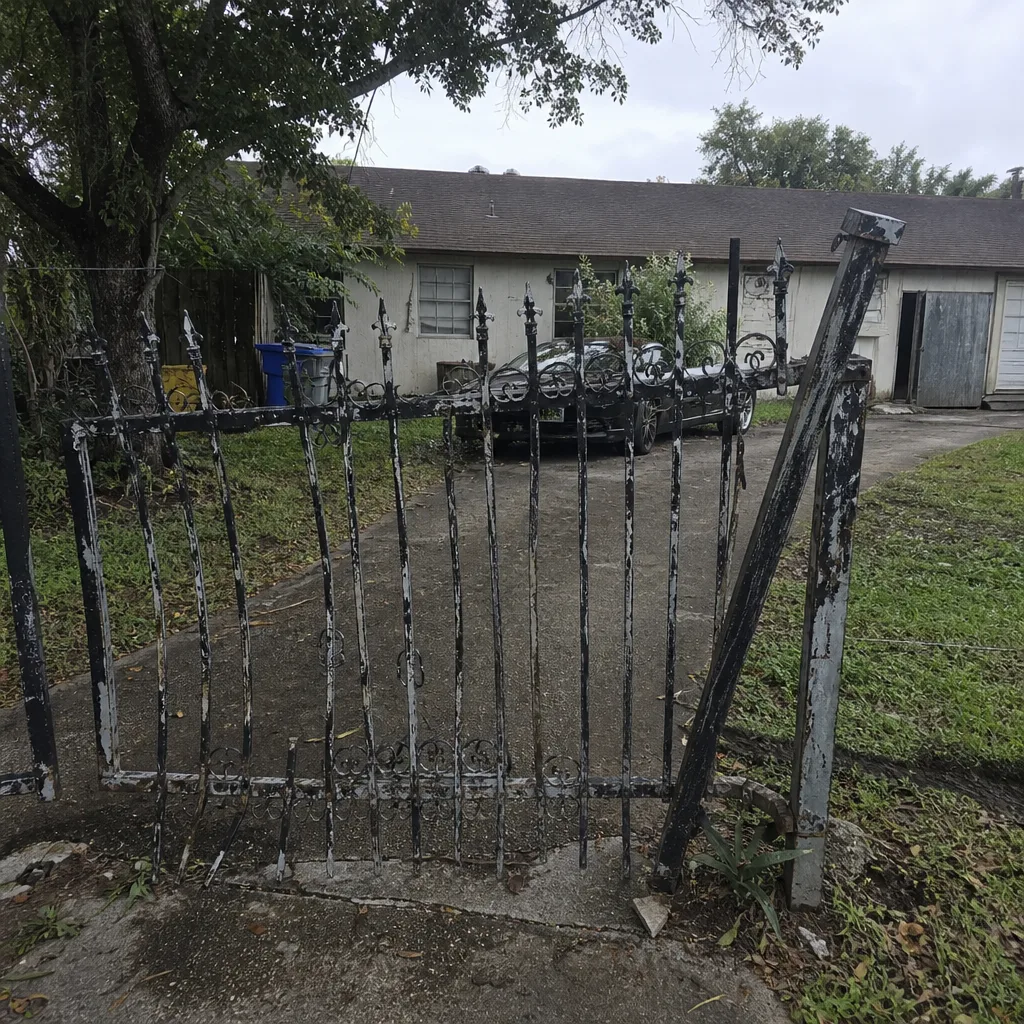
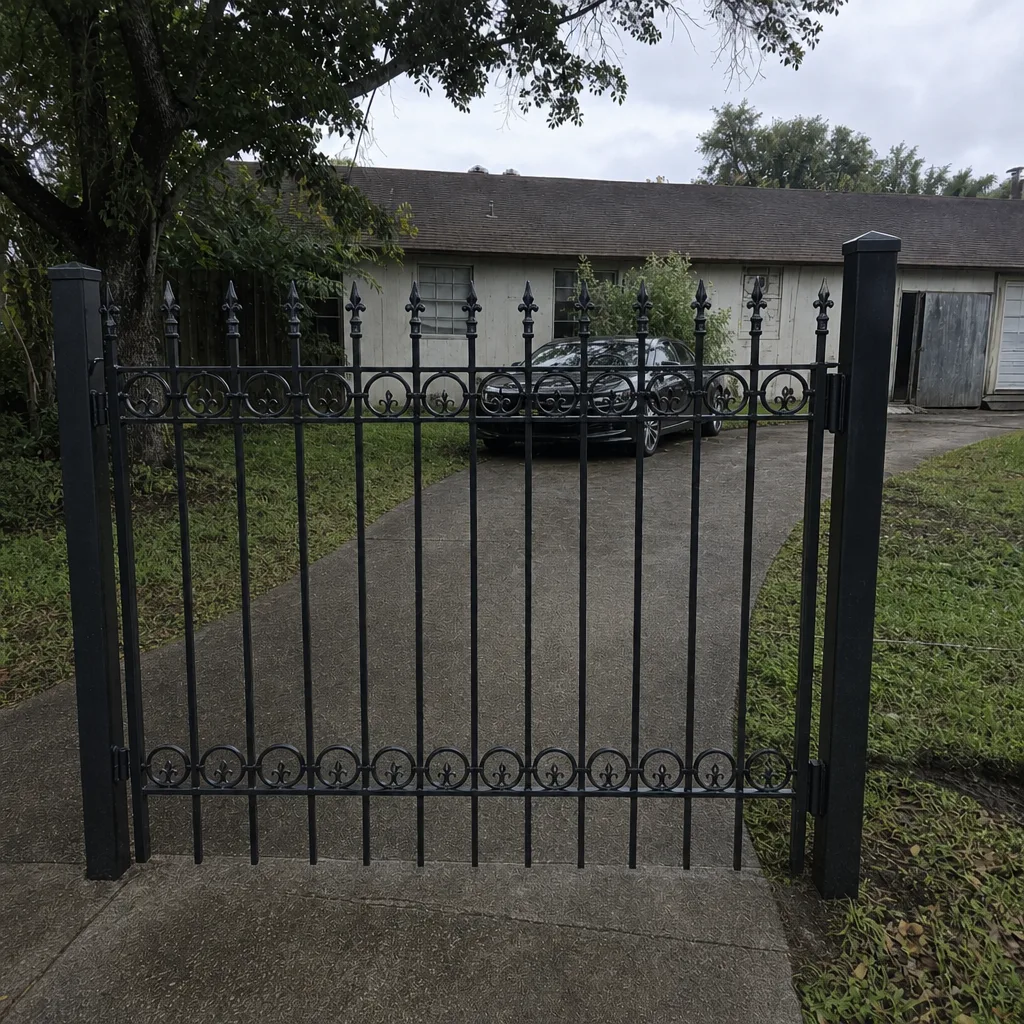
See the difference
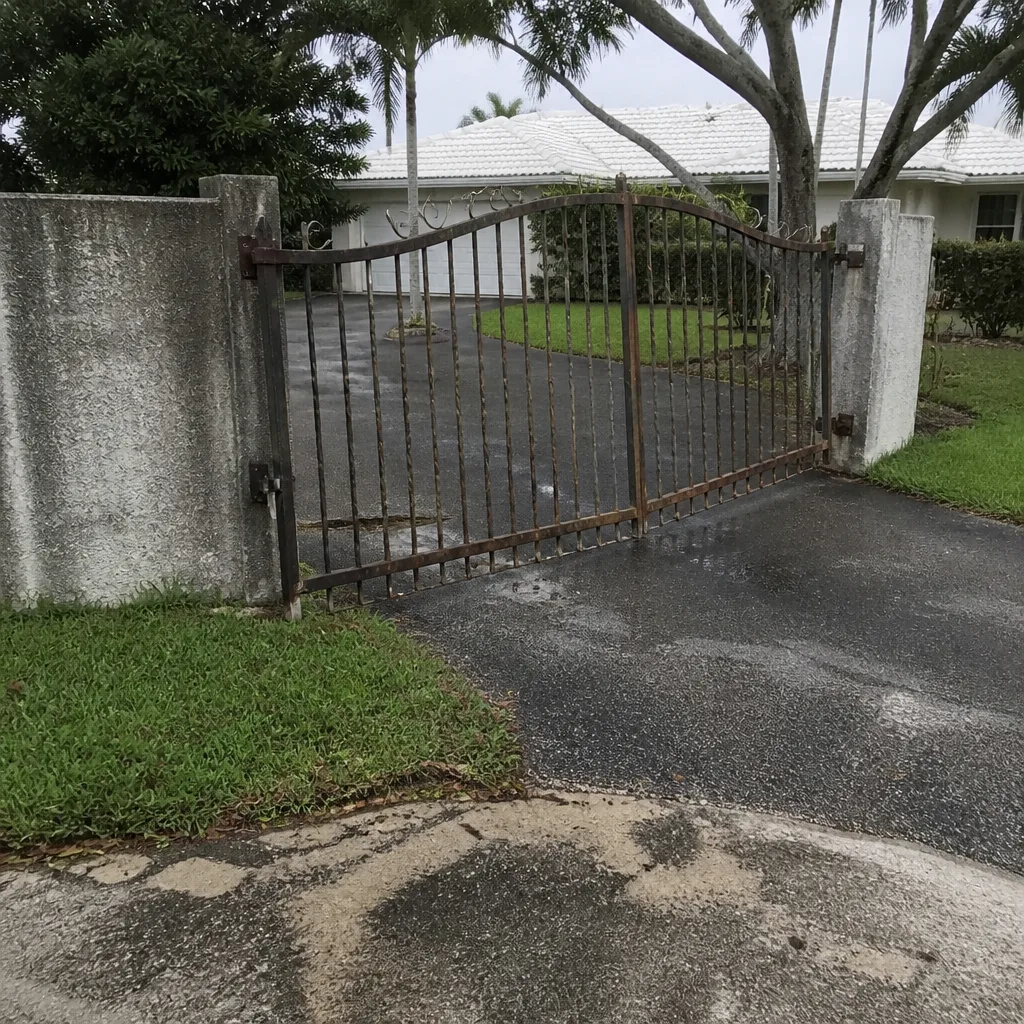 Before
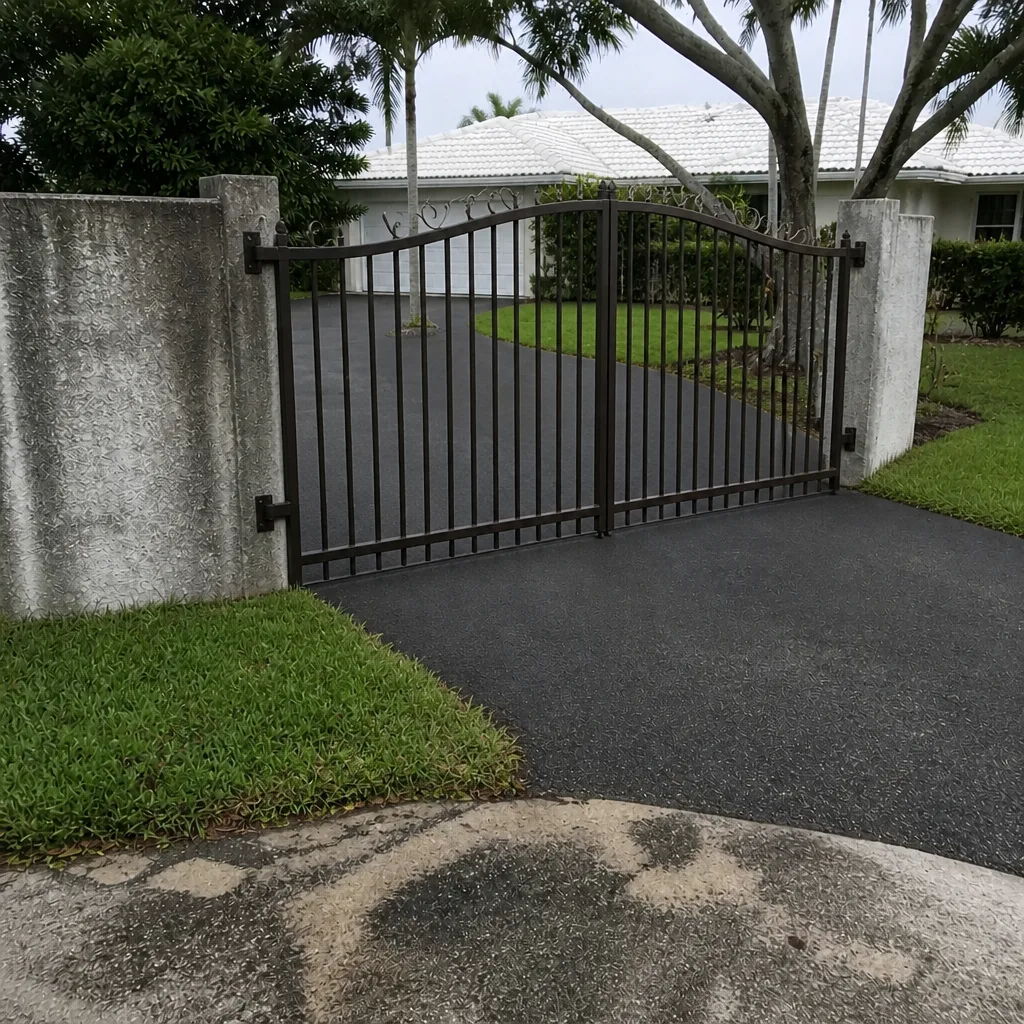 After
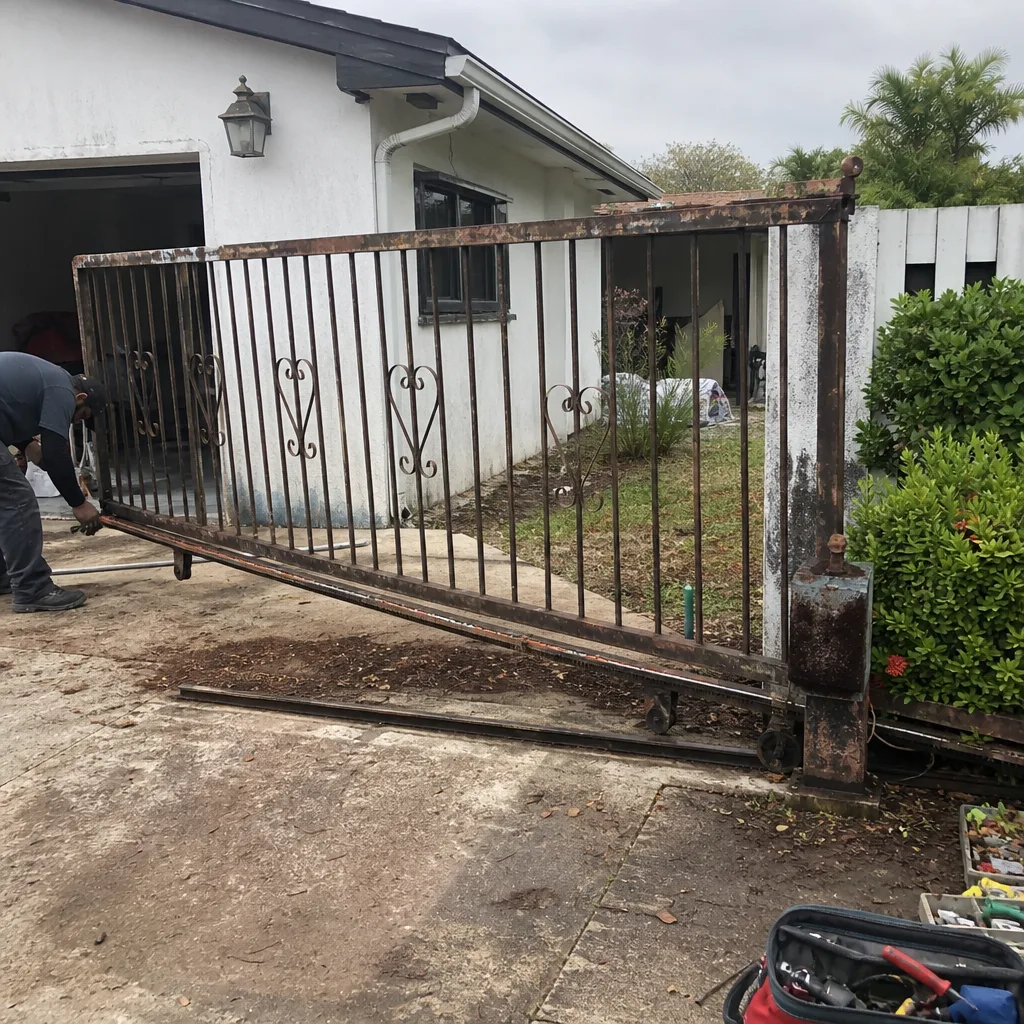 Before
 After
 Before
 After
When to Call a Professional
Call a professional for anything involving the operator’s wiring or power supply, any gate that reverses unexpectedly, any post that has shifted, any control board that smells hot or is showing warning LEDs, and any gate hanging off the track or with a hinge that has failed. These are the situations where a trained technician’s expertise protects your family and your property, and where the wrong guess damages equipment. Our technicians have up to 11 years of experience across all nine major brands, and we can work with your insurer if storm damage is involved. Gate Repair Davie offers free estimates in Davie. Call (877) 802-1841. We answer 24/7. Fast dispatch from 7am to 7pm, Sunday through Friday.
Frequently Asked Questions
Gate maintenance in Davie runs on a Florida calendar: hurricane prep in May, a post-storm inspection in October, and a dry-season sealant and UV check from January into March. The most overlooked window is October through November, when components stressed by summer heat and humidity tend to fail as the air dries out. Book an April or September service to catch problems before those transitions. For a specific system, call (877) 802-1841 for a free estimate.
Yes, in almost every case. Leaving a gate locked closed on a live operator in a hurricane puts wind pressure into the arm, hinges, and frame instead of the moving gate. Release it to manual, or lock it open if your fabricator designed it that way, before the storm arrives. Have a technician show you the exact release for your operator if you’re unsure. Call (877) 802-1841 to book a walk-through.
Leave the power off and walk the travel path by hand to look for debris, water, or a jam. Then check the operator housing for water and confirm the safety loops and sensors are dry and aligned. Only restore power once those are clear. If anything looks off, keep the gate clear and call us. Fast dispatch from 7am to 7pm, Sunday through Friday – Call (877) 802-1841 for a free estimate.
Humidity swings are harder on operators than steady heat. In the wet months, condensation inside the housing and water on the sensors wear down electrical components. When the air dries out, thermal cycling reverses and weakened capacitors, tired motors, and old seals tend to give up at once. That’s why we recommend a service visit in April or September, before the swing, rather than after a failure. Call (877) 802-1841 for an exact quote – estimates are free.
In most cases, yes – provided the operator, gate frame, and posts are otherwise sound. A control board, motor, sensor, or battery backup repair keeps a working system alive for years. Full replacement is the right call when the frame is bent, the footing has moved, or the operator has failed beyond economic repair. Every price is quoted and agreed before any work starts. Call (877) 802-1841 for a free estimate.
We work on the major brands homeowners and property managers actually have in Davie, including Linear, Viking, Ghost Controls, DoorKing, FAAC, BFT, LiftMaster, Elite, and Mighty Mule. We’re not tied to a single manufacturer, so the recommendation is based on what your system needs, not what we sell. Call (877) 802-1841 to describe the problem and book a free estimate.
The Bottom Line
The takeaway for seasonal gate care in Davie is simple: don’t plan around four seasons. Plan around the real ones. Prep in May, inspect after storms in October, watch the dry-season seals and UV from January through March, and treat October-November and May-June as the windows when a well-worn gate tends to fail. Cycle your gate weekly, walk it monthly, and service it annually. When something stalls, reverses, or gets noisy, call a technician who knows the brand. We work on the gate you have, and we’ll tell you honestly whether it’s a repair or a replacement. Call (877) 802-1841. We answer 24/7. Fast dispatch from 7am to 7pm, Sunday through Friday.
Written by the team at Gate Repair Davie.