
Last updated November 15, 2026
 Wrought iron
 Wood & steel frame
 Farm & ranch
 Sliding driveway gates
 LiftMaster operators
Free on-site gate assessment - hinges, posts, and your LiftMaster or Nice gate operator checked before anything is quoted
The assessment is free and the quote is the invoice.
Get your free estimateDIY vs Professional Gate Repair: The Davie Homeowner’s Decision Guide
Most gate repair advice splits the world in two: simple fixes you handle yourself, and everything else, which you hand to a pro. That split is wrong, and it’s the reason so many Davie gates fail twice. The real line isn’t skill. It’s risk. Some gate parts are genuinely safe for a careful homeowner to touch – reprogramming a remote, clearing a sensor lens, releasing the arm by hand when the power drops. Others sit inside a live electrical enclosure or hold a heavy panel over a driveway, and those are where a weekend project turns into a liability. This guide draws that line clearly for Davie homeowners, HOA managers, and property owners, so you know what you can safely do and exactly when to stop.
Quick Answer
In Davie, you can safely handle remote reprogramming, sensor cleaning, light lubrication, and the manual release during a power outage. You should call a professional for anything involving the operator’s wiring, control board, motor, limits, or a gate panel that has dropped or come off its track. The dividing line is risk, not difficulty: if the task puts you near line voltage or under a heavy moving panel, it belongs to a trained technician, and electric gate repair is a job for someone who works on operators every day.
Styles & brands we work with
- Wrought iron
- Wood & steel frame
- Farm & ranch
- Sliding driveway gates
- LiftMaster operators
Table of Contents
- Where the DIY Line Actually Falls
- Gate Tasks That Are Safely Owner-Serviceable
- Florida Electrical Code and Why It Changes the Answer
- How DIY Work Affects Your Gate Operator Warranty
- DIY Repairs That Look Fixed but Aren’t
- How to Release Your Gate During a Power Outage
- Why Brand Knowledge Matters More Than You’d Think
- When to Stop and Call a Technician
Where the DIY Line Actually Falls
Here’s the part most repair guides skip: a gate system is not one machine. It’s a mechanical assembly bolted to a low-voltage control layer bolted to a line-voltage power feed, and each layer carries a different level of risk. A homeowner who understands those layers can make a smart call in about thirty seconds. A homeowner who treats the whole gate as “the thing that opens” ends up guessing, and guessing is where injuries and wasted money come from.
Think of your gate in three zones.
- The access zone: remotes, keypads, the manual release, the photo-eye lenses, and general cleaning. Low voltage or no voltage at all. Safe for a careful owner.
- The control zone: the operator’s circuit board, limit switches, safety-loop wiring, and the motor itself. Mostly low voltage but tied to a live feed, and small mistakes here create intermittent faults that are hard to trace.
- The power and structure zone: the 120-volt feed, the disconnect, the transformer, hinge and post anchoring, and any heavy panel or slide carriage. This is where a mistake can shock you, crush a hand, or drop a gate onto a vehicle.
In our experience across Davie, the calls that start with “I tried to adjust it myself” cluster almost entirely in the control and structure zones. The access zone rarely causes real trouble. That’s the line: if the task lives in the access zone, go ahead. If it lives in the control or structure zone, that’s a technician’s job.
One more nuance for Davie specifically: our summers are long, hot, and storm-heavy, and operators mounted in full afternoon sun run hotter than the same unit under shade. Heat stress on a motor and its control board is cumulative, and a homeowner who keeps resetting a tripping operator instead of finding the cause adds load to a component that’s already working hard. Knowing when to stop resetting is part of the skill.
Gate Tasks That Are Safely Owner-Serviceable
A short, honest list of what you can do yourself without putting anyone or anything at risk. If your task is on this list, you don’t need to call anyone.
- Reprogramming a remote or keypad. Adding or removing a remote is a menu routine in the operator’s manual. Whether it’s a Linear unit or a Ghost Controls DIY-grade operator, pairing is low voltage and fully reversible.
- Cleaning the photo-eye lenses. A dirty sensor is one of the most common reasons a gate reverses or refuses to close. Wipe both lenses with a soft cloth and clear any spider webs or leaf debris between them.
- Light lubrication of moving mechanical parts. Hinges, rollers, and the slide track. Use a manufacturer-approved lubricant, not whatever’s in the garage. More on that below.
- Clearing debris from the gate’s path. Branches, palm fronds, toys, and storm-blown debris trip safety sensors constantly. A quick sweep before you assume the gate is broken saves a service call.
- Replacing remote batteries. Obvious, but worth saying: a dead battery looks exactly like a failed receiver until you check.
- Performing the manual release during a power outage. Covered in full below.
- Visual inspection. Look for rust, loose bolts, sagging hinges, or a panel that’s dropped. You don’t have to fix what you find, but spotting it early is valuable.
Everything else – opening the operator housing, adjusting limit switches, rewiring anything, or repositioning a heavy panel – requires a trained technician. That’s not gatekeeping. It’s the honest line between a task that can go wrong harmlessly and a task that can go wrong badly.
Florida Electrical Code and Why It Changes the Answer
This is the section most DIY guides avoid, so let’s be direct. A gate operator runs on line voltage, and in Florida the electrical work that feeds it is governed by the National Electrical Code as adopted by the state and enforced locally. That matters to a homeowner because code isn’t just paperwork – it’s the reason certain repairs are a liability rather than a hobby.
The core provisions that matter for a gate operator:
- The operator must be on a dedicated circuit with a means of disconnect within sight of the operator, so the unit can be powered down for service. Circuit-tapping a gate off an existing outdoor outlet is common in older installations and is a code problem.
- The operator and its enclosure must be properly grounded. A gate operator that isn’t correctly grounded is a shock hazard and, in a lightning-prone climate like ours, a fire hazard. This one gets worse with every rainy season, not better – a marginal ground doesn’t heal.
- Outdoor connections and enclosures must be rated for wet locations. Standard indoor boxes and wire nuts degrade under Florida rain and humidity. If you’re peeking into a junction box near your gate and it looks improvised, it probably is.
- High-voltage conductors must be separated from low-voltage control wiring inside the operator housing. Mixing them is a common shortcut and a common source of phantom faults.
The practical takeaway: any task that requires you to open a line-voltage enclosure, trace wiring, or touch the 120-volt feed is electrical work. In most Florida jurisdictions, that work must be done by a licensed electrical contractor, and gate operator installation usually requires a permit from the local building department. Always confirm the current requirement with Davie’s building department before work begins. A homeowner can legally replace a remote battery. A homeowner should not be rewiring a power feed, and no honest guide should tell them otherwise.
The danger here is not hypothetical in our line of work. A live conductor in a damp enclosure near wet ground is one of the most dangerous combinations in residential electrical work. When in doubt, hire a licensed professional.
How DIY Work Affects Your Gate Operator Warranty
Warranty terms vary by manufacturer, so the honest answer is: read the paperwork that came with your operator. But the pattern across the major brands is consistent enough to be useful.
What typically does not void a warranty:
- Reprogramming remotes and keypads
- Cleaning sensors and the gate path
- Light lubrication of external moving parts
- Replacing batteries in remotes or accessories
- Performing the manual release as the manual describes
What typically does create warranty problems:
- Opening the operator housing and touching the control board. Many manufacturers state that field modification of the board or wiring voids coverage of the board and motor.
- Adjusting limit switches beyond the manual’s procedure. If the operator is designed with an internal limit adjustment, following the manual is fine; improvising beyond it is where damage starts.
- Improper lubrication causing internal component damage. Using the wrong lubricant can attack seals, collect grit, and strain the motor. That’s a defect the manufacturer can attribute to the owner.
- Any line-voltage electrical work performed outside licensed practice. Beyond warranty, this is a safety and code issue.
- Evidence of water intrusion from an improperly resealed enclosure. Very relevant in a climate with our storm seasons.
The warranty is only half the picture. It’s also just expensive to learn a fault by trial and error on a $1,000-plus operator. A brand-agnostic technician – we work on BFT, Linear, Viking, Ghost Controls, and the rest – can usually identify the actual cause in one visit and save the guesswork. If you’re already in a failure loop, the cost of a diagnostic visit tends to be lower than the cost of the parts you’d buy hoping to fix it.
DIY Repairs That Look Fixed but Aren’t
This is the most important section in this guide, because deferred failures cost more than outright breakdowns. A gate that stops working gets fixed. A gate that “works” while slowly damaging itself often doesn’t get noticed until a much bigger component fails.
The three usual suspects:
1. Incorrect hinge shimming. A sagging gate gets a washer stuffed behind a hinge to lift it. It closes. Then the load shifts onto the operator arm or the track, and the operator starts working harder on every cycle. Over a few months, the arm wears, the motor overheats, and the symptom moves from “slightly sagging gate” to “operator keeps tripping its thermal cutout.” That’s a hinge problem that became an operator problem because the shim was a shortcut, not a fix.
2. Improper limit switch adjustment. The limit switches tell the operator when to stop. Adjust one wrong and the gate may travel too far, stop too early, or hit the physical stop on every cycle. It looks fine until the door or panel starts bouncing off the stop, and the operator’s gear train absorbs the impact. Two months later you’re replacing a gearbox for a limit setting that was a screw-turn away from correct. In our experience, limit issues present as intermittent faults, which makes them especially likely to be “fixed” with a reset instead of a repair.
3. The wrong lubricant. This one’s subtle. A generic spray usually works fine for a while, then starts attracting grit and drying into a sticky film. The rollers and hinges start binding, the operator compensates, and the real problem – the lubricant itself – never gets named. Whatever brand your operator is, use the lubricant type the manufacturer specifies, and apply it sparingly.
The general rule: if a repair doesn’t explain why the gate failed, it’s not a repair. It’s a delay. On heavier estate or commercial gates, the delay is shorter. On a lighter residential unit with a Ghost Controls or Mighty Mule-style operator, it can be longer. But it’s always a delay.
How to Release Your Gate During a Power Outage
This is the one procedure every Davie homeowner should know cold, because power outages here are routine. Get it wrong and you can damage the operator, strain the arm, or leave the gate stuck in the driveway with no way to move it.
Learn this now, before the next storm, not during one.
- Know your release mechanism. Most operators use either a manual release key (a short key that engages a clutch) or a bypass lever. Find yours this week. Read the manual for your specific brand. A LiftMaster arm operator and a FAAC swing operator release differently.
- Turn off power at the disconnect before releasing. This is the step people skip. Breakers can flip back on unexpectedly, and releasing a gate with the operator live can cause the arm to move suddenly.
- Use the release key or lever exactly as directed. Turn the key or pull the lever only as far as the mechanism specifies. Forcing it beyond its travel is how release clutches get stripped.
- Open or close the gate by hand. The gate should now move freely. If it binds, doesn’t move, or feels heavy, stop – do not force it. A gate that won’t move after release has a mechanical problem that needs a technician.
- Re-engage the release fully before restoring power. Half-engaged release mechanisms are one of the most common causes of “the gate won’t move” service calls after an outage.
Two safety caveats. First, if your gate has a slide panel or heavy steel construction, never stand in the path of the gate while you release it – heavy panels can shift suddenly. Second, if the release mechanism itself is broken, seized, or missing, do not improvise. Call a technician. The release is a designed part of the system, not a puzzle to solve with a pry bar.
Why Brand Knowledge Matters More Than You’d Think
A gate is a gate, right? No. The differences between brands matter most exactly at the moment you’re deciding whether to call a professional, because they determine whether a given repair is a 15-minute adjustment or a genuine hazard.
A Ghost Controls or Mighty Mule operator is built for homeowner installation, with serviceable components and clear owner-accessible adjustments. A Linear unit is a step up in complexity. A BFT or FAAC commercial system is engineered for daily-drive gates at an estate or HOA entry, with control boards and safety-loop logic that assume a trained technician on the other side. A Viking or LiftMaster operator splits the difference. Treat all six the same way and you’ll either over-call a technician for a task you could handle, or under-call one for a task that will hurt you.
That’s why we’re brand-agnostic. We work on the gate you have – LiftMaster, FAAC, BFT, Linear, Viking, Ghost Controls, DoorKing, Elite, or Mighty Mule – not the brand we prefer to sell. If your system is a residential-grade operator with a clean failure, we may be able to talk you through the fix over the phone. If it’s a commercial BFT with safety-loop faults, we’ll tell you straight that it needs an on-site look. That honesty is the point.
Electrical gate repair – motors, control boards, safety loops, remote access – is what we do. If you’re in Davie and your operator is behaving oddly after a storm, or you’ve reset it three times this month and it still acts up, electric gate repair is the right starting point, not another round of DIY.
When to Stop and Call a Technician
Calls like this are usually avoidable with one honest question: is the task in the access zone or the power and structure zone? But some signs mean stop now, regardless of which zone you think you’re in. Here are the ones that should end your DIY session:
- The operator housing needs to come off, or you can see a live conductor you don’t recognize.
- The gate panel has dropped, come off the track, or won’t hold its position – a heavy panel is a crush risk.
- The operator trips repeatedly, smells hot, or makes a grinding noise.
- Your remote works intermittently, or the gate reverses for no visible reason after you’ve cleaned the sensors.
- You’ve tried a fix twice and the symptom came back.
- You spot burnt wiring, scorched terminals, water inside the enclosure, or a ground wire that’s come loose.
For anything on that list, stop. Call (877) 802-1841. We answer 24/7. Fast dispatch from 7am to 7pm, Sunday through Friday. Every estimate is free, and the price for the work is quoted and agreed in writing before any technician starts. A quick diagnostic now is almost always cheaper than the part you’d replace next by guessing.
Common Mistakes to Avoid
- Treating a reset as a repair. If the operator trips its breaker and you reset it, the gate will trip again. Resetting a tripping operator without finding the cause adds heat and load to a component that’s failing. Fix the reason, not the symptom.
- Spraying anything in the garage on the hinges. WD-40 and generic greases attract grit and dry into a tacky film. Whatever the operator’s manufacturer specifies, use that, and use a little.
- Shimming a sagging hinge instead of addressing the post or hinge itself. A shim lifts the panel and shifts the strain onto the operator. It works for a month and costs an arm a quarter later.
- Adjusting limit switches by trial and error. Each wrong adjustment adds an impact cycle to the operator’s gear train. Follow the manual procedure or leave it to a technician.
- Filling a wet enclosure with silicone. Sealing the top of a wet connection traps moisture inside and accelerates corrosion. In our rainy season, that enclosure needs to drain and breathe correctly, not be packed shut.
- Running a new power feed from an existing outlet. It’s tempting, and it’s a code violation. The operator needs a dedicated circuit with a disconnect in sight. Confirm current requirements with the local building department.
- Forcing a manual release you can’t move. A seized release clutch means the mechanism needs a technician, not more force. Forcing it can shear the key or bend the arm.
See the difference
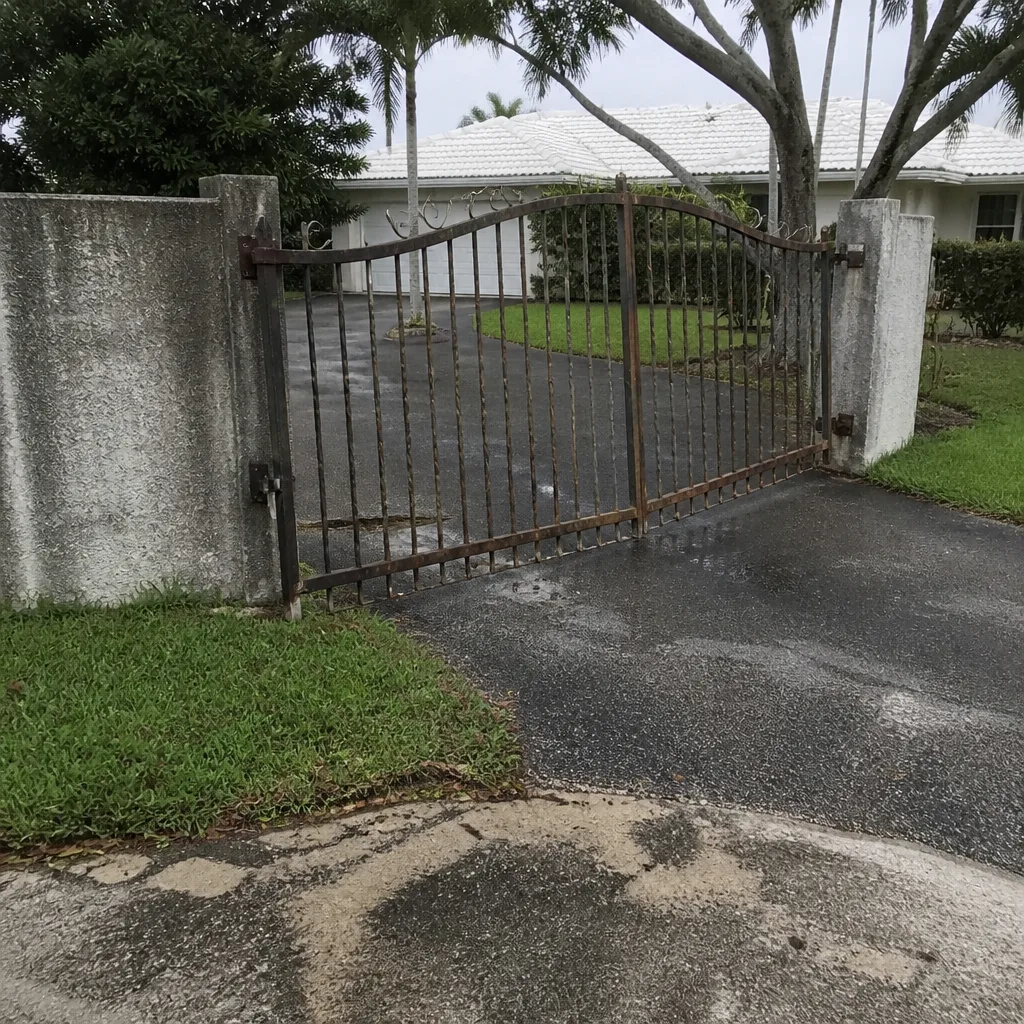 Before
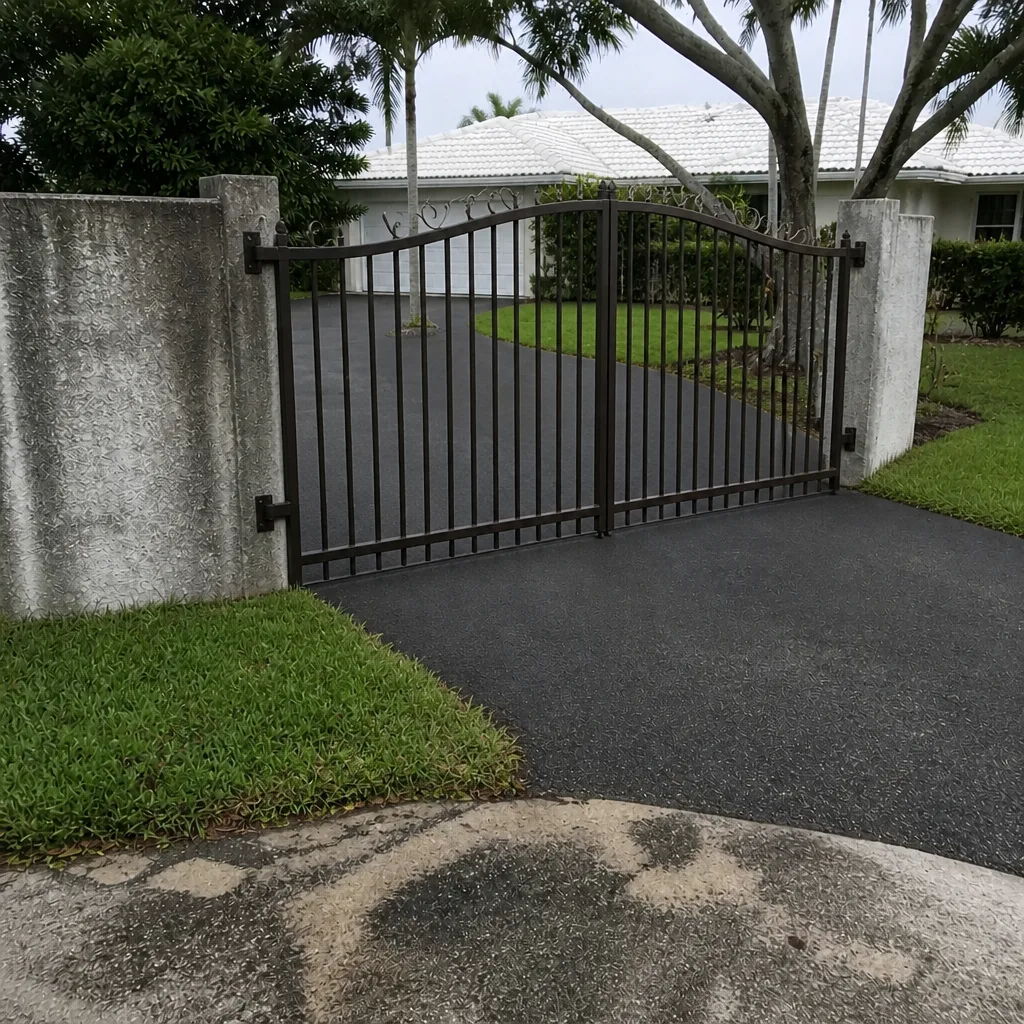 After
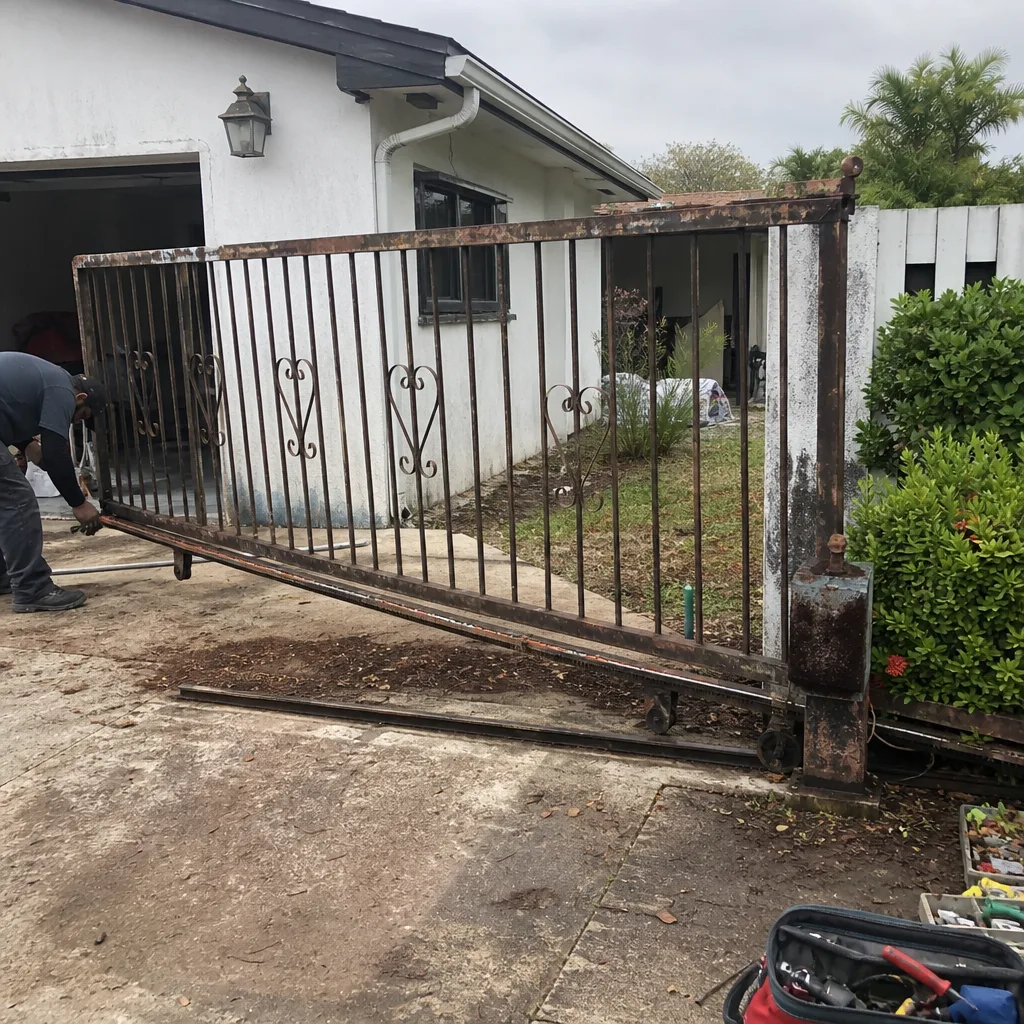 Before
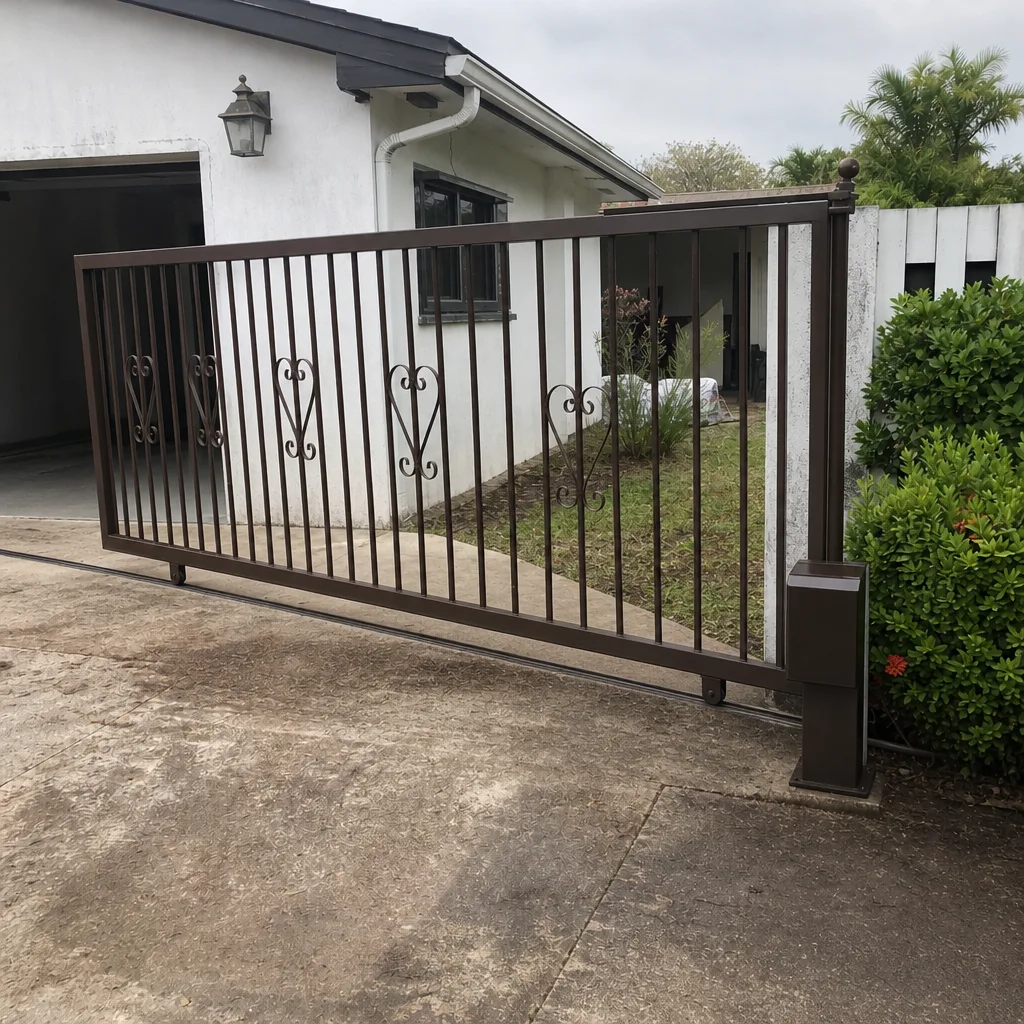 After
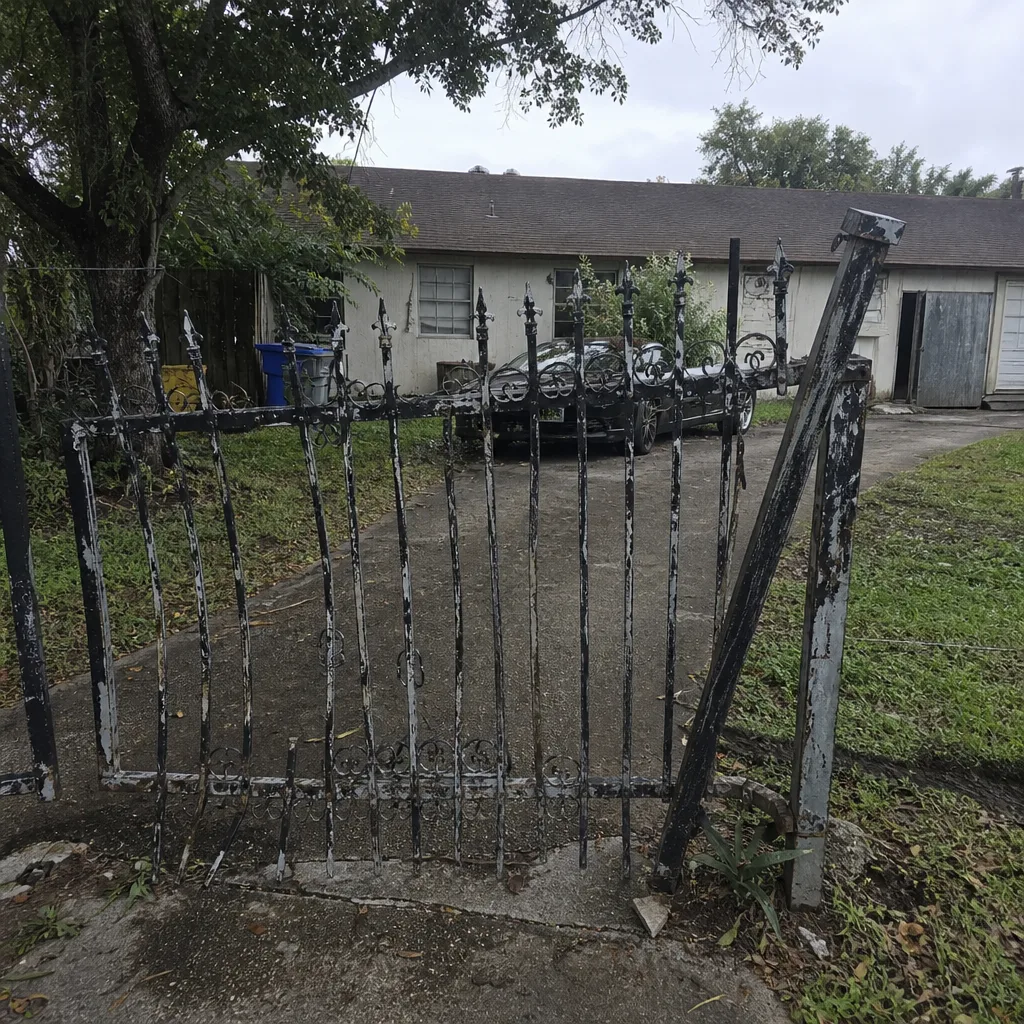 Before
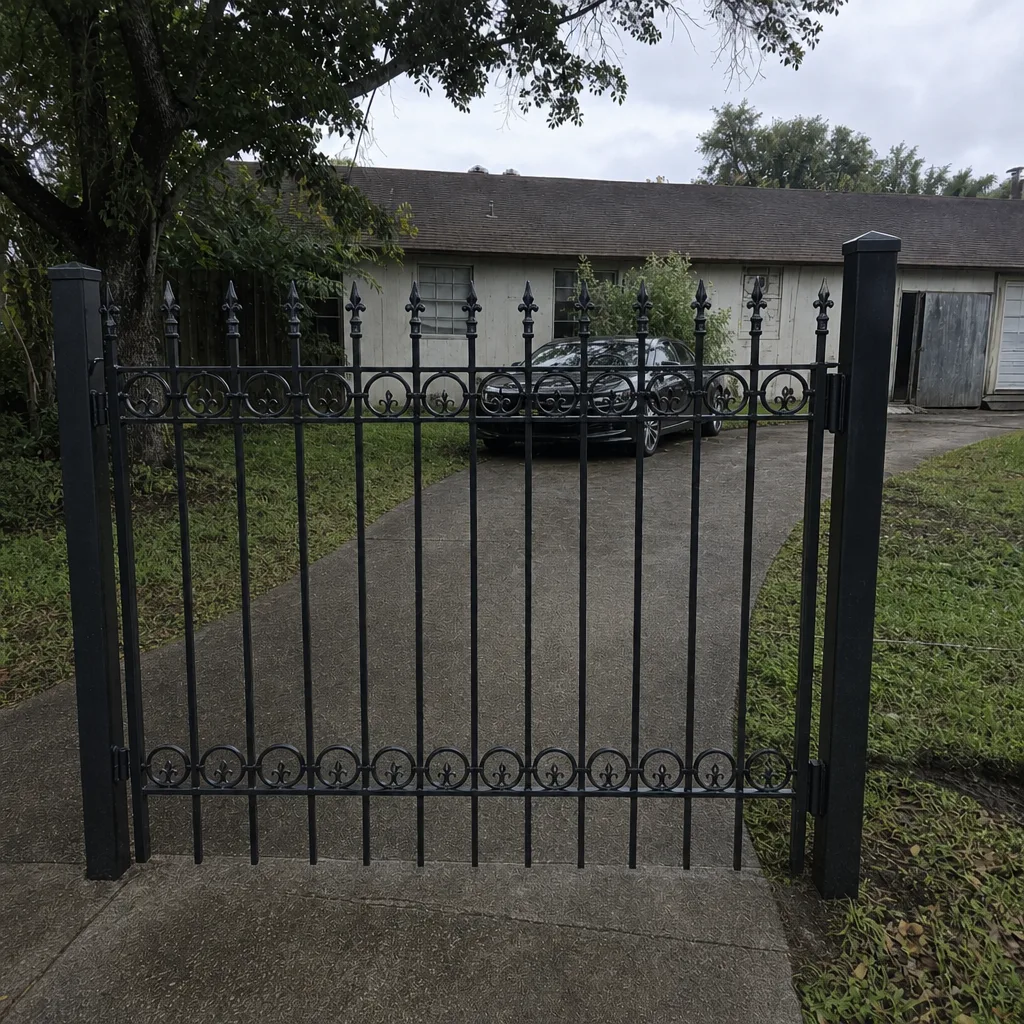 After
When to Call a Professional
The short version: call a professional whenever the task touches line voltage, the operator’s internals, or a heavy gate panel – and call the moment you’ve tried a fix twice without lasting success. In our experience, the calls that reach us in Davie split roughly into three groups: homeowners who tried a DIY repair that made the fault harder to trace, homeowners who had a real safety issue they couldn’t see, and property managers with an HOA or commercial gate that needs a documented repair. All three benefit from a trained eye early rather than a second attempt later.
We handle diagnosis, repair, and full installation, so you don’t need a second contractor if the system is beyond repair. Gate Repair Davie offers free estimates in Davie – call (877) 802-1841. If your gate needs a technician for something bigger, gate repair and a full replacement estimate can both come from the same visit. For a broader view of everything we handle across the area, start at Gate Repair Davie.
Frequently Asked Questions
You can safely perform access-zone tasks yourself – reprogramming a remote, cleaning sensors, light lubrication, and the manual release during an outage – but anything involving the operator’s wiring, control board, motor, or limit switches should be left to a licensed technician. The dividing line is risk, not skill. A knowledgeable homeowner with the manual can handle more than a generic guide implies, but not the parts that touch line voltage.
Yes. The line-voltage power feed to a gate operator is electrical work governed by the National Electrical Code as adopted by Florida and enforced locally, and in most jurisdictions that work must be done by a licensed electrical contractor. Gate operator installation usually requires a permit from the local building department, so confirm the current requirement with Davie’s building department before any work begins. A technician who isn’t licensed for electrical work shouldn’t be touching your power feed either.
Sometimes, depending on the manufacturer and what you do. Reprogramming remotes, cleaning sensors, and basic lubrication typically don’t affect coverage. Opening the enclosure to modify the control board, adjusting limit switches beyond the manual’s procedure, or any line-voltage work usually does. Read the paperwork that came with your operator – it states the coverage terms in plain language, and it’s the only authority on the question for your specific unit.
First, check that the manual release is fully re-engaged – a half-engaged release is the most common cause of a gate that won’t respond after an outage. Then confirm the breaker hasn’t tripped and your remote battery is good. If the gate still won’t move, the release mechanism may be seized or the operator’s control board may have lost its travel settings. Do not force the release or the panel. Call (877) 802-1841 – we answer 24/7, and dispatch runs from 7am to 7pm, Sunday through Friday.
We don’t quote flat prices over the phone, because the cost depends on the failure and the brand. What we can tell you is that the estimate is free and the price is set per job in a written estimate that you agree to before any work begins. Call (877) 802-1841 for an exact quote – estimates are free.
Usually, yes, and more often than owners expect. A commercial-grade operator from a brand like BFT or DoorKing is built to be serviced, and the failure is usually a specific component – a control board, a safety loop, a motor capacitor – rather than the whole system. In our experience, repairing the actual cause is far cheaper than replacement. A technician who knows the brand can tell you within one visit whether repair or replacement makes sense. If replacement is the honest answer, we can install a new system on the same visit, so you’re not calling a second contractor.
The Bottom Line
The DIY-or-pro question comes down to zone and risk, not confidence. Handle the access zone – remotes, sensors, light lubrication, and the manual release – and leave the control and power zones to a trained technician who works on operators every day. Respect Florida’s electrical code, understand what voids your warranty, and don’t let a shimmed hinge become an operator failure. That’s the whole game. If you’re not sure where your task lands, our technicians have up to 11 years of experience across nine major gate brands, and a free estimate in Davie will settle the question fast. Call (877) 802-1841 – we answer 24/7, with fast dispatch from 7am to 7pm, Sunday through Friday. Every job is quoted and agreed in writing before work starts. For homeowners across Davie, that means no surprises on the invoice.
Written by the team at Gate Repair Davie.