
Last updated November 15, 2026
 Wrought iron
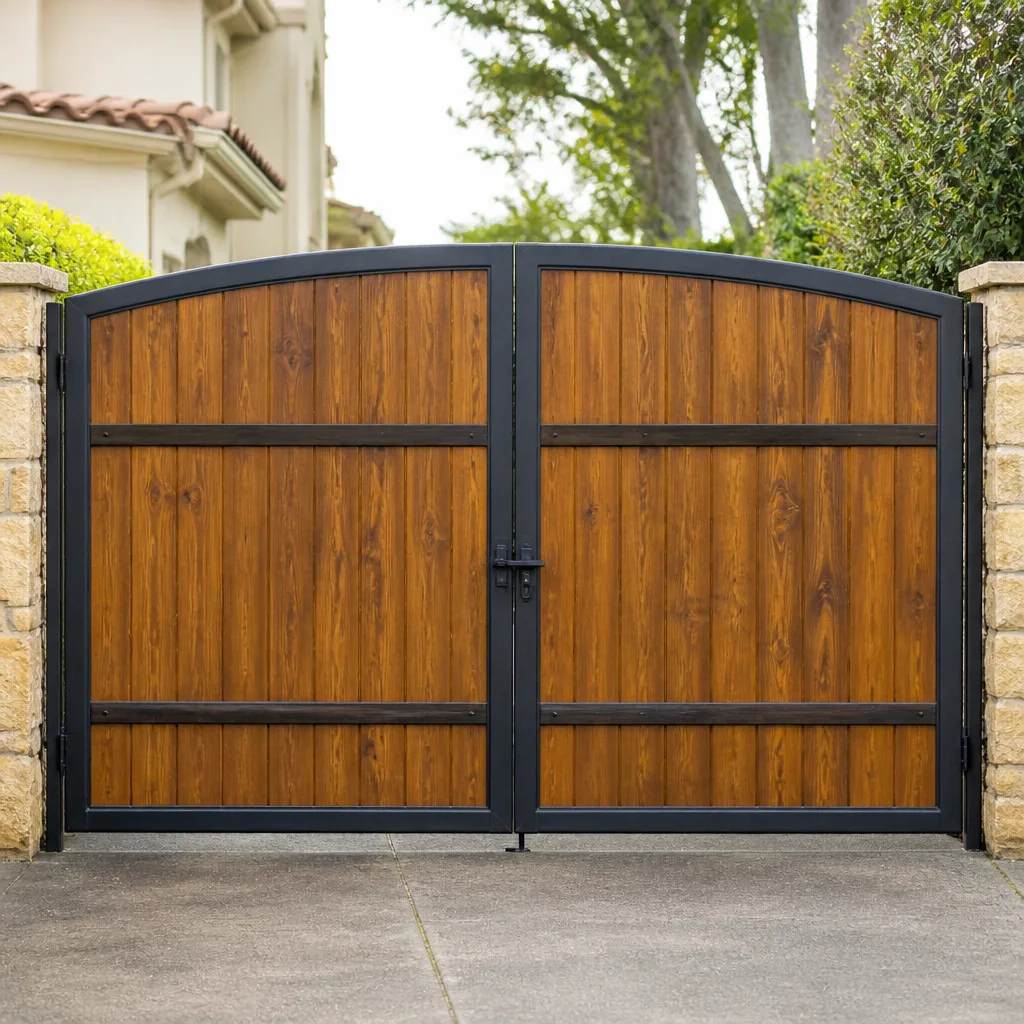 Wood & steel frame
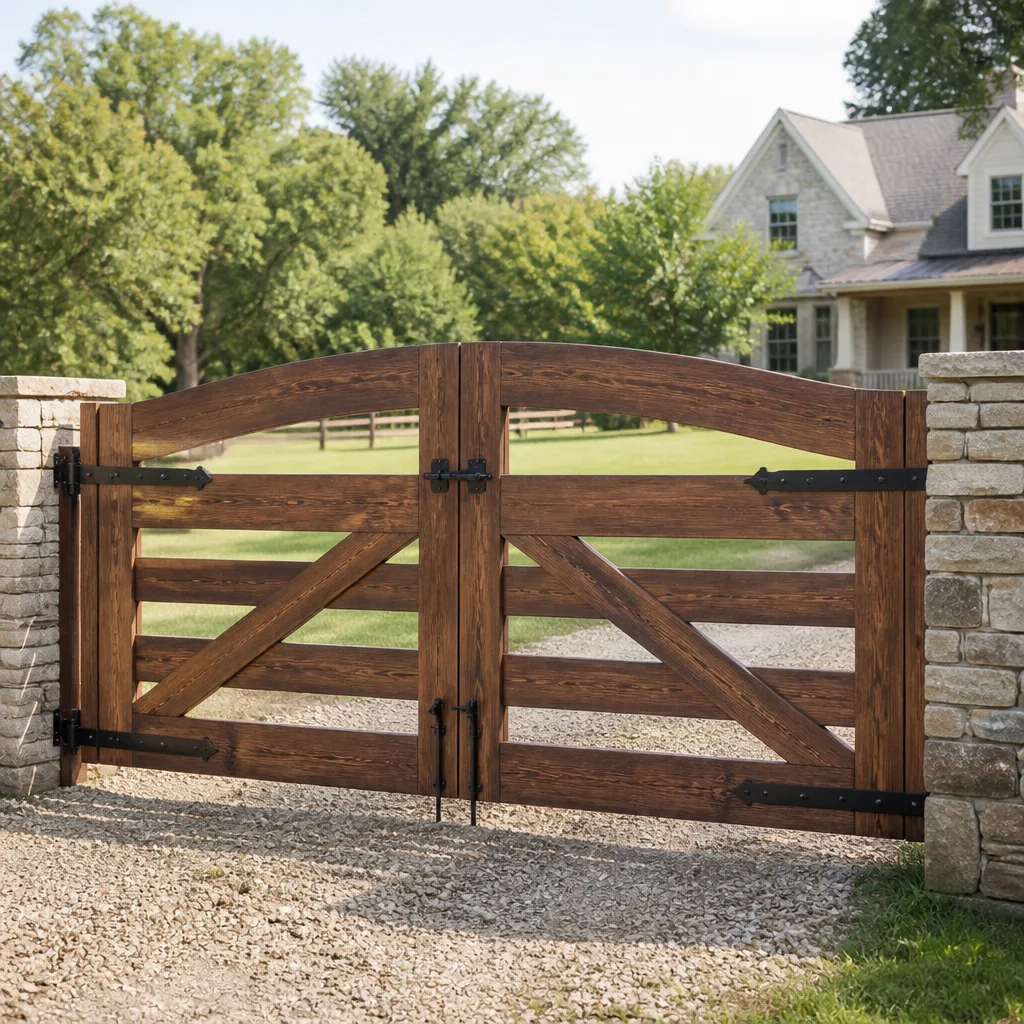 Farm & ranch
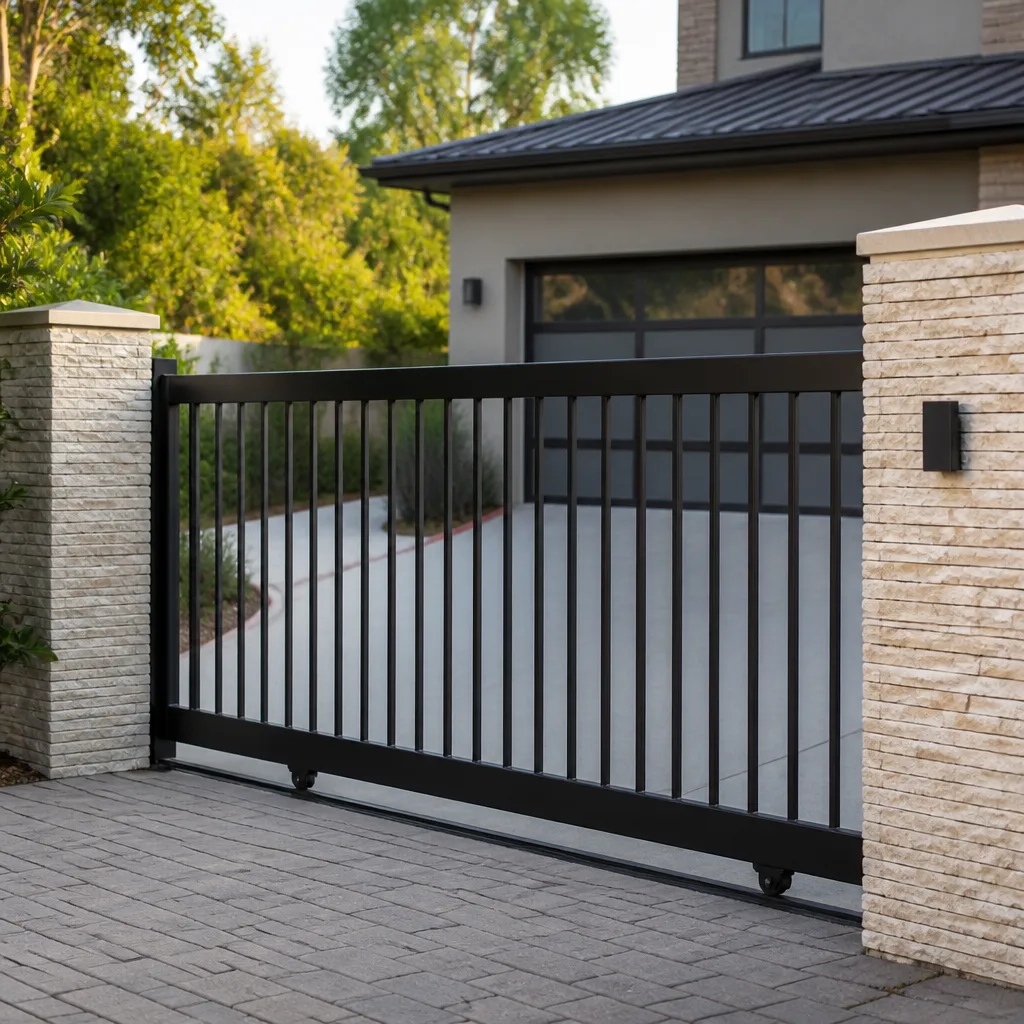 Sliding driveway gates
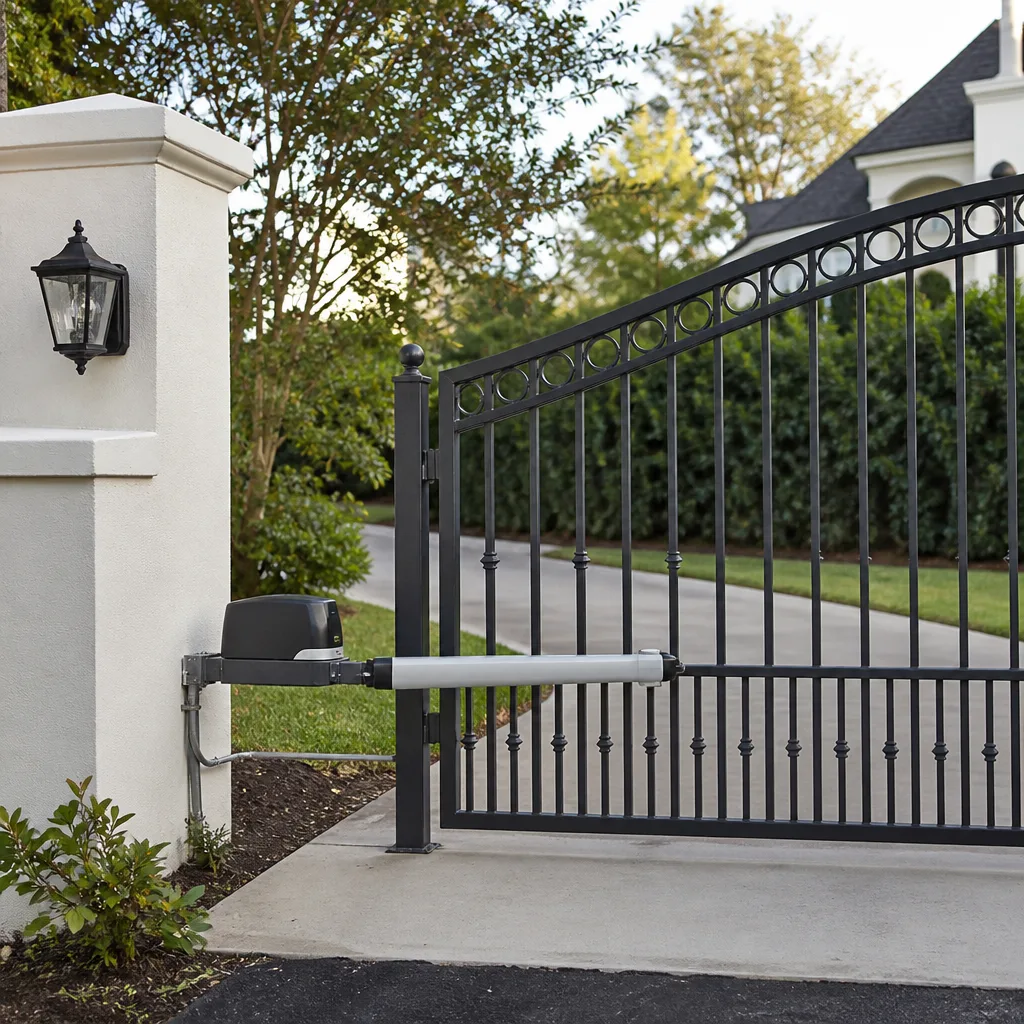 LiftMaster operators
Free on-site gate assessment - hinges, posts, and your LiftMaster or Nice gate operator checked before anything is quoted
The assessment is free and the quote is the invoice.
Get your free estimateGate Repair Maintenance Schedule: What to Do and When
Most gate maintenance advice assumes every gate is the same. It isn’t. A swing gate at a busy Davie HOA entrance cycling 80 times a day wears mechanically like a commercial system, and treating it like a quiet driveway gate is exactly how operators fail long before their rated cycle life. The schedule that keeps a gate alive has to come from the gate itself: its drive type, its material, and the traffic it actually handles. In this guide we’ll show you how to build a maintenance calendar around your real system, from cycle counts to wet-season inspection to a written log your technician will thank you for.
Quick Answer
A gate maintenance schedule should be built from three things: your gate’s actual daily cycle count, its drive type (chain, rack-and-pinion, or arm), and South Florida’s seasonal swings. Most residential gates in Davie need a light inspection monthly, lubrication every 3 to 6 months, and a full professional check annually; gates above roughly 40 cycles a day should move to quarterly professional service. Battery backup load-testing and hardware torque checks belong on every schedule, not just the annual one.
Styles & brands we work with
- Wrought iron
- Wood & steel frame
- Farm & ranch
- Sliding driveway gates
- LiftMaster operators
Table of Contents
- How to Calculate Your Gate’s Daily Cycle Count
- What Maintenance Interval Your Cycle Rate Demands
- Drive-Type Lubrication: Chain vs. Rack-and-Pinion in Florida Heat
- Seasonal Inspection: Wet Season vs. Dry Season in Davie
- Battery Backup Health Checks Most Guides Skip
- Safety Edges, Loops, and Hardware: The Monthly Walk-Around
- Build a Written Gate Log That Protects You
- What You Can Check Yourself and What Needs a Technician
How to Calculate Your Gate’s Daily Cycle Count
Cycle count is the single most useful number in gate maintenance, and almost nobody measures it. One cycle is one complete open-and-close sequence. The operator doesn’t care how many cars you think pass through; it cares how many times the motor ran. Those aren’t the same thing, and the gap between them is where premature failures hide.
Here’s how to get a real number in a week:
- Count entries and exits separately. A vehicle that drives in and later drives out is two cycles, not one. Homeowners routinely halve their own number without noticing.
- Add pedestrian and service traffic. A separate walk gate driven by the same operator family counts. So does a delivery driver who pulls up, waits, and leaves.
- Include manual cycles. Every time someone releases the operator and pushes the gate by hand, the hinge and rollers still wear even though the motor didn’t run.
- Multiply across residents or tenants. For an HOA or commercial property, take the busiest weekday count and multiply by the number of households or units that actually use the gate.
- Watch the weekend pattern. Many Davie communities see peak traffic on Sunday mornings and quiet weekdays. Use the busiest day, not the average, because peak days set the wear rate.
A single-family home might see 15 to 25 cycles a day. An HOA entrance on a busy Davie street can easily hit 60 to 100. An automated commercial driveway near a retail center can run into the hundreds. That range is why a single published “annual maintenance” recommendation doesn’t fit every gate. Once you know your real number, the rest of the schedule falls into place.
What Maintenance Interval Your Cycle Rate Demands
The operator’s rated cycle life is a guide, not a promise. A residential-grade LiftMaster or Mighty Mule arm operator rated for a certain number of cycles assumes a certain duty level. Push it past that in daily use and you’ve turned a residential gate into a commercial load without the commercial hardware to match. That’s the most common cause of early motor and control board failures we see in Davie.
Match your interval to your number:
- Under 25 cycles a day: light monthly visual check, lubrication every 6 months, full professional service once a year.
- 25 to 40 cycles a day: monthly visual check, lubrication every 3 to 4 months, professional service annually.
- 40 to 80 cycles a day: monthly check with hardware torque inspection, lubrication quarterly, professional service every 6 months.
- Over 80 cycles a day: weekly visual walk-around, lubrication every 6 to 8 weeks, professional service quarterly, and a hard look at whether the operator is sized for the actual traffic.
Two caveats. First, dust and debris accelerate wear, so a gate near a construction entrance or unpaved shoulder may need everything one step sooner. Second, an automated gate with a high cycle count is often a candidate for a commercial-grade operator swap when the current unit finally gives out. A quality gate repair schedule buys you time; the right equipment choice buys you years.
Drive-Type Lubrication: Chain vs. Rack-and-Pinion in Florida Heat
Not every drive gets the same grease, and not on the same schedule. South Florida heat changes the equation because oils thin faster and greases separate sooner than in cooler climates. What lubricates well in a mild spring can run off a chain by July.
Chain-Drive Operators
Chain-drive systems need a light, tacky lubricant that stays on the links without collecting grit. The chain acts like a conveyor for dust, so heavy grease attracts debris and works against you. Inspect for slack and dry links every 4 to 6 weeks in the hot months. A chain that’s dry on the underside of each link is overdue. In Florida heat, we generally shorten the interval by a third compared to cooler markets.
Rack-and-Pinion Systems
Rack-and-pinion drives – common on FAAC and BFT sliding systems – want a proper moly or lithium grease on the rack teeth, applied sparingly. Too much grease makes a magnet for grit and wears the pinion faster. Clean the rack, apply a thin film, and check the drive pinion for wear at the same time. These systems can go 6 to 8 months between greasings in a mild climate but need a check every 3 months in Davie’s peak summer.
Arm and Screw Drives
Articulating arm operators (many LiftMaster residential units) and screw drives have specific grease points on the arm joints and, for screw units, in the sealed gear housing. Manufacturer spec often dictates the grade. We use the spec unless the system is old enough that a compatible replacement grade is chosen carefully.
Lubrication Rule of Thumb
- Clean first. Grease over grit grinds.
- Apply sparingly. More is not better.
- Use the right product for the drive type.
- Wipe away excess so it doesn’t attract dust.
- Log the date and product used, because the next technician will want to know.
Seasonal Inspection: Wet Season vs. Dry Season in Davie
Davie’s summer wet season runs roughly May through October, with heavy afternoon rain and high humidity. The dry season is cooler and drier. Corrosion and wear patterns differ between the two, and your inspection list should reflect that.
Wet Season Checklist (Pre- and Mid-Season)
- Water intrusion. Check the operator housing and control box for moisture. Standing water in a control enclosure is a fast path to circuit board failure.
- Drainage around posts. Heavy rain exposes footing issues. A post that shifts after a storm means the gate swings off-square and the operator works harder.
- Safety loop and sensor performance. Wet ground can affect buried vehicle loops and photo-eye alignment. Test them after the first heavy rains.
- Battery health. Heat is hard on lead-acid batteries. Wet season heat plus a failing battery equals a gate that won’t open during a power outage.
- Lubrication re-check. Grease that ran off in June heat needs reapplying by August.
Dry Season Checklist
- Dust and grit. Dry-season dust accumulates in tracks and on racks. Clean and inspect for abrasion.
- Hinge, roller, and pivot wear. Dry-season load reveals what the wet season masked.
- Structural alignment. Check that the gate hangs level; any sag is easier to address early.
- Control board health. Run a full operational test, including the remote and keypad.
- Fastener torque. Loose bolts show up when the whole system has had dry months to settle.
Property managers in the Davie area get the most out of a pre-wet-season inspection in April and a pre-dry-season service in October. Both dates let you catch seasonal issues before they compound.
Battery Backup Health Checks Most Guides Skip
A voltage test tells you a battery is charged, not that it can carry a load. This is the single biggest gap we see in maintenance guides and the single most common reason a gate goes dead during a storm when it should have kept working. A tired battery can read a healthy voltage at rest and collapse the moment the motor draws current.
Here’s the check that matters:
- Note the resting voltage. A fully charged backup battery should read in its rated healthy range. If it’s already low, it’s failing.
- Run a load test. Trigger the gate cycle while the battery is the power source. Watch how the motor responds. A sluggish cycle or a slowdown partway through signals a battery that can’t deliver current.
- Watch the cycle time. Compare the battery-powered cycle to a mains-powered cycle. A noticeable difference means the battery is weak.
- Inspect the terminals and cables. Corrosion, loose lugs, and cracks in the casing all shorten life.
- Check battery age. Lead-acid backup batteries usually have a defined service life. In Florida heat, they age faster than the label suggests.
Do this every 3 to 6 months on a high-cycle gate, and at the start of the wet season at minimum. When the battery does fail, the operator’s fault code usually tells you. Getting there early is what keeps the gate running through a power event.
Safety Edges, Loops, and Hardware: The Monthly Walk-Around
A monthly five-minute walk-around catches most problems before they become repairs. Walk the full gate cycle three times: once from the outside, once from the inside, and once while a helper stands where a child would be.
- Safety edges. Press the rubber strip along the leading edge while the gate is closing. It should reverse immediately. Test both the primary edge and any auxiliary edge.
- Photo-eyes and safety loops. Wave a hand in front of the photo-eye while closing. Park a car over any buried loop to confirm detection.
- Hardware. Look for loose bolts, worn hinges, and play in the pivots. Rattles that weren’t there last month are a warning.
- Gate travel. The gate should open and close fully without slamming or hitting a stop hard. An arm or slide gate that bangs the stop at full speed is a sign the limit settings are drifting.
- Manual release. Locate the release mechanism and confirm it operates. You don’t want to discover a seized release mid-emergency.
Wiring and power components are not part of a homeowner’s routine inspection. If you see exposed conductors, a scorched enclosure, or smell something burning near the control box, stop and call a professional.
Build a Written Gate Log That Protects You
A written log turns maintenance from guesswork into a documented history. It helps your technician diagnose faster, and it’s the difference-maker when a warranty claim comes up. Most guides skip this step; we think it’s the most underrated maintenance tool you have.
Keep a simple notebook or sheet taped inside the control enclosure. Log:
- Date and cycle count snapshot. A quick estimate is fine.
- What you did. Lubrication type, battery check, hardware tightening, etc.
- What you noticed. “Slight wobble on the left hinge,” “chain had visible slack.”
- What changed. New remote, new battery, new photo-eye alignment.
- Who worked on it. Self or service company name.
- Parts replaced. Brand and model when printed on the part.
When you call in a repair or a full professional service, having the log in hand cuts diagnostic time. When a manufacturer asks about the failure, the log is the record you need. When you eventually sell a Davie property with an automated gate, the log is proof the system was cared for.
What You Can Check Yourself and What Needs a Technician
Some maintenance is genuinely yours to do. Some of it involves electrical components, heavy gate panels, and the risk of crushed hands or worse. Knowing the line is what keeps you safe and keeps your gate working.
Safe for You
- Visual inspection of hinges, hardware, and gate travel.
- Lubricating the drive per manufacturer spec.
- Testing safety edges, photo-eyes, and loop detection.
- Testing the manual release.
- Running a battery load test.
- Replacing the remote battery.
- Keeping the written log.
Needs a Trained Technician
- Any work inside the control box or on the operator wiring.
- Control board diagnosis or replacement.
- Motor, gearbox, or drive unit service.
- Safety loop or photo-eye installation and rewiring.
- Adjusting limit switches that need to be recalibrated.
- Structural work on posts, mounting hardware, or heavy gate panels.
- Any problem with a gate that isn’t moving at all.
Electric gate repair work involves live wiring and heavy moving parts, so we recommend a trained professional for anything on the second list. If you’re in Davie and want a straight answer about what your gate needs, our electric gate repair team can diagnose it on a service visit. For everything from a failing sensor to a full system check, gate repair in Davie starts with a free estimate and a written price before any work begins.
Common Mistakes to Avoid
- Treating a high-cycle gate like a low-cycle one. An HOA entrance cycling 80 times a day needs quarterly service, not annual. The average maintenance advice on the internet doesn’t account for this and it shortens operator life.
- Greasing everything with the same product. Chain drives and rack-and-pinion systems have different requirements, and the wrong grease in Florida heat either runs off or attracts grit. Match the product to the drive.
- Trusting a voltage test on the backup battery. A rested battery reads healthy even when it can’t carry the motor. Load-test it or you’ll find out during a storm.
- Skipping the safety edge test. It’s the single most important safety feature on an automated gate, and it’s the fastest thing to check. Test it monthly.
- Ignoring small hardware movement. A hinge that jiggles becomes a sagging gate, which becomes a worn motor. Fix the small thing before it becomes the big thing.
- No written log. Every service visit, every part change, every issue belongs in a notebook. Without it, warranty claims get complicated and diagnostics slow down.
- Not adapting the schedule to the season. Davie’s wet season and dry season reveal different problems. Inspections timed to each season catch more than any single annual check.
See the difference
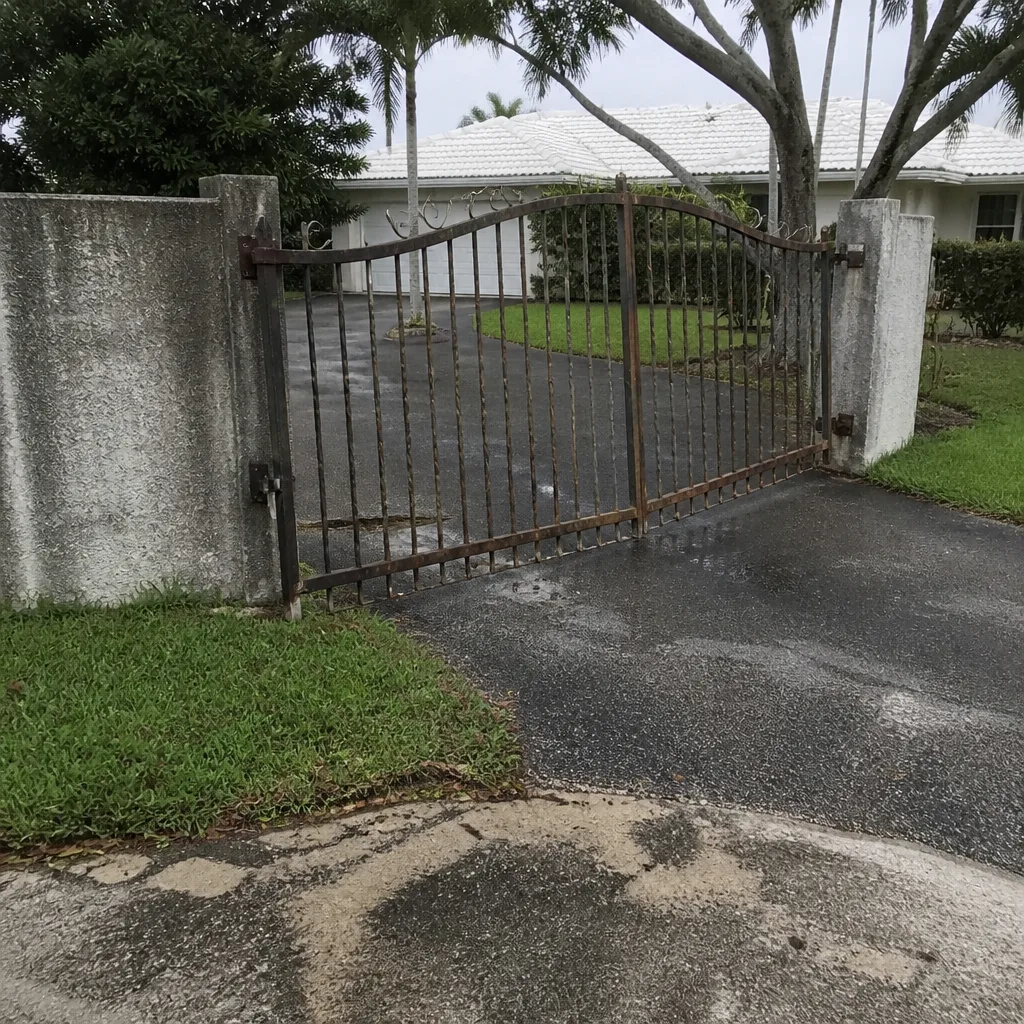 Before
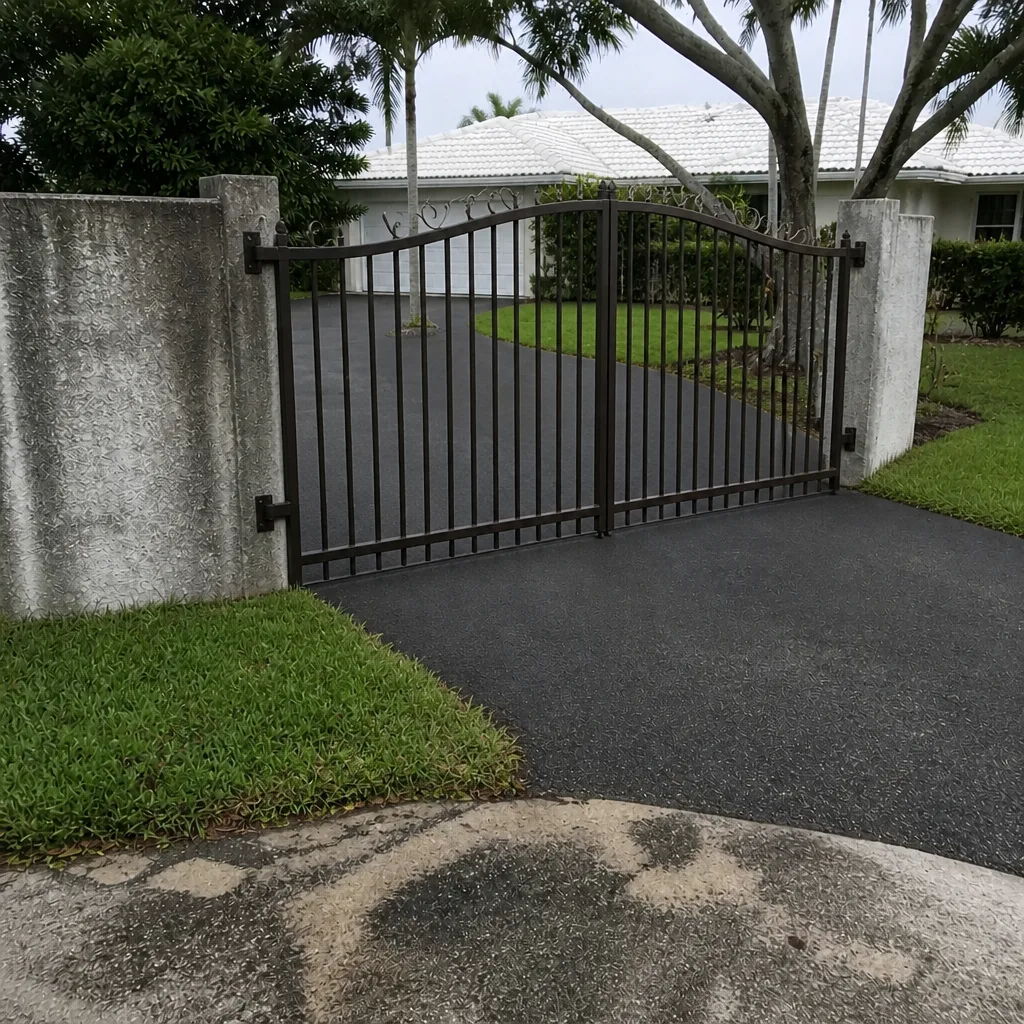 After
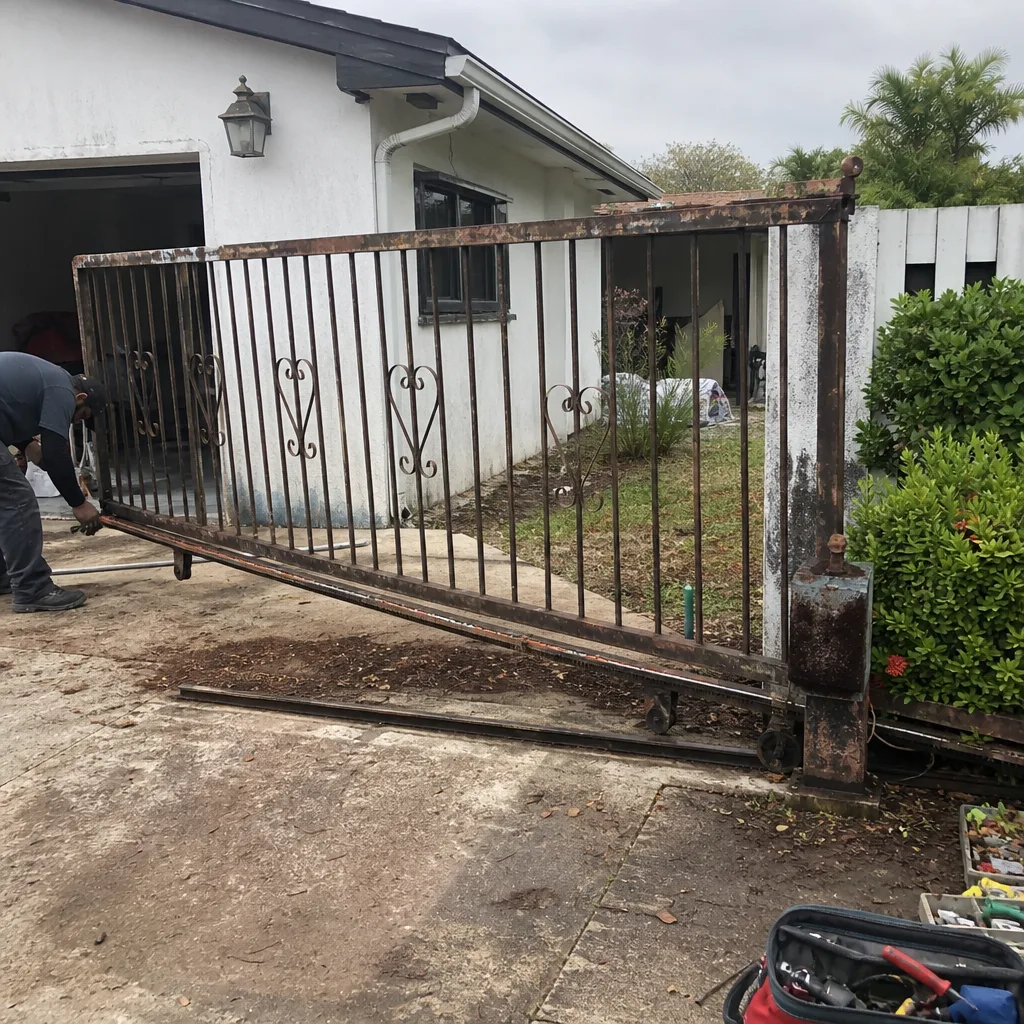 Before
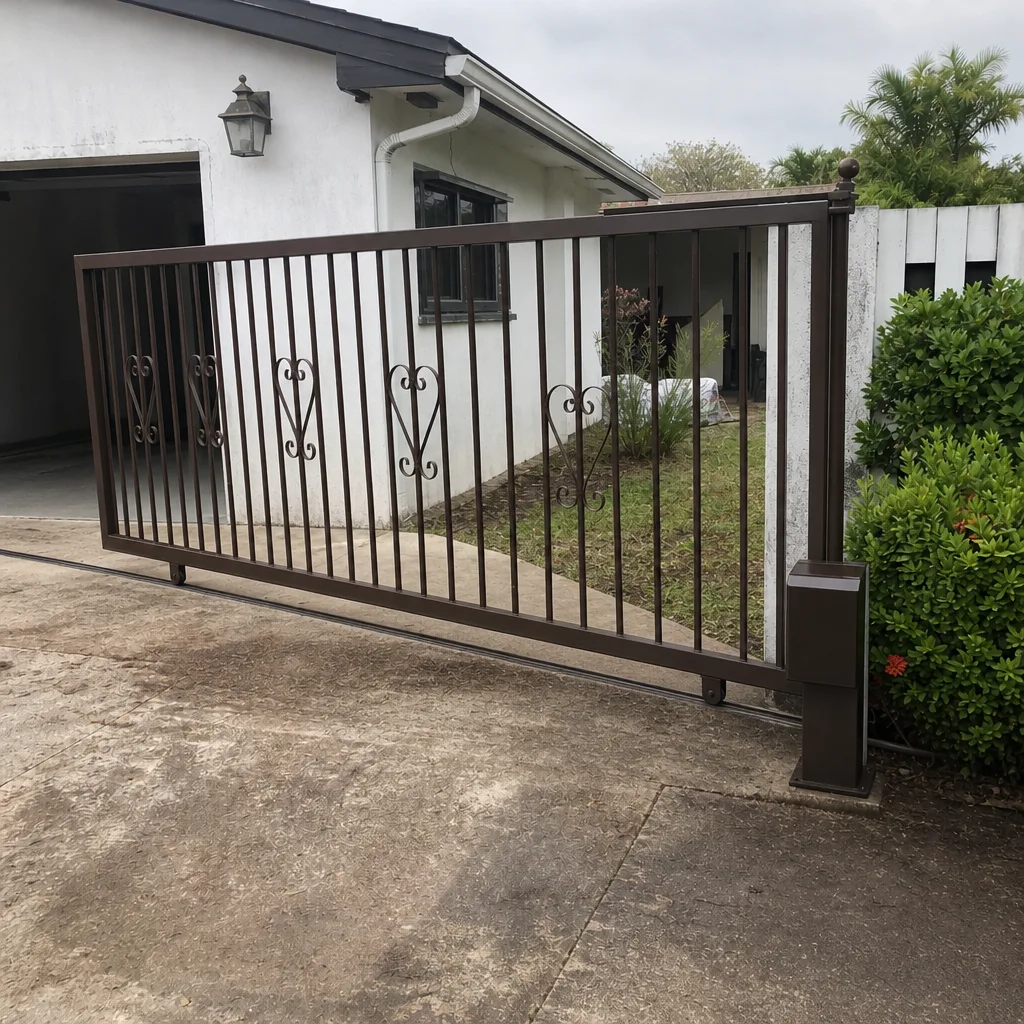 After
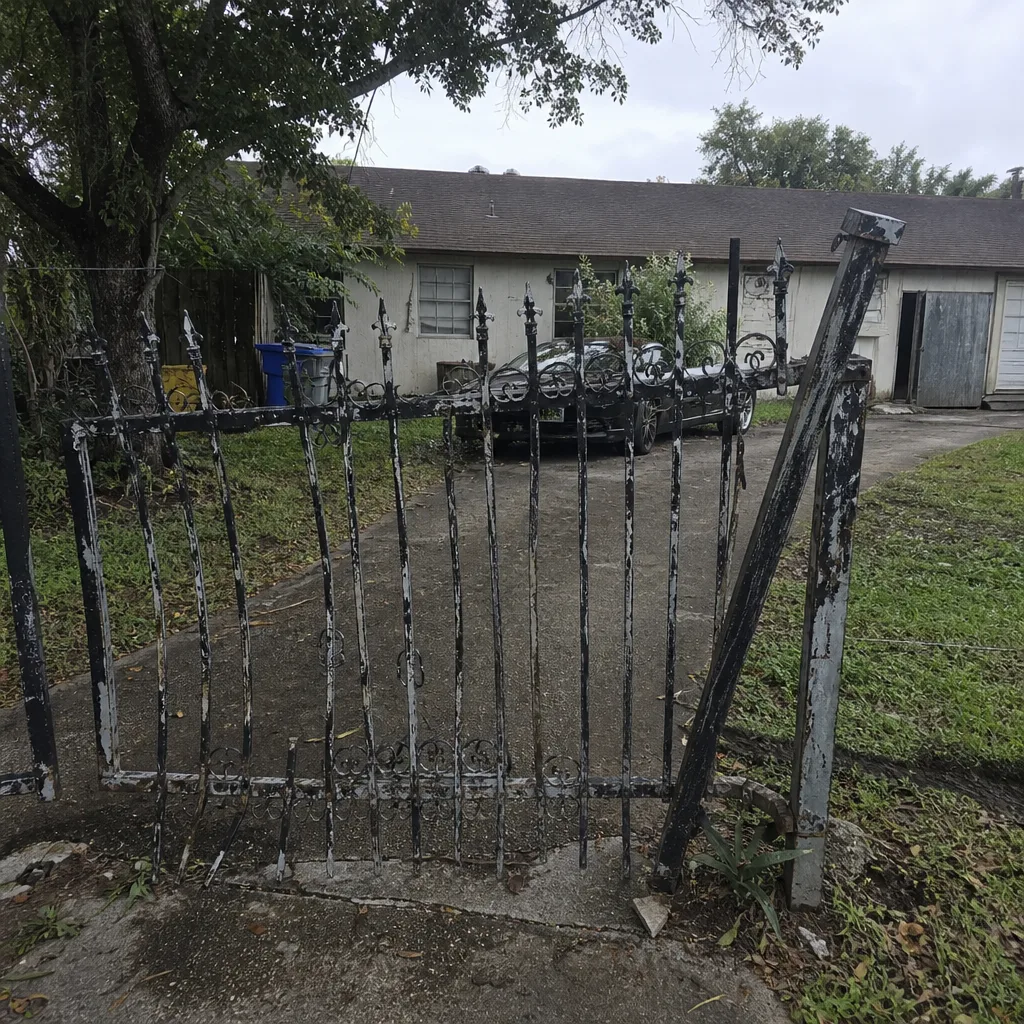 Before
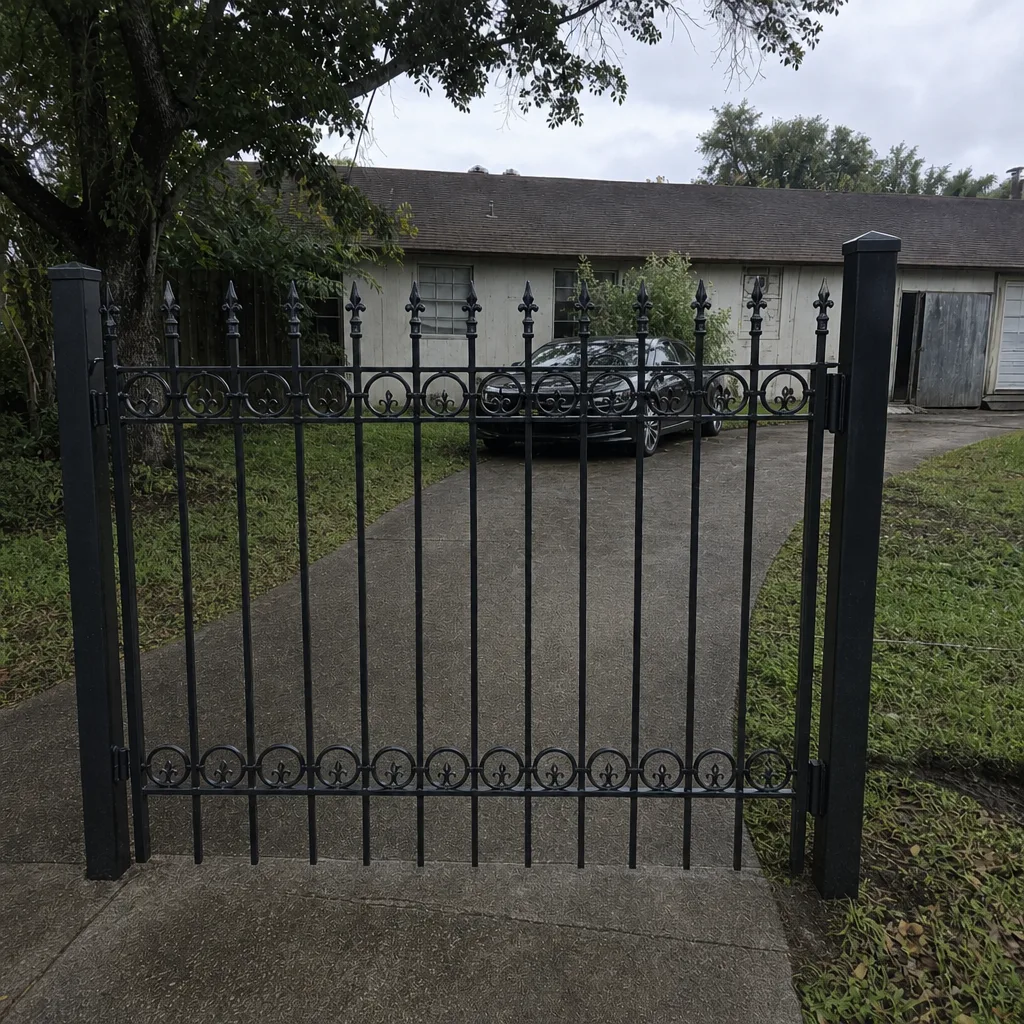 After
When to Call a Professional
Any of these are reasons to stop and call:
- The gate won’t move at all, or stops mid-cycle.
- The operator runs but the gate stays put – usually a drive or limit issue.
- The safety edge or photo-eye fails to reverse a closing gate.
- You see scorching, exposed wiring, or smell burning near the control box.
- The gate has partially come off its track or hangs noticeably off-level.
- Remote troubleshooting doesn’t resolve a control board fault code.
- The system is over 80 cycles a day and hasn’t had professional service in more than 6 months.
Gate Repair Davie offers free estimates in Davie for gate repair and electric gate repair. Our technicians work on the gate you have – whether it’s a Mighty Mule residential arm, a LiftMaster operator, or a FAAC commercial system. Call (877) 802-1841 and we’ll get it working again. We answer 24/7. Fast dispatch from 7am to 7pm, Sunday through Friday.
Frequently Asked Questions
Most Davie residential gates need a full professional service annually, but gates that cycle more than 40 times a day should be serviced every 6 months, and commercial-grade or HOA entrance systems at 80+ cycles a day should see quarterly service. The interval depends on your actual cycle count, drive type, and seasonal exposure more than a calendar date. Call (877) 802-1841 for a free estimate and we’ll help you pin down the right interval for your gate.
Count every open-and-close as two cycles, add pedestrian and service traffic, account for manual cycles, and multiply by the number of households or units the gate serves. Use your busiest weekday, not an average, because peak days set the wear rate. A single-family home runs 15 to 25 cycles a day; a busy Davie HOA entrance can reach 60 to 100.
Yes, lubricating the chain, rack, or arm per the manufacturer spec is safe for a homeowner. Use the correct product for your drive type and apply it sparingly. Work on the control box, wiring, motor, and drive unit should go to a trained technician because it involves live components and heavy moving parts.
Heat is the main factor. A lead-acid backup battery in Florida heat ages faster than the label suggests, and a battery that hasn’t been load-tested can look healthy right up until you need it. Load-test every 3 to 6 months and at the start of every wet season. Call (877) 802-1841 for a battery check and a free estimate on replacement.
Gate repair covers the mechanical side – hinges, tracks, rollers, hardware, structural alignment. Electric gate repair covers the motor, control board, safety sensors, and remote access system. Most gate failures combine both, which is why we look at the whole system on a service visit. For a Davie property, our Davie team handles both under one contact.
A maintenance visit is a diagnostic and preventive service – inspection, lubrication, testing, and a written summary of anything that needs attention. Repairs are quoted separately and agreed with you before any work starts. That means no surprise invoice; the written estimate sets the final price.
The Bottom Line
A good gate maintenance schedule isn’t copied from a generic checklist – it’s built from your actual gate. Measure your cycle count, match your interval to the traffic, use the right lubricant for your drive type, time your seasonal inspections to Davie’s wet and dry cycles, load-test your battery rather than trusting a voltage reading, and keep a written log that documents everything. Do those five things and you’ll get years more life out of any Mighty Mule, LiftMaster, FAAC, or BFT system than you would on an average schedule. When something’s beyond a monthly check, the Gate Repair Davie team is one call away.
Call (877) 802-1841 for a free estimate. We answer 24/7. Fast dispatch from 7am to 7pm, Sunday through Friday. Estimates are free, prices are quoted and agreed before any work starts, and our technicians have up to 11 years of experience across residential and commercial gate systems.
Written by the team at Gate Repair Davie.