
Last updated November 15, 2026
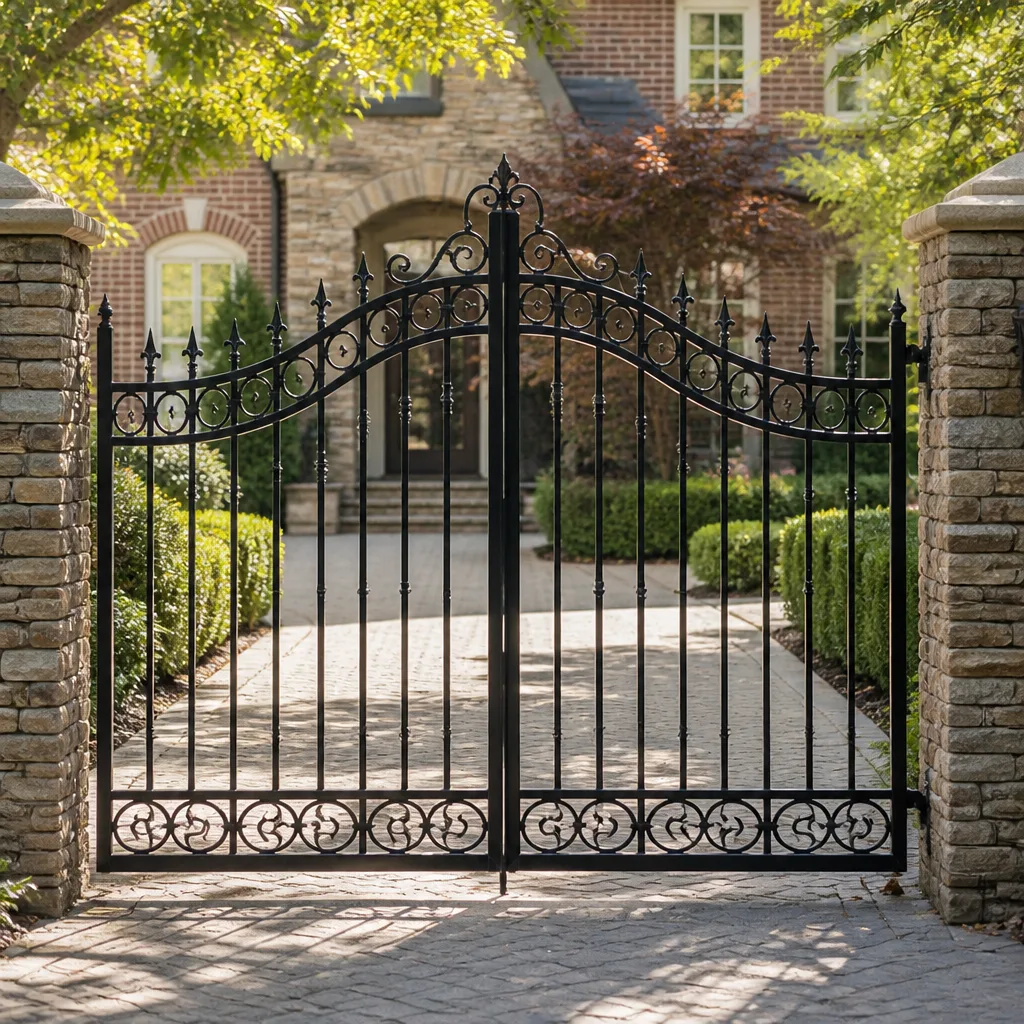 Wrought iron
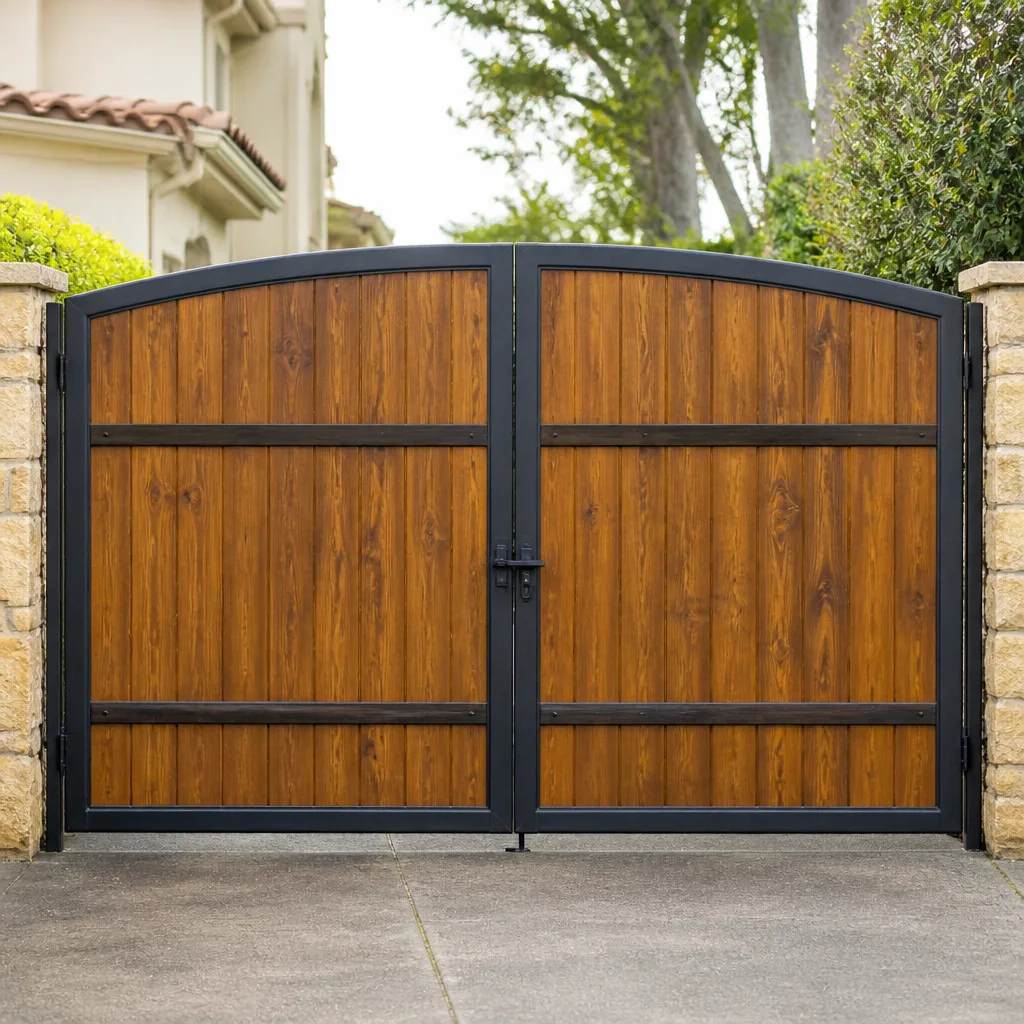 Wood & steel frame
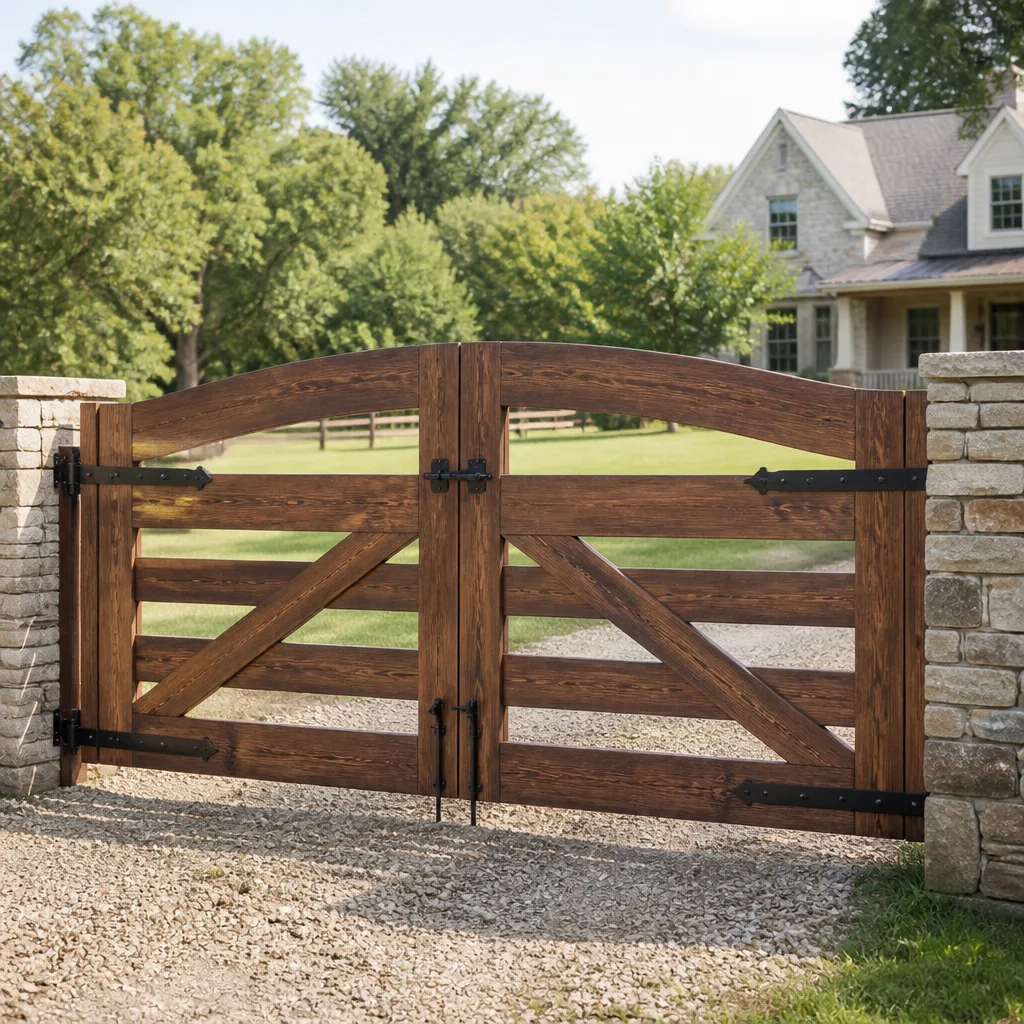 Farm & ranch
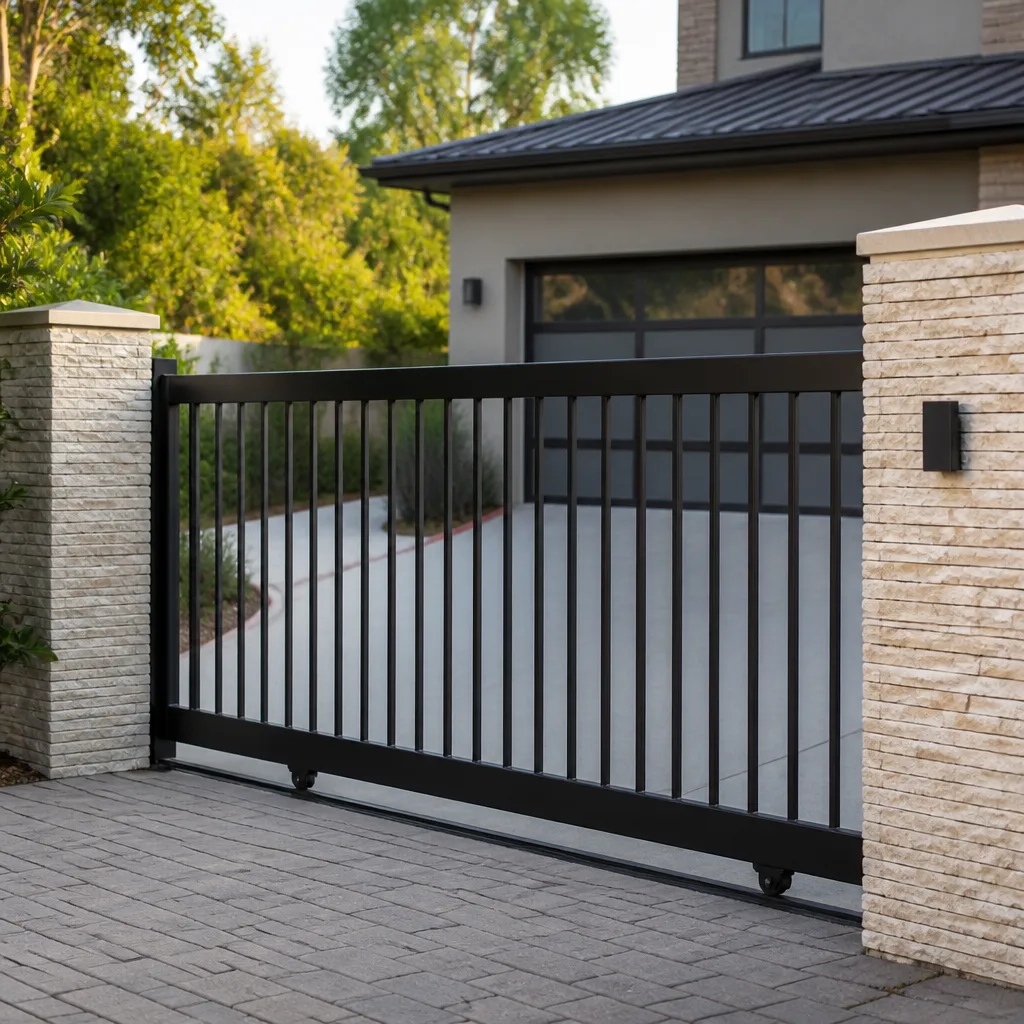 Sliding driveway gates
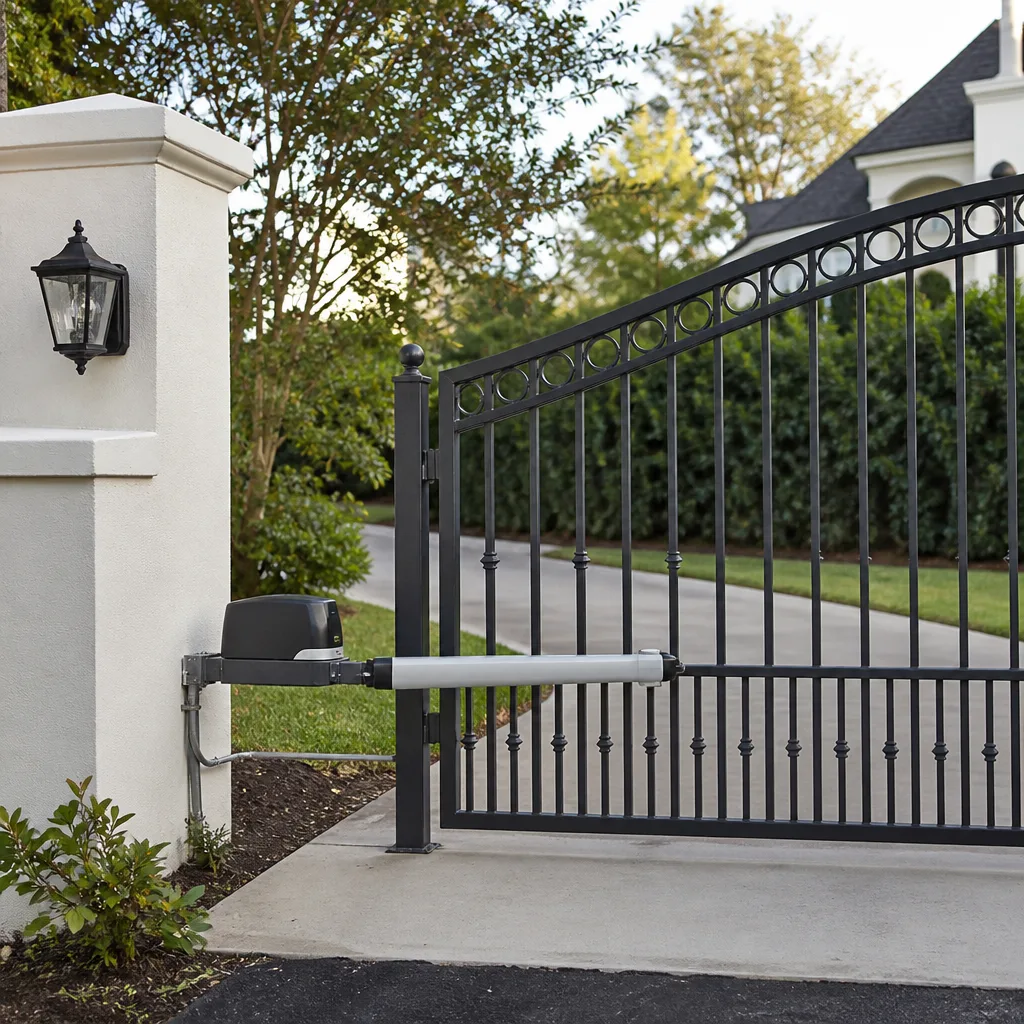 LiftMaster operators
Free on-site gate assessment - hinges, posts, and your LiftMaster or Nice gate operator checked before anything is quoted
The assessment is free and the quote is the invoice.
Get your free estimateThe Complete Guide to Gate Repair in Davie
The gate repair technician who shows up and immediately quotes you a full replacement hasn’t diagnosed your system – they’ve skipped it. That’s the most common failure in our trade, and it costs Davie homeowners real money every month. Davie’s mix of equestrian estates, HOA communities, ranch properties, and newer waterfront subdivisions means the gate systems here vary more than almost anywhere in Broward County. A LiftMaster swing operator on a quarter-acre HOA lot has almost nothing in common with a FAAC slider on an equestrian property off Southwest Ranches Road. This guide maps each common gate system in Davie to its specific failure patterns and the correct repair path, so you can tell the difference between a technician diagnosing your gate and a salesperson replacing it.
Quick Answer
Gate repair in Davie falls into three distinct categories – operator failure, structural failure, and control/access failure – and the correct fix depends entirely on which one you’re dealing with. Misdiagnosis is the single biggest reason gate repairs fail the second time, because a technician who treats a control board problem like a hinge problem will replace the wrong parts and leave you with the same broken gate. Every repair should start with identifying your system’s brand, gate type, and failure category before a single part is ordered.
Styles & brands we work with
- Wrought iron
- Wood & steel frame
- Farm & ranch
- Sliding driveway gates
- LiftMaster operators
Table of Contents
- Why Davie’s Property Types Dictate Which Gate Systems You’ll Find
- The Three Failure Categories Every Gate Owner Needs to Know
- Brand-Specific Quirks Common in Davie Installs
- How Florida Humidity Accelerates Gate Failures
- Electric Gate Repair: What’s Actually Inside Your System
- DIY-Access Brands vs. Professional-Grade Systems
- How to Verify a Repair Was Done Correctly Before the Technician Leaves
- Repair or Replace? The Honest Decision Framework
Why Davie’s Property Types Dictate Which Gate Systems You’ll Find
Davie is unusual in Broward County because it still has working equestrian acreage sitting a few minutes from dense HOA subdivisions. That mix produces gate systems that don’t cluster the way they do in a typical South Florida suburb. Walk down a street in one of Davie’s ranch-style areas and you’ll see heavy-duty slide gates on FAAC or DoorKing operators. Turn into an HOA community off Griffin Road and you’re looking at LiftMaster swing operators on decorative aluminum. Drive through the newer waterfront and estate streets and you find a third pattern: long-span slide gates with Elite or Viking operators chosen for their drive capacity.
Here’s how property type maps to the systems we work on across Davie:
- Ranch and equestrian properties: Heavy steel and tube slide gates, usually on commercial-grade operators. Posts take more load, motors work harder, and hardware wears faster because these gates cycle for vehicles, trailers, and livestock.
- HOA communities: Aluminum and ornamental swing gates on LiftMaster or Linear operators, often with keypad and transponder access. These fail on the access-control side more often than the mechanical side.
- Waterfront and estate homes: Long-span slide gates on high-torque operators like FAAC, Elite, or Viking. The gate leaf itself is heavy and the operator is under constant load, so motor and gear wear dominate.
- Newer gated subdivisions: Mixed fleets where the original installer used one brand and later repairs introduced another. This is where brand-agnostic knowledge matters most, because no single manufacturer’s parts catalog covers what’s on the property.
That mixed-fleet reality is why we work on the gate you have rather than steering every property toward one brand. A HOA manager who inherits a community with three different operator brands across five gates doesn’t need a specialist in one of them. They need a technician who’s fluent in all three. Our technicians have up to 11 years of experience across the residential and commercial systems common in Davie, and knowing what’s bolted to your fence line before the technician arrives is the fastest way to get a real diagnosis rather than a guess.
The Three Failure Categories Every Gate Owner Needs to Know
Most gate repair mistakes come from conflating three completely separate failure types. Operator failure means the motor, gearbox, or control board isn’t working. Structural failure means the gate leaf, hinges, posts, or track have failed. Control/access failure means the operator and gate are both fine but the system won’t respond to a remote, keypad, loop, or phone entry. The fix for each is different, and a technician who treats one as the other will charge you for parts you didn’t need.
1. Operator Failure
Operator failure shows up as a gate that hums but doesn’t move, moves but slows down, reverses mid-travel, or cycles erratically. Common causes include a failed capacitor, worn gearbox, burnt control board, or a limit switch that’s drifted out of alignment. The gate leaf looks fine and swings freely by hand – the problem is strictly in the motor and electronics. This is the category where we spend most of our time on electric gate repair, and where a proper diagnosis saves the most money, because operator parts are the expensive ones.
2. Structural Failure
Structural failure shows up as sagging gates, dragging hinges, bent tracks, cracked welds, or posts that have shifted. These failures are mechanical – the operator may be doing exactly what it’s told, but the gate it’s pushing has too much resistance or too much play. Replacing the operator on a structurally failing gate is the most expensive mistake a homeowner can make, because the new motor will fail faster than the old one did. Structural repairs come first, always.
3. Control / Access Failure
Control failure means the gate works when you use the manual release or on-gate button but not from the remote, keypad, or entry system. Common causes: dead batteries, unmounted safety loops, failed photo-eye sensors, damaged antenna wire, mis-paired remotes, or a keypad whose code has been changed or corrupted. These are usually the cheapest repairs, and they’re the ones most often misdiagnosed as “the motor is dying.” If your remote stopped working last Tuesday and the gate still runs perfectly from the on-gate control, the operator is not the problem.
The Diagnostic Order That Saves Money
- Test the gate by hand with the operator disengaged – if it binds, drags, or sways, you have structural issues to address first.
- Test the operator from its on-board controls only – if it won’t run from the gate itself, you have an operator or control-board issue.
- Test the access path – remote, keypad, phone, and safety devices – once the operator runs correctly from its own controls.
- Check wiring, safety loops, and photo-eyes last, because they’re the cheapest components and the most common misdiagnosis target.
That order is the reason a proper on-site diagnosis matters more than a quick quote. A technician who skips it is quoting a guess.
Brand-Specific Quirks Common in Davie Installs
Every gate brand has a failure signature. Knowing them changes the diagnosis before the technician opens a single panel. Here are the patterns we see most often on Davie properties:
LiftMaster
LiftMaster swing and slide operators are the most common systems on HOA and residential gates in Davie, and their control boards are the usual failure point when the gate reverses randomly, stops mid-travel, or refuses to close. Photo-eye alignment problems also show up constantly on LiftMaster installs because the sensors are mounted where landscaping grows into the beam path. The board is usually repairable or replaceable without replacing the operator itself.
FAAC
FAAC operators dominate the commercial and heavier residential gates on Davie equestrian and estate properties. Their gearboxes are durable but sensitive to load, and a FAAC on a binding gate will wear out its internal gears long before the motor itself fails. By the time a FAAC operator stops, you’re often looking at a combination of gearbox wear and a structural issue on the gate that’s been quietly loading the operator for months.
Viking
Viking operators show up on gates where the homeowner needed consistent swing or slide performance on a heavier leaf. They’re reliable enough that we see them mostly for preventive-style repairs – capacitors, limit switches, battery backup – rather than catastrophic failures. Viking boards aren’t as forgiving of voltage spikes from South Florida’s summer thunderstorm season, so surge damage is a pattern worth knowing.
Elite
Elite operators appear on long-span and heavy-duty slide gates across Davie. Their drive motors are built for continuous load, but the limit-switch assemblies need adjustment over time, and when they drift, the gate ends up stopping short or slamming at the end of travel. That slamming is often read by homeowners as “the motor is dying” when it’s a five-minute limit-switch adjustment.
DoorKing and Mighty Mule
DoorKing is the professional-grade commercial system we see on office parks and gated entrances; its failure patterns center on access-control integration – phone entry, card readers, and loop detectors – rather than the gate hardware. Mighty Mule and Ghost Controls sit at the DIY-access end of the spectrum, usually on residential driveway gates, and their failures cluster around battery and solar-charge systems, arm alignment, and reverse-sensor calibration.
Whether the gate in front of you is a LiftMaster operator or a FAAC commercial system, the diagnosis path is the same. The parts are what differ.
How Florida Humidity Accelerates Gate Failures
South Florida’s humidity is a real factor in gate repair timelines, and it affects components most guides ignore. The national timeline for gate hardware assumes a drier climate. In Davie, the conditions a gate lives in every day are harder on it than that timeline accounts for.
- Control boards and connectors: High humidity drives condensation inside operator housings when temperatures swing from hot afternoons to cooler evenings. That condensation finds its way into connectors and control boards, which is why board failures are more common here than in dry climates.
- Hinges and pivot points: Consistent moisture means lubricant washes out faster, so hinges and pivot points in Davie need attention more often than the manufacturer’s general guide suggests.
- Batteries for solar and backup systems: Heat accelerates battery degradation. Solar-charged Mighty Mule and Ghost Controls systems in Davie often need battery attention sooner than the replacement interval printed on the box.
- Landscaping-driven sensor failures: Year-round growing season means hedging and vines frequently block photo-eyes and safety loops. A gate that reverses at the same spot every afternoon is usually a sensor problem caused by landscaping, not a motor problem.
- Post and footing settlement: Softer soils and heavy summer rain can shift footing over time, causing slide-gate track misalignment or swing-gate sag that quietly overloads the operator.
Our technicians have up to 11 years of experience with those conditions on Davie properties, and the practical takeaway for homeowners is this: don’t wait for a gate to fail completely before repairing it. A hinge that’s starting to bind or a photo-eye that fogs up mid-summer will drag the operator toward the same expensive failure. Catching it early is cheaper.
Electric Gate Repair: What’s Actually Inside Your System
Electric gate repair is what we do, and the biggest gap between a quick fix and a real repair is understanding what’s inside an automated gate system. Most homeowners see the gate and the motor. What’s actually there is a chain of components where any single failure can mimic another.
- The operator: Motor, gearbox, and drive mechanism. Handles the physical work of moving the gate leaf.
- The control board: The brain of the operator. Processes every input and decides whether to open, close, reverse, or hold.
- Safety devices: Photo-eyes, safety loops under the driveway, and reverse sensors on the gate leaf. These are the most-common failure point in residential systems, and they exist to stop the gate on a person, pet, or vehicle.
- Access devices: Remotes, keypads, phone entry, card readers, transponders, and intercoms. Each one is a separate path into the system, and each can fail independently.
- The power source: Utility power, low-voltage transformer, battery, or solar. Where the power comes from determines what kind of failure you’re likely to see first.
Safety and the Parts You Should Never Touch
The dangerous parts of an automated gate are the operator’s high-voltage wiring, the control-box power feed, and the heavy gate leaf itself. A slide gate that’s come off its track or a swing gate whose arm is under spring tension can injure the person trying to force it. If you see sparking, smell burning at the control box, hear the operator straining without moving, or see the gate leaf clearly off its track, stop using the gate and call a trained professional. We don’t recommend homeowners open an operator housing or trace power wiring. That’s the part of gate repair where a real expert flags the risk rather than talking you through it.
DIY-Access Brands vs. Professional-Grade Systems
Gate operators split into two rough tiers, and recognizing which tier you own tells you a lot about how your gate should be repaired and what a reasonable price range looks like. Mighty Mule and Ghost Controls are the DIY-access tier: sold at retail, designed for homeowner installation, and built around simpler electronics. LiftMaster, Linear, Viking, and Elite sit in the residential-to-mid professional tier. FAAC and DoorKing sit at the commercial end, where the systems are designed for continuous use and integration with access-control infrastructure.
The practical differences matter when something breaks:
- Parts availability: DIY-access brands are sold at retail, so parts are widely available but designed for simple installs. Commercial systems like FAAC and DoorKing route parts through distributors, but their components are built for longevity.
- Diagnostic complexity: A Mighty Mule failure is often solved in one visit. A DoorKing commercial failure can involve access control, phone entry, and loop detection all in the same system, which requires more diagnostic time even for a tiny component.
- Repair economics: Most residential gate repairs cost less than replacement, and the DIY-access tier is where that gap is widest. Commercial repairs are more expensive but also more clearly justified, because commercial systems are built to be serviced, not replaced.
- Upgrade path: When a DIY-access operator has reached its end, upgrading to a residential-grade system like LiftMaster or Viking gives you longer service life and better safety-drive performance. That’s a conversation about your specific gate leaf, not a brand pitch.
Our brand-agnostic approach means we don’t steer customers toward the brands we’d prefer to install. We diagnose what’s there, and repair is usually the first honest answer. If a repair truly doesn’t make sense, we’re a single call for a gate repair follow-through into full replacement. No second contractor needed when the diagnosis points toward new gear.
How to Verify a Repair Was Done Correctly Before the Technician Leaves
This is the section most gate repair guides skip, and it’s the one that protects your money. A repair that “worked when the technician tested it” isn’t verified until you’ve run the gate through the situation it failed in. Here’s the checklist we recommend every homeowner walk through before the technician packs up:
- Cycle the gate at least three full open-and-close sequences using the same access method that failed. If it was the remote, use the remote. If it was the keypad, use the keypad. Don’t accept a test from the on-gate control alone.
- Test the safety devices. With the gate closing, break the photo-eye beam with your hand at a safe distance, or roll a ball through the safety loop zone. The gate should reverse immediately. If it doesn’t, the repair isn’t done.
- Test the manual release. Disengage the operator and confirm the gate moves freely by hand. This is your emergency backup and it must work.
- Test the emergency reverse. With the gate closing, apply light resistance to the leading edge at a safe distance, and confirm it reverses.
- Confirm all remotes and access devices work. Have the technician pair every remote, keypad code, and phone entry on the property, not just yours.
- Get the written summary. You should leave the visit knowing exactly what part failed, what was replaced or adjusted, and what to watch for next.
- Watch for repeat failure in the first two weeks. If the same symptom returns, the diagnosis was wrong and the follow-up should be covered without another full diagnostic charge.
Ask any technician to walk you through this. A confident repair holds up. A rushed one doesn’t.
Repair or Replace? The Honest Decision Framework
Homeowners ask us this constantly, and the answer isn’t always “replace.” The honest framework comes down to three questions:
- What’s the cost of the repair versus the cost of the replacement operator? If the repair is a small part of a full replacement cost and the operator has years of service left, repair clearly wins.
- Why did the current operator fail? If it failed because it was undersized for the gate, worn out from long service, or damaged by unrepaired structural issues, replacing it without fixing the underlying cause just resets the clock on the same failure.
- Is the current system still supportable? Older DIY-access operators that are past their parts-support window become false economy. A newer residential-grade system like LiftMaster or Viking sometimes makes more sense than chasing parts for a discontinued model.
Very few gates in Davie genuinely need full replacement on the first visit. The ones that do usually share the same story: repeated repairs of the wrong component, a structural issue nobody addressed, or an operator that was undersized from the day it was installed. That’s the value of proper diagnosis. Get it working again first, and replace only when the math actually favors it.
Common Mistakes to Avoid
- Accepting a full replacement quote without a diagnosis. Any technician who quotes a new operator before testing the existing one has skipped the most important step. Ask what failed and how they know.
- Treating remote or keypad failure as operator failure. If the gate runs fine from the on-gate control, the operator is working. Start with batteries, antennas, and access devices before assuming the motor is dying.
- Ignoring structural issues while fixing operator problems. A gate with a dragging hinge or a bent track will wear out any new operator faster than the old one. Structural repairs come first, and they’re often the cheapest part of the job.
- Letting landscaping grow into the photo-eye path. Davie’s year-round growing season means hedging moves into sensor beams within weeks. This is the most common cause of “the gate just started reversing on its own.”
- Skipping the safety test after a repair. A gate that opens and closes isn’t the same as a gate that reverses on a person. Always test the reverse function before the technician leaves.
- Calling a single-brand specialist for a mixed-fleet property. HOA communities and ranch properties often have several operator brands in one location. A technician who only knows one brand will either guess or recommend replacement, and both cost more.
- Putting off a small repair through South Florida’s storm season. A gate that struggles in calm weather will struggle more under the wind loads and voltage swings of summer thunderstorms. Small fixes are cheapest before the season tests them.
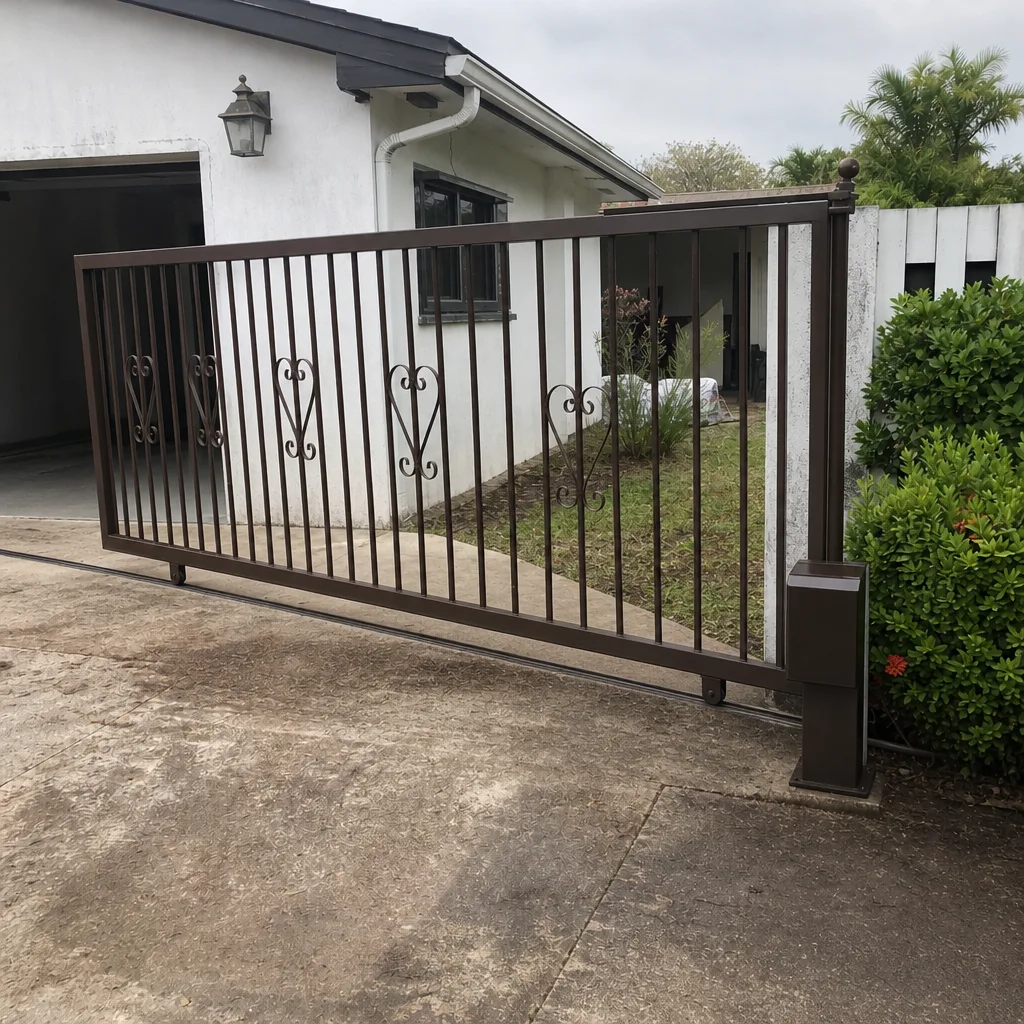
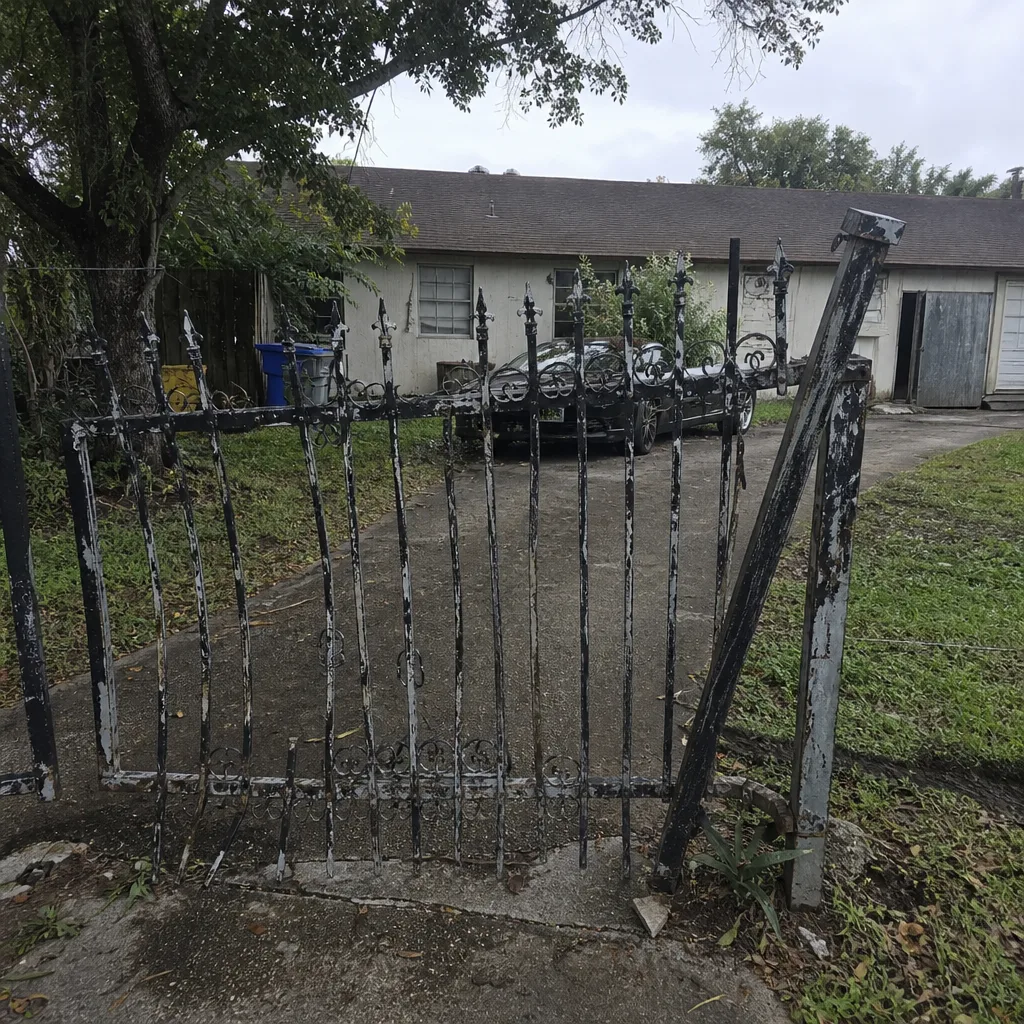
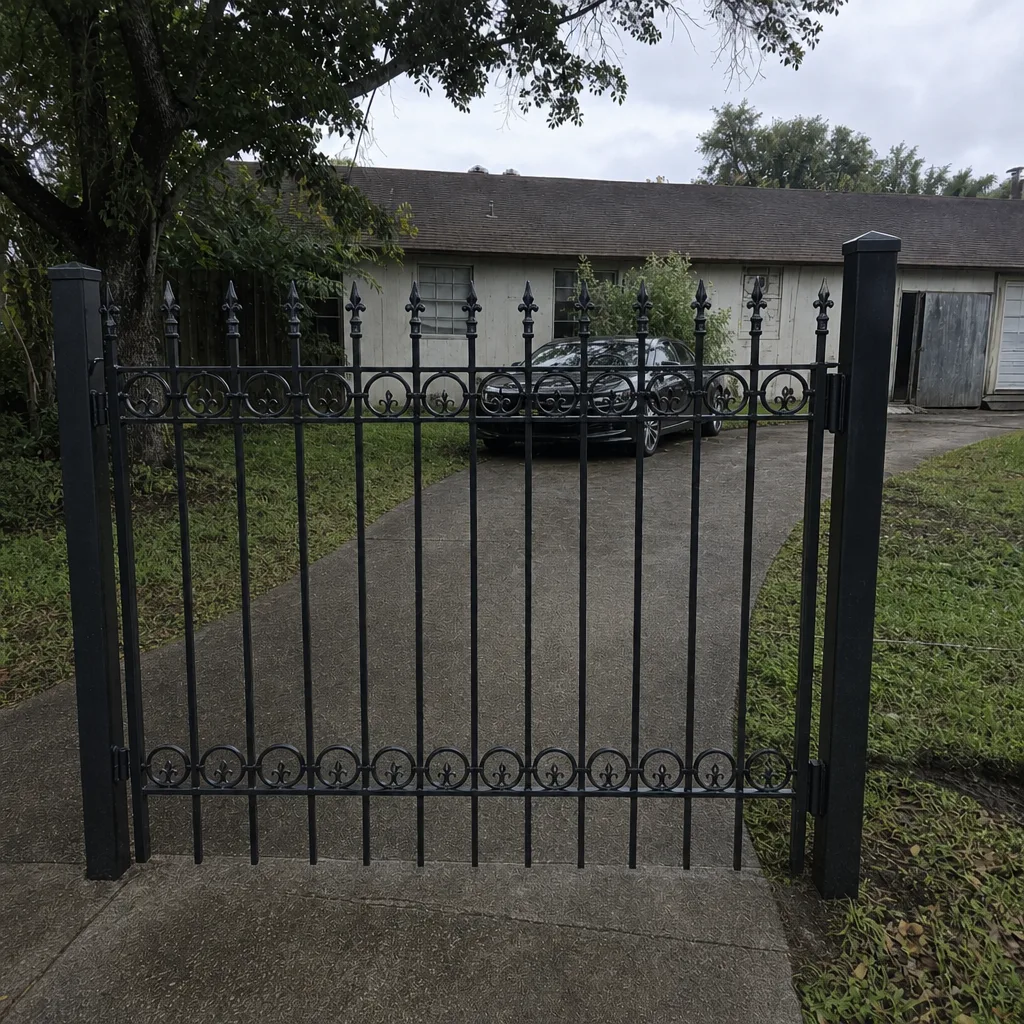
See the difference
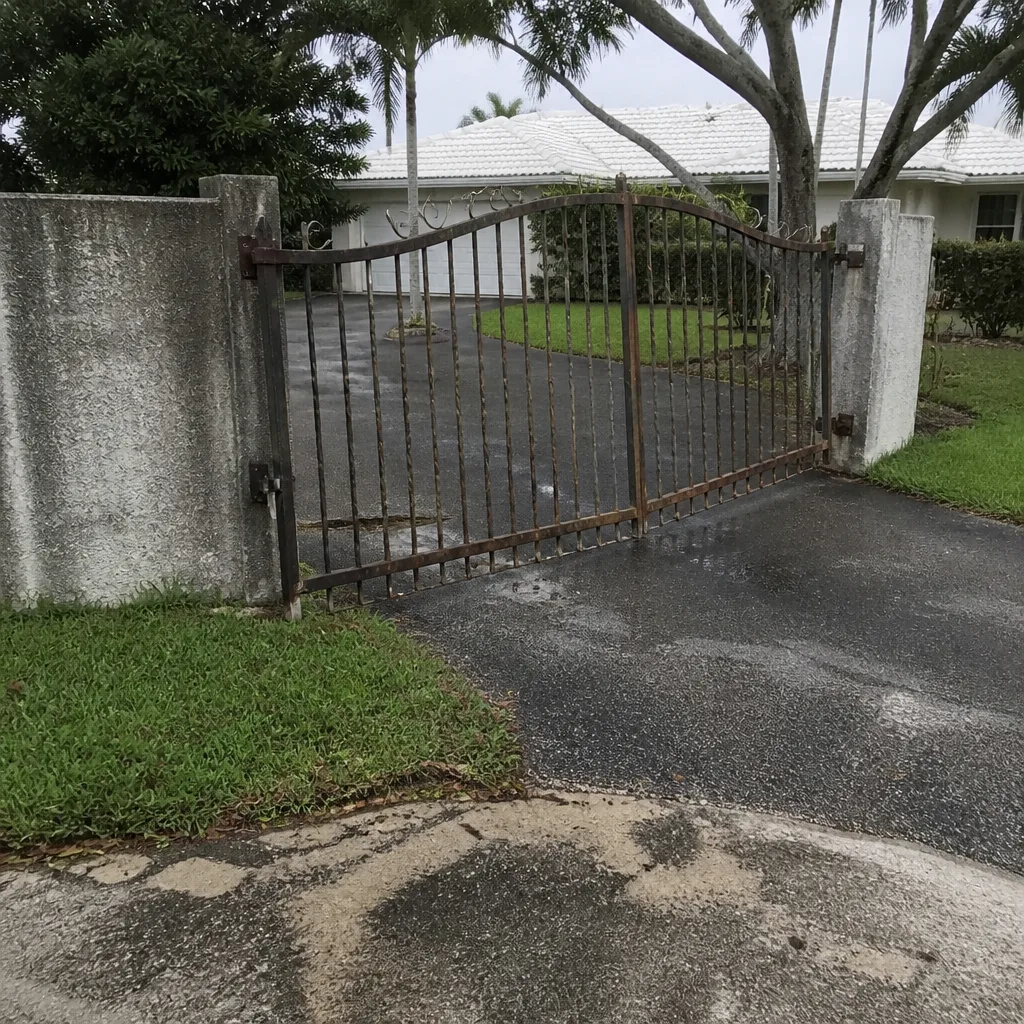 Before
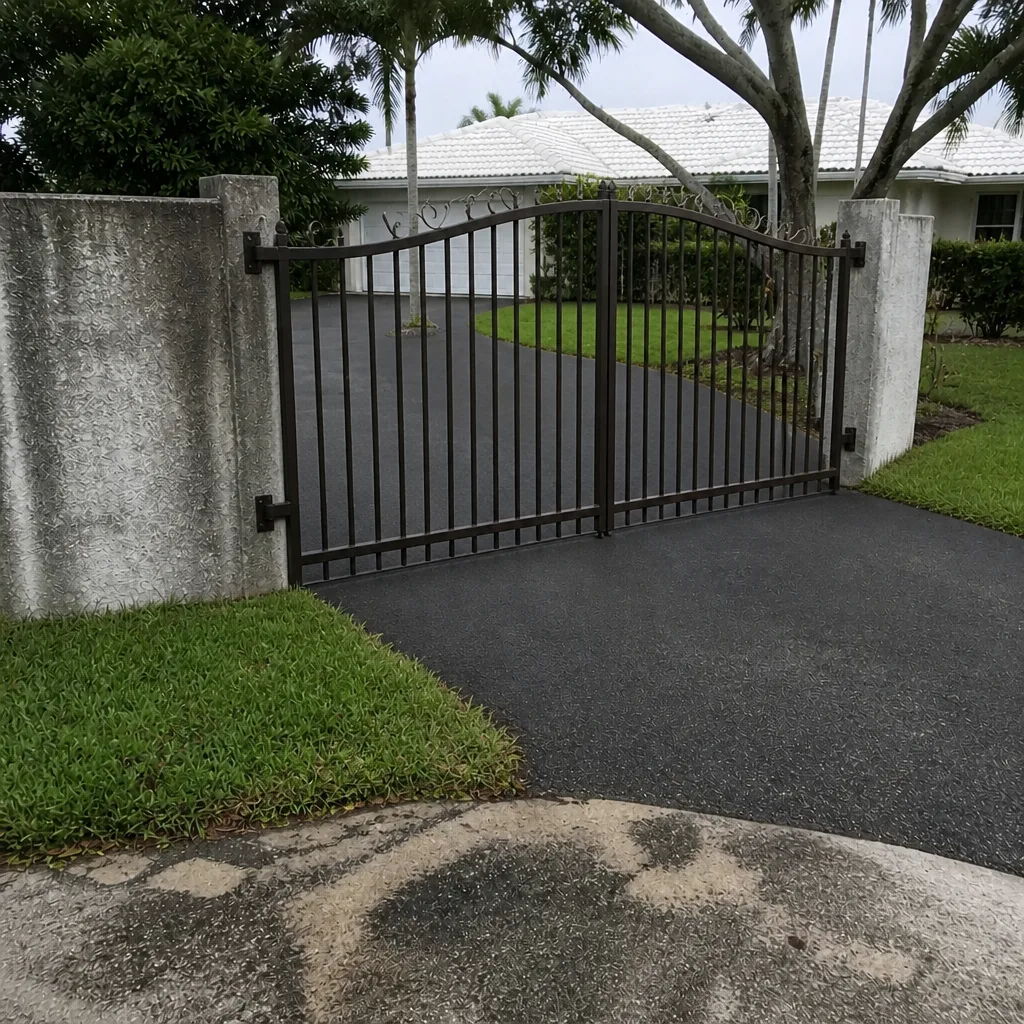 After
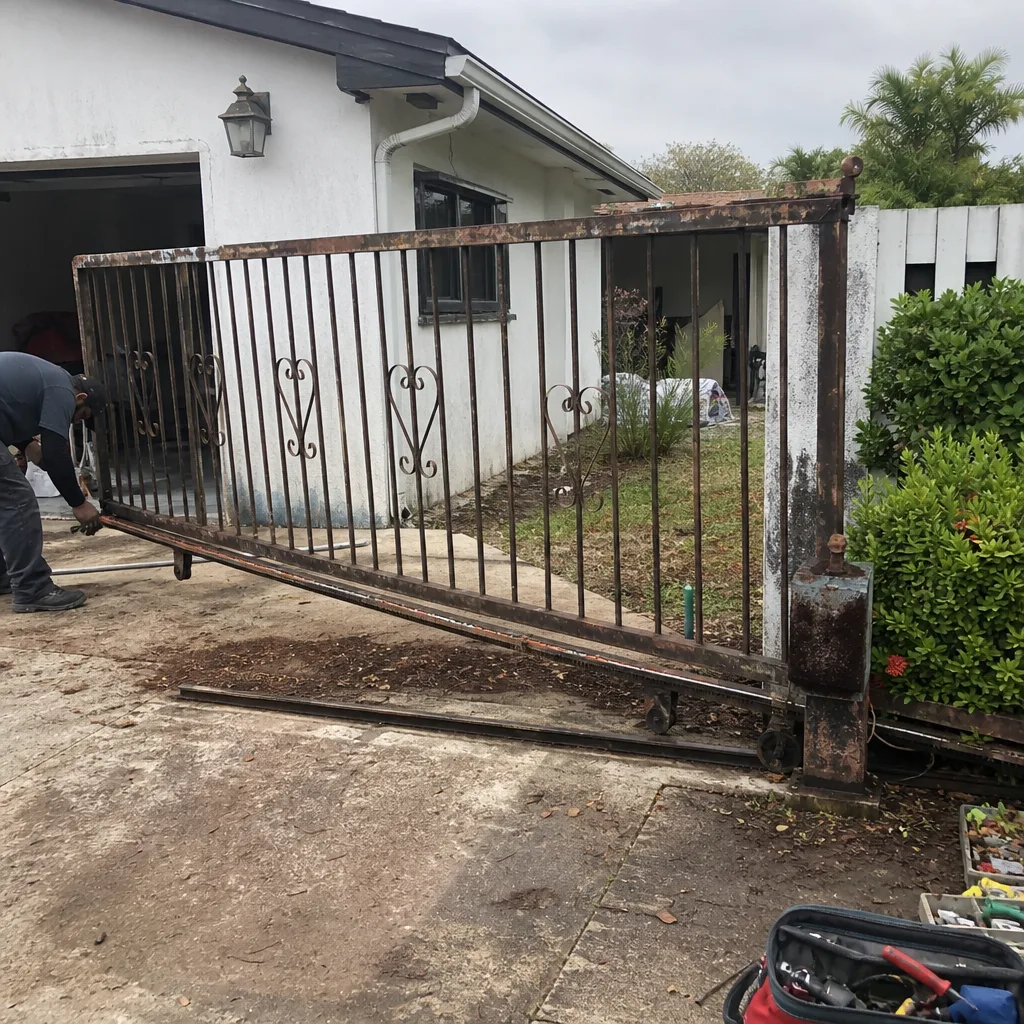 Before
 After
 Before
 After
When to Call a Professional
Call a professional whenever the problem involves the operator’s power, the gate’s structural integrity, or the safety devices – not because those fail often, but because a mistake with any of them has real consequences. Specifically, call us when your gate reverses at random, stops partway through travel, refuses to close, makes grinding or straining sounds, shows visible sparks or smells at the control box, has come off its track or sags against the ground, or won’t respond to any access device. If you’re unsure whether your system is Mighty Mule, LiftMaster, FAAC, or something else, that’s not a barrier. Gate Repair Davie offers free estimates in Davie. Our technicians work on the gate you have, from a broken arm to a full installation, and the written estimate sets the price before any work begins. Call (877) 802-1841 to get it working again.
Frequently Asked Questions
Most gate repairs in Davie fall in a broad range that depends on whether the failure is structural, operator-related, or control-related – but the honest answer is that no reliable number exists without a diagnosis. A photo-eye realignment or remote re-pairing is a small job. An operator control board or gearbox is a much larger one. The written estimate we provide sets the final price before any work starts, and the estimate visit is free. Call (877) 802-1841 for an exact quote – estimates are free.
Same-day repair depends on the failure type and parts availability. Many manufacturer-approved parts for the brands we work on are on hand or locally available, which makes same-day repair realistic for a lot of residential jobs. Structural repairs or jobs that need special-order commercial parts may need scheduling. We answer 24/7, so you can reach us whenever the gate fails, and fast dispatch runs from 7am to 7pm, Sunday through Friday. Call (877) 802-1841 and we’ll tell you what’s realistic for your gate.
We work on systems from LiftMaster, FAAC, BFT, Linear, Viking, Ghost Controls, DoorKing, Elite, and Mighty Mule, covering residential, commercial, and estate-level systems across Davie. That includes both DIY-access brands like Mighty Mule and Ghost Controls and professional-grade commercial systems like FAAC, BFT, and DoorKing. We don’t claim exclusivity to any single brand and we don’t steer customers toward the brand we’d prefer to install. Call (877) 802-1841 for an exact quote on your system – estimates are free.
That pattern points to a control/access issue, not operator failure. The operator and the gate itself are working – the problem is on the input side, which usually means the remote needs re-pairing or a new battery, the antenna wire is damaged, or the receiver is misbehaving. It’s almost always cheaper than a motor problem. A technician can resolve it in one visit. Call (877) 802-1841 for a free estimate.
Repair is the answer more often than replacement, and it should be the first honest diagnosis. Replacement makes sense when the cost of a repair approaches the cost of a new operator, when the current operator is undersized for the gate, or when the current system is past its parts-support window. Our technicians diagnose before recommending replacement, and the written estimate sets the price either way. Call (877) 802-1841 to see which path fits your gate – estimates are free.
Yes. Electric gate repair – including motors, control boards, safety loops, photo-eyes, and remote access systems – is a core service, not an add-on. We work on the wiring and safety devices as part of the same visit that diagnoses the failure, and we test the safety reverse before we leave. If you don’t know what’s inside your system, we’ll explain it during the estimate. Call (877) 802-1841 for a free estimate on electric gate work.
The Bottom Line
The gate in front of you is not a black box. It’s an operator, a gate leaf, a set of safety devices, and an access path – and understanding which of those is failing is the difference between a $50 repair and an unnecessary replacement. Davie has an unusual mix of gate systems because it’s an unusual mix of properties: equestrian, HOA, ranch, and waterfront all sitting a few minutes apart. The right technician for a Davie gate is one who can identify your system’s brand and type before touching it, diagnose the failure category, and tell you honestly whether repair or replacement is the answer. That’s how we approach every visit. Call (877) 802-1841. We answer 24/7. Fast dispatch, 7am-7pm, Sunday through Friday. Estimates are free, the price is set by the written estimate, and the work is agreed before anything starts.
Written by the team at Gate Repair Davie.