
Last updated November 15, 2026
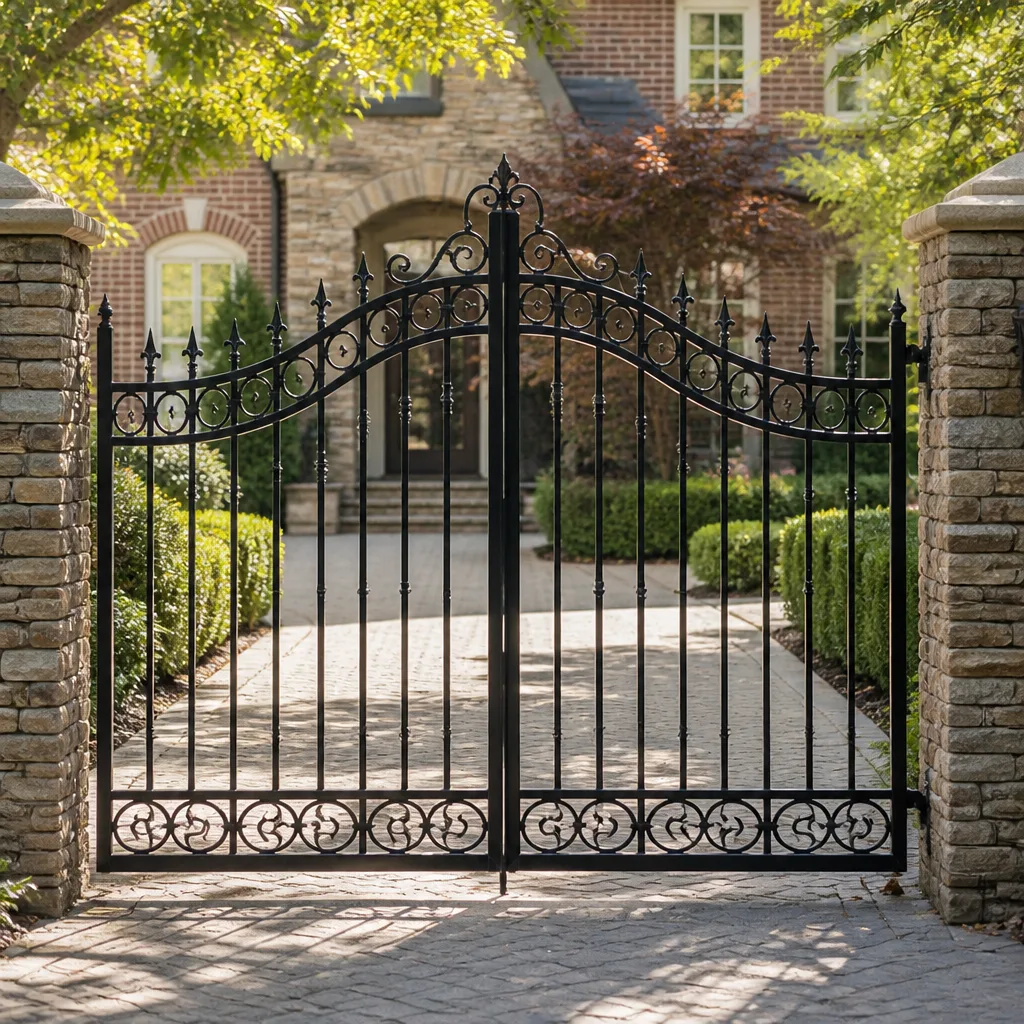 Wrought iron
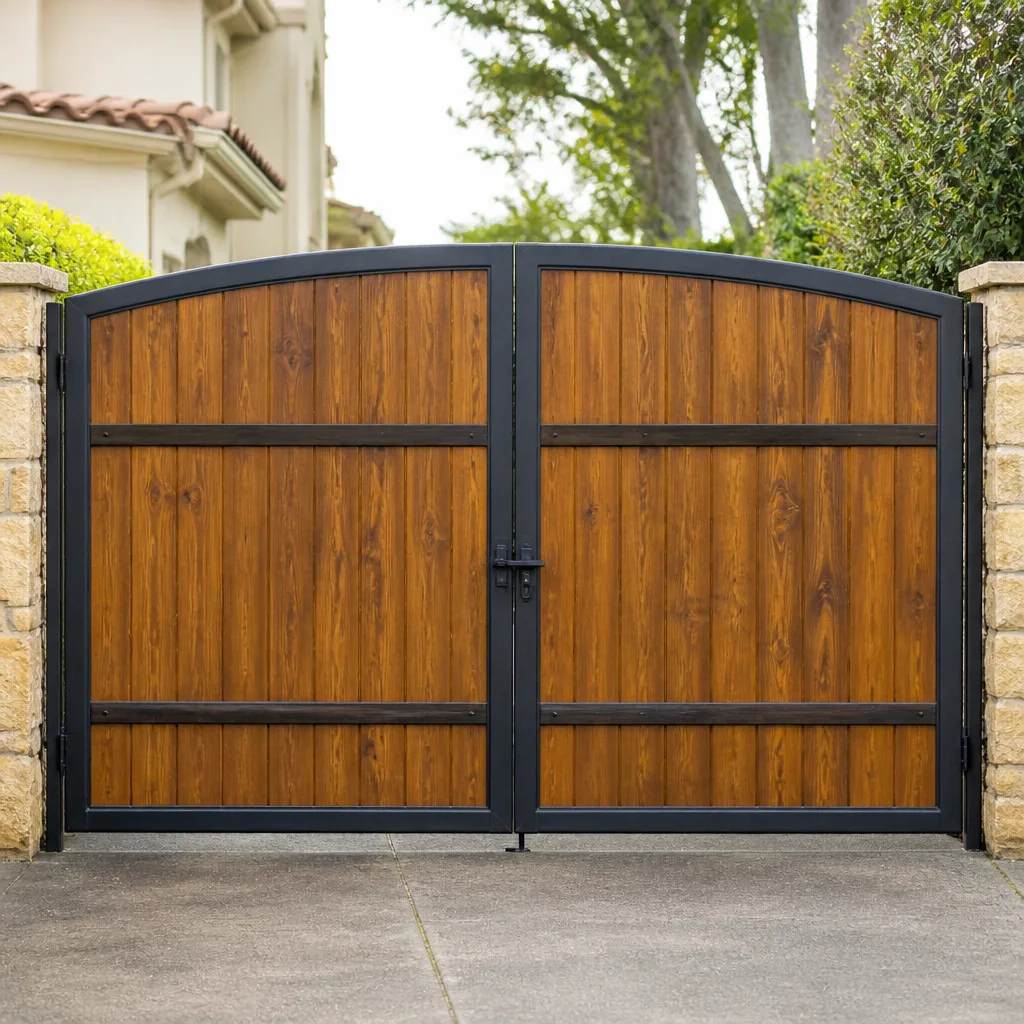 Wood & steel frame
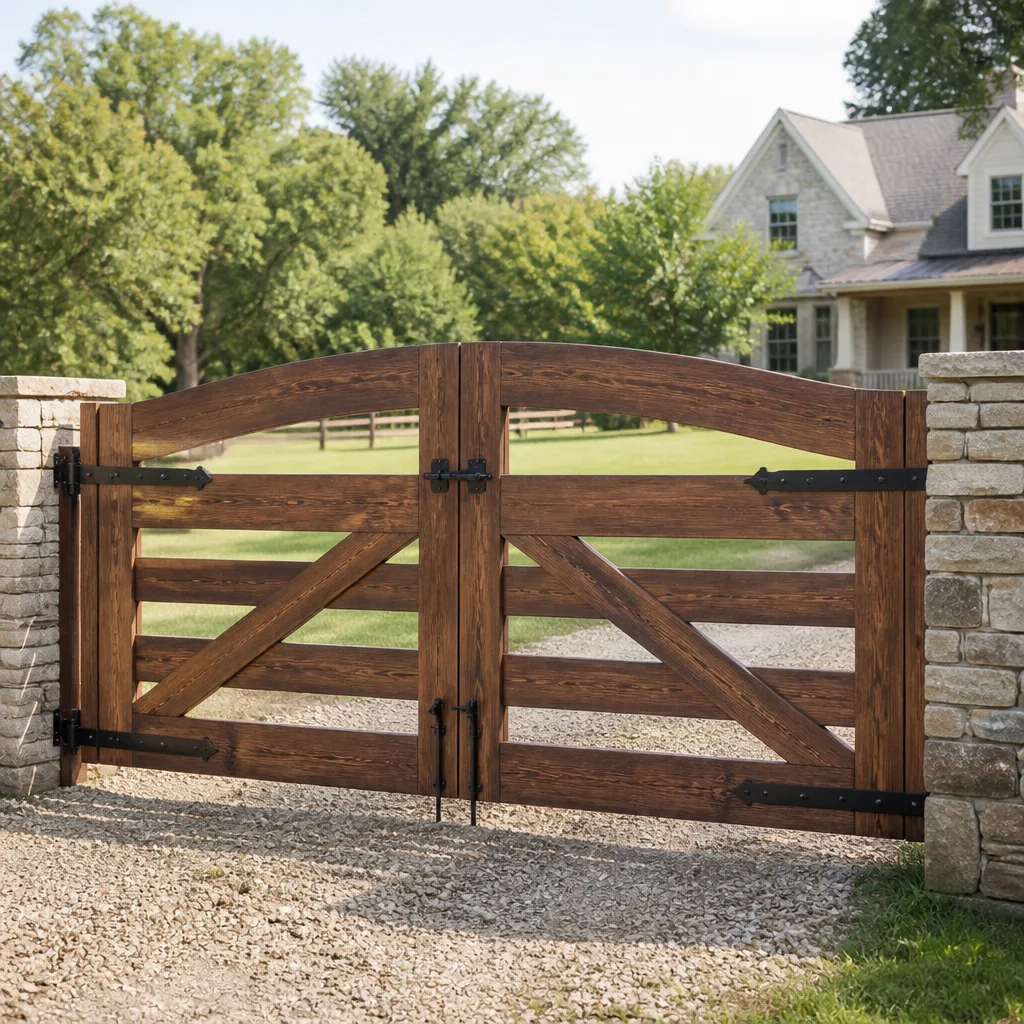 Farm & ranch
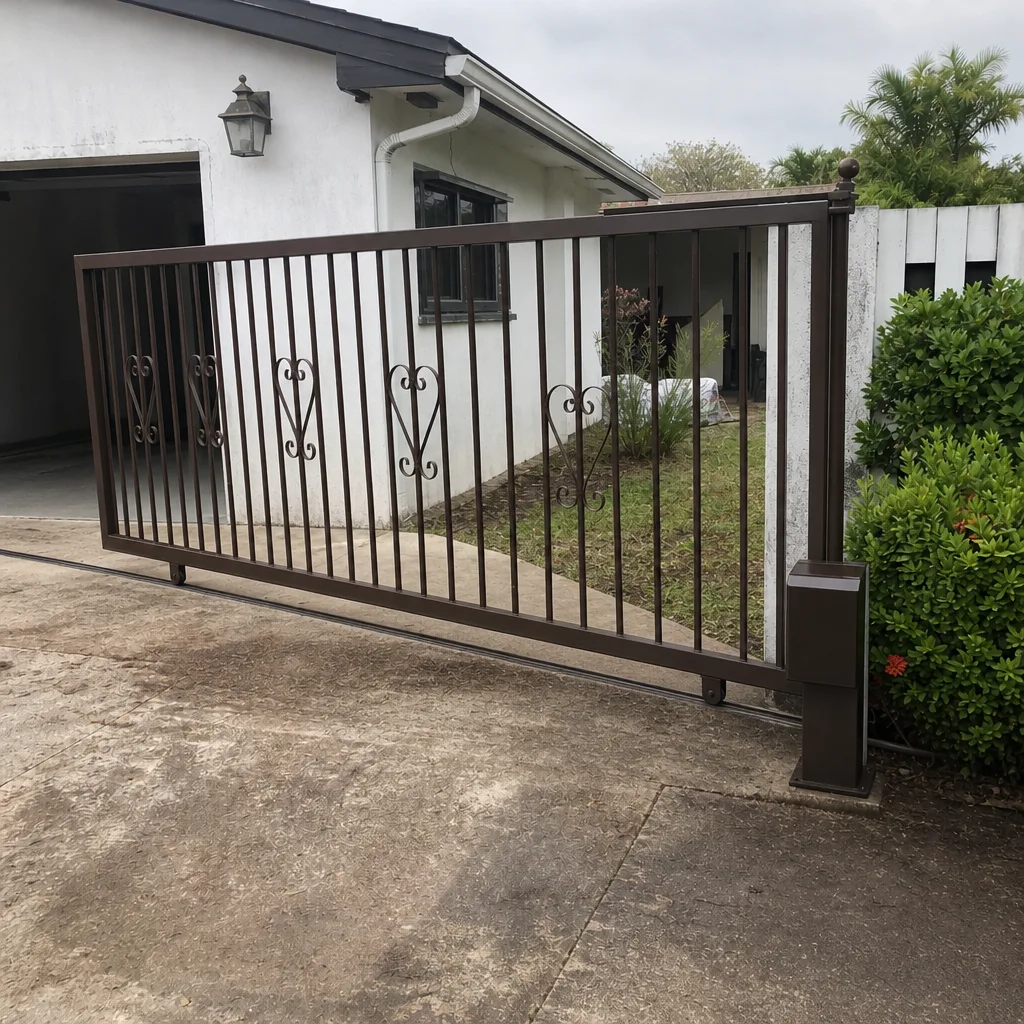
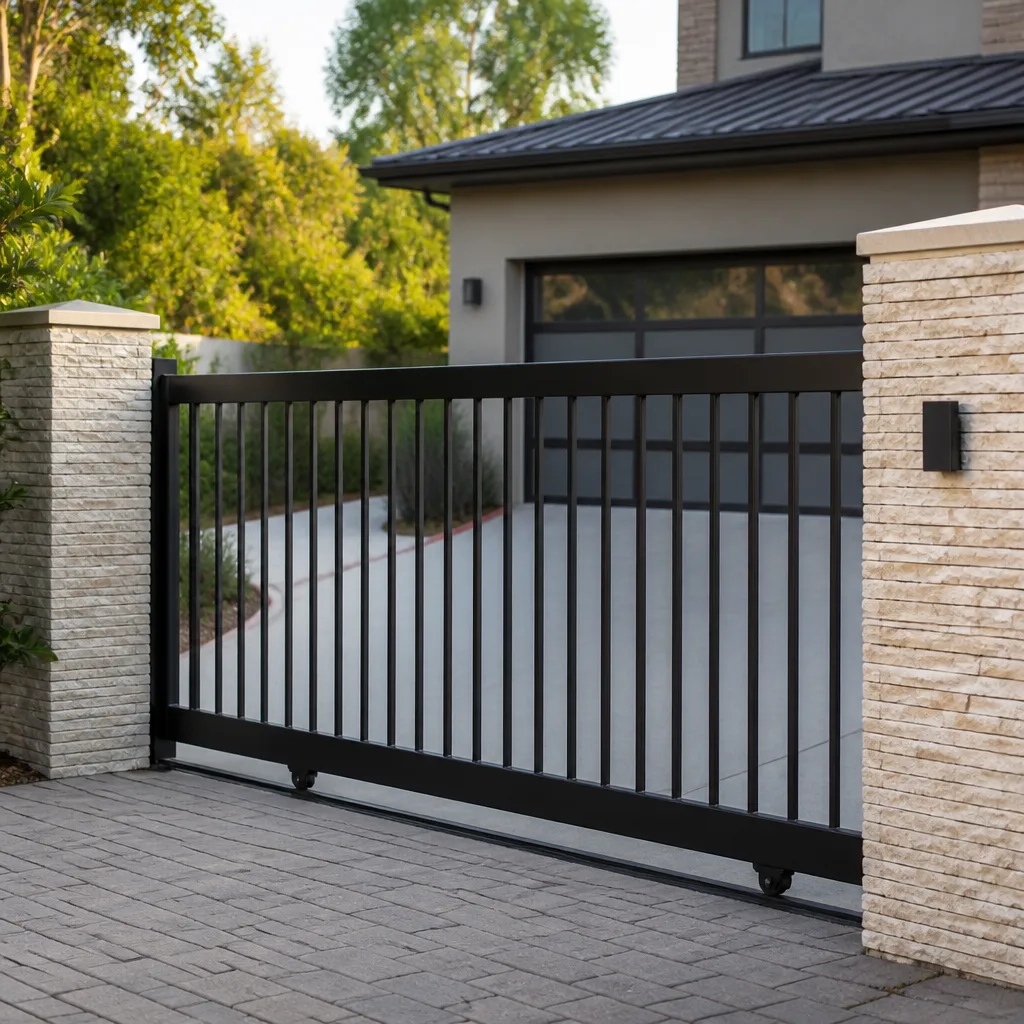 Sliding driveway gates
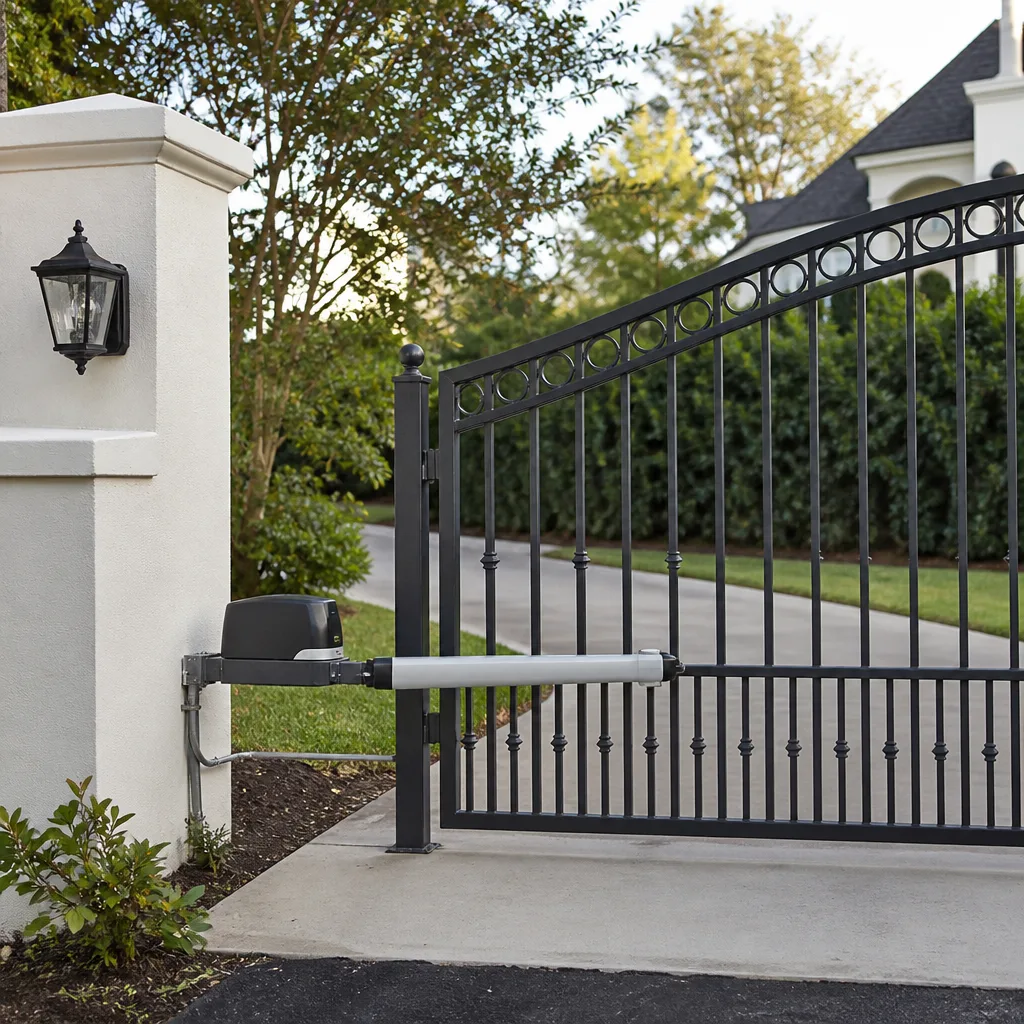 LiftMaster operators
Free on-site gate assessment - hinges, posts, and your LiftMaster or Nice gate operator checked before anything is quoted
The assessment is free and the quote is the invoice.
Get your free estimateGate Repair Maintenance Checklist for Davie Homeowners
Most gate maintenance advice you’ll find online is written for a climate that isn’t ours. It tells you to lubricate everything, tighten everything, and spray the moving parts once a month, without asking what the gate is made of, how many times a day it cycles, or which operator is bolted to it. In Davie, that generic approach can do more harm than good. Lubricating a gate hinge with a lightweight spray in our humidity doesn’t protect it; it can displace the heavier grease that was actually keeping moisture off the metal, leaving bare steel to start rusting. This guide is different. It’s organized by material and system type, not by season, because an aluminum slide gate on a Ghost Controls operator and a wrought iron estate gate on a FAAC system have almost nothing in common in terms of upkeep. We’ll cover what each material needs, how to lubricate by brand, how to test safety sensors properly, what you can safely check on the electrical side without opening the operator, and why cycle count matters more than age. Our technicians have up to 11 years of experience working on gates across Davie.
Quick Answer
A proper gate maintenance checklist in Davie should be built around three variables: the gate material (aluminum, wrought iron, vinyl, or wood), the operator brand and its specified lubricant, and the actual cycle count rather than the gate’s age. Safety reversal and obstruction sensors need a live physical test, not just a power check, and high-cycle HOA or commercial gates need inspection far more often than a residential driveway gate that opens twice a day. If you’re unsure where to start, we offer free estimates in Davie and can tell you exactly what your system needs.
Styles & brands we work with
- Wrought iron
- Wood & steel frame
- Farm & ranch
- Sliding driveway gates
- LiftMaster operators
Table of Contents
- Why Generic Checklists Fail in Davie’s Climate
- Material-Specific Maintenance: Aluminum, Wrought Iron, Vinyl, and Wood
- Operator-Specific Lubrication: Matching the Product to the Brand
- How to Test Safety Reversal and Obstruction Sensors Correctly
- Electrical and Control Board Checks You Can Do Safely
- Why Cycle Count Beats Age for HOA and Commercial Gates
- A Practical Monthly and Quarterly Routine for Davie
- Common Mistakes to Avoid
- When to Call a Professional
- Frequently Asked Questions
- The Bottom Line
Why Generic Checklists Fail in Davie’s Climate
Davie sits in a stretch of South Florida where humidity stays high for most of the year, afternoon rain is routine through the wet months, and the sun is relentless on anything left exposed. That combination hits gate systems in specific ways that a checklist written for a dry climate never addresses. Metal doesn’t just get wet; it stays wet. Moisture clings to joints, tracks, and hardware long after the rain stops, and any spot where the protective coating has worn through starts corroding from the inside out. That’s the reason product choice matters so much here. The wrong lubricant doesn’t just fail to help; it can trap water against the metal or wash away the protective film that was doing the real work.
Davie also has a housing mix that complicates upkeep. Neighborhoods like Pine Island Ridge and the communities off Griffin Road have a lot of gated HOA entrances, which means operators that run dozens or even hundreds of cycles a day rather than the handful a private driveway gate sees. A gate that cycles 300 times a day wears out components on a completely different schedule than one that opens twice. Treating them the same is the core mistake.
Finally, the material mix matters. Aluminum, wrought iron, vinyl, and wood gates each fail for different reasons, and a single maintenance routine applied to all of them will under-serve some and damage others. Outdoor wood in this humidity needs attention to finish and fasteners; wrought iron needs rust prevention at the welds and joints; aluminum is more forgiving but still needs its hinges and tracks kept clear. A checklist that doesn’t separate these is a checklist that isn’t really doing anything.
Material-Specific Maintenance: Aluminum, Wrought Iron, Vinyl, and Wood
The material of your gate panel determines almost everything about how you maintain it. Here’s what each type needs and what tends to damage it in Davie conditions.
Aluminum Gates
Aluminum is the most common material on residential and HOA gates because it resists rust well. It doesn’t corrode the way steel does, but it can pit and oxidize, especially where the powder coat or paint has chipped. Keep the surface clean with a mild detergent and water, and touch up any chips before they spread. The bigger issue with aluminum is usually the hardware, not the panel: hinges, latches, and the mounting points where the operator attaches are often steel and will rust even when the gate frame doesn’t. Inspect those points and apply the correct grease rather than a spray. Aluminum tracks on slide gates need to be kept clear of grit and debris, because grinding grit wears the wheels faster than the load does.
Wrought Iron Gates
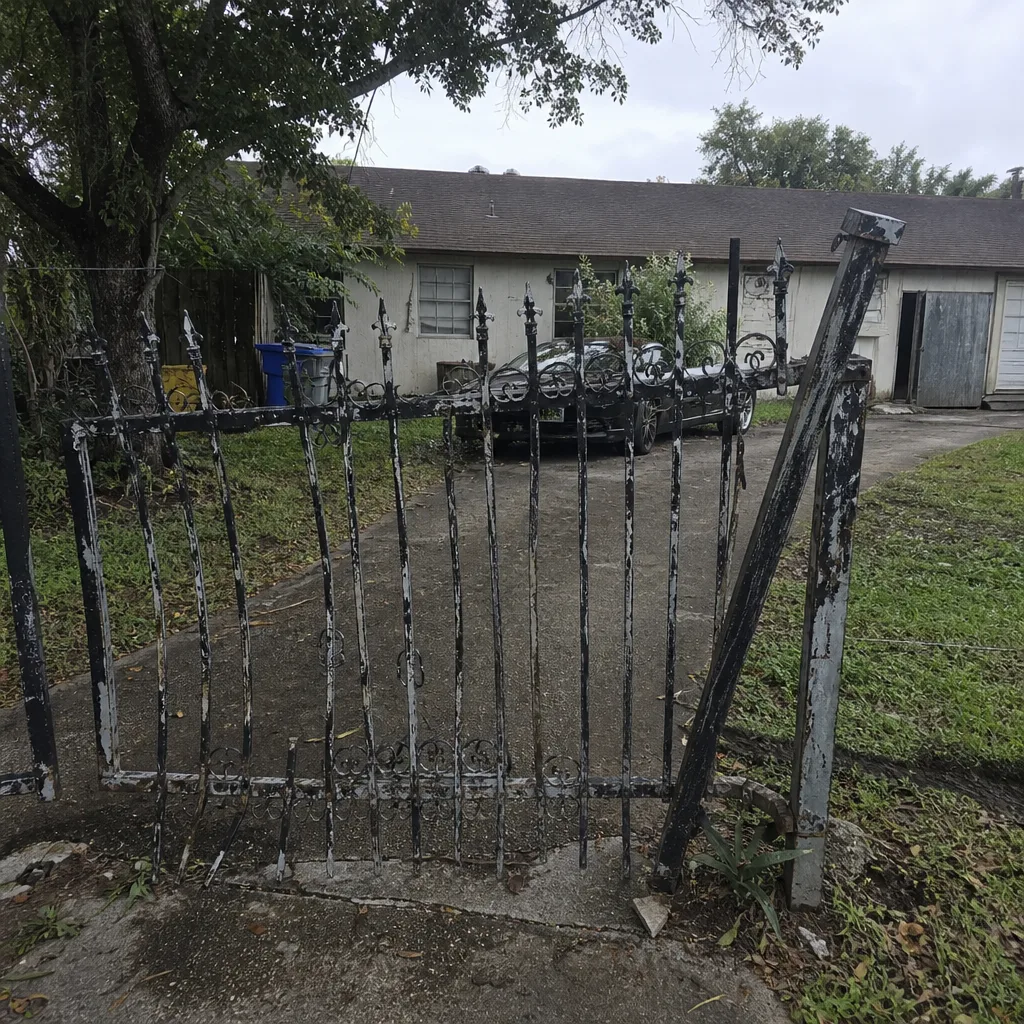
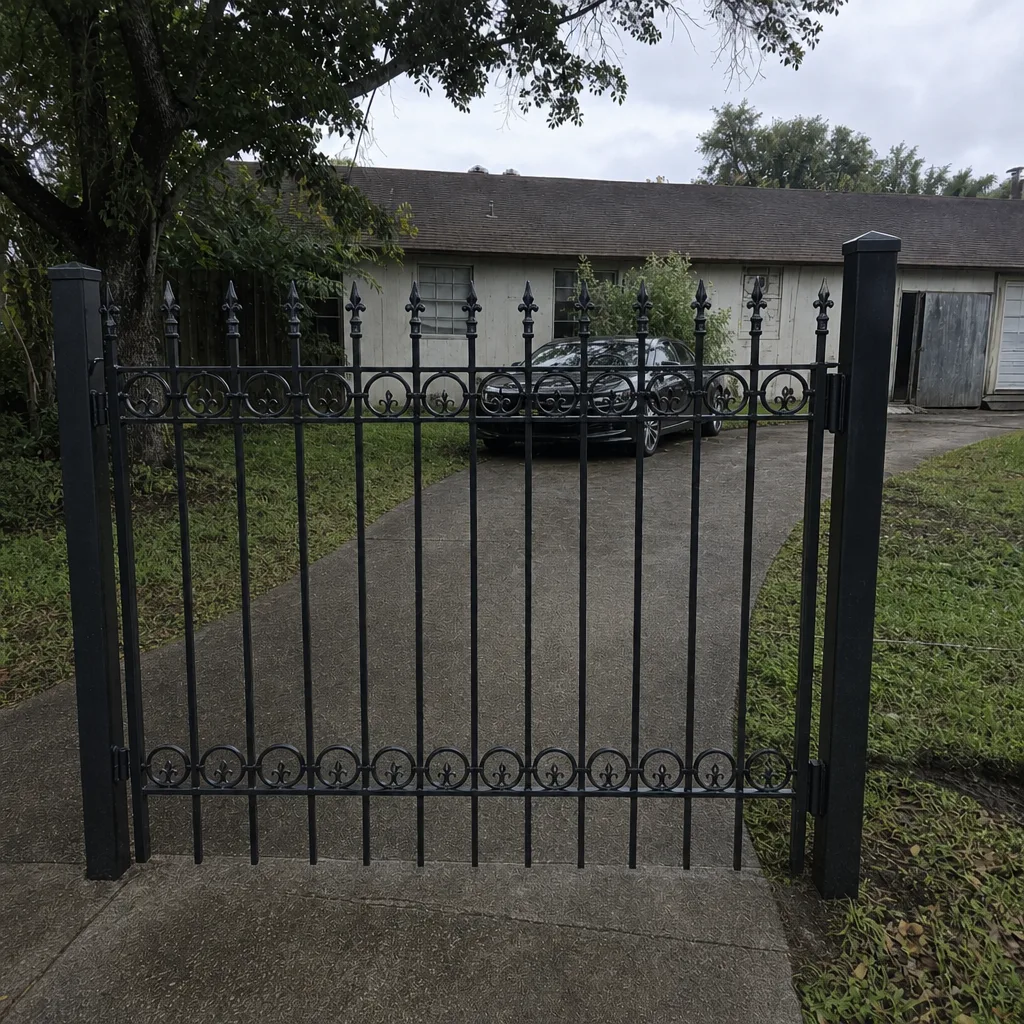
Wrought iron is heavy, sturdy, and the most demanding of the metals in a humid climate. It rusts. Rust starts at the welds, the joints, and any scratch in the finish, and once it starts it spreads under the paint. Inspect the entire panel a few times a year for rust bloom, especially at the bottom rail where splash and ground moisture collect. Treat any rust you find promptly, prime the bare spot, and repaint to match. Keep the hinges greased with a product that holds up to moisture, and check the welds for cracking at the hinge plates since the weight of wrought iron stresses those points. A well-maintained wrought iron gate lasts a long time; a neglected one in Davie’s humidity can lose years to rust.
Vinyl Gates
Vinyl is low maintenance by nature, but it isn’t maintenance-free. It doesn’t rust, but it can crack in cold snaps, fade under UV, and loosen at the fasteners as the material expands and contracts. Wash it to remove pollen and grime that hold moisture, and check that the hinges and latches are snug. On a vinyl gate with an operator, make sure the operator’s mounting bracket is secure and the gate isn’t flexing under the motor’s push, because vinyl panels can crack at the mounting points if the hardware loosens. Watch for cracks near hinges first; that’s where the stress concentrates.
Wood Gates
Wood is the highest-maintenance material in this climate. The humidity pushes wood to swell, and the sun dries it out, and that cycle opens joints, raises grain, and lets moisture in. Keep a protective finish on it and refresh it before it wears through rather than after the wood has started to gray and take on water. Check for rot at the bottom of the gate and around the fasteners, since standing moisture and the hardware both attack wood first. Re-tighten fasteners periodically because wood shrinks as it dries and hardware loosens. If a wood gate is automated, check that the operator’s force settings are matched to the gate’s weight and don’t try to overpower a swollen panel.
Whatever the material, the gate’s moving parts (hinges, rollers, latches, and the operator’s connection point) need the metal-specific care covered in the next section. If your gate has stopped responding entirely, our electric gate repair team can diagnose it.
Operator-Specific Lubrication: Matching the Product to the Brand
Not all gate operators use the same lubricant, and using the wrong one is one of the most common causes of premature wear we see. A swing-arm operator, a slide operator, and a barrier arm each have different moving surfaces that need different products. Here’s the general logic, with notes on the brands we work with regularly.
- Swing-arm and articulated arm operators (Ghost Controls, Viking, Elite): The arm pivots and the connection points to the gate need a heavier grease, not a spray. A light spray displaces the grease and leaves the pivot running dry. Check the arm’s pivot pins and the gate bracket regularly.
- Slide operators (DoorKing, FAAC): The rack-and-pinion or chain drive needs a lubricant suited to its type. Chain drives want a chain-specific lubricant, and rack-and-pinion gears want a gear grease. The gate’s track and rollers are separate and should be kept clean and lubricated with a product that won’t attract grit.
- Barrier arms and high-cycle commercial operators (DoorKing, FAAC): These run the most cycles and need their lubrication intervals checked against the operator’s manual. The heavier the cycle count, the more often the moving parts need attention.
- DIY-grade operators (Ghost Controls, Mighty Mule): These are often installed by homeowners and may be lubricated with whatever is on hand. The arm and pivot points still need the correct grease, and the control box should never be opened for lubrication.
The safe rule: never spray the operator’s control enclosure or circuit board, never use a generic spray on the arm pivots, and always check the operator manual for the lubricant type the manufacturer specifies. When in doubt, a single correct grease application is worth more than monthly spraying. If you’re unsure what your operator needs, we work on Viking, Ghost Controls, and DoorKing systems every week and can tell you in a few minutes. For a routine inspection, our gate repair team handles the whole system, not just the hardware.
How to Test Safety Reversal and Obstruction Sensors Correctly
Confirming that a safety sensor powers on is not a test. A sensor can have power and still fail to stop the gate. The only real test is a live physical one, and it should be done regularly, especially on any gate a child or pet could reach. Here’s how to do it correctly:
- Clear the path and check the gate’s travel. Confirm the gate moves freely and nothing is in its path before you begin. Make sure you can safely watch the whole gate while testing.
- Test the photo-eye or obstruction sensor with an object, not just a hand wave. Place a solid object in the sensor’s beam and start the gate closing. The gate should stop and reverse immediately. A quick hand wave that doesn’t break the beam fully can give a false pass.
- Test the reversal on the closing cycle. With the gate closing, apply resistance at the leading edge (using a firm object, not your body) and confirm the gate reverses. Swing gates and slide gates reverse differently; on a slide gate the safety edge and the sensors both need to work.
- Test the safety edge or bumper if the gate has one. These are separate from the photo-eyes and often fail first. Push against the edge as the gate closes and confirm it reverses.
- Check the sensor alignment. Photo-eyes must be aligned and clean. Fog, dirt, and spider webs are common causes of nuisance tripping in Davie’s humid months. A sensor that trips constantly isn’t “safe”; it’s misaligned or dirty, and it should be cleaned and realigned.
- Repeat for both directions and both sensors. On a double gate, test each leaf and each sensor. Don’t assume one passing means both work.
If any part of the test fails, stop using the gate until it’s repaired. A gate that won’t reverse is a hazard, and this is exactly the kind of failure that should get a technician out quickly. For a system on a Davie property that needs professional attention, we can test and repair the safety circuit.
Electrical and Control Board Checks You Can Do Safely
Electric gate repair is a specialty for a reason. The operator’s control board, wiring, and power feed are the parts most likely to cause injury or a fire, and they are not the parts a homeowner should open. But there’s still a lot you can check safely from the outside, without touching the enclosure. Here’s what’s reasonable:
- Check the power indicator and any fault lights. Most operators have an external status LED or a display. Note what it’s showing; that single piece of information can tell a technician a lot before they arrive.
- Confirm the remote and keypad work. If the gate won’t respond to a remote but the keypad works, the issue is likely the receiver or the remote, not the board. If neither works, the problem may be at the board or the power supply.
- Listen for the operator at start. A click or hum with no movement often points to a capacitor, a stuck limit switch, or a board fault. That’s a check, not a repair; don’t try to open the cabinet.
- Look at the wiring for visible damage. Check the low-voltage sensor wiring and the gate’s safety loop wiring for chew marks, corrosion at the connectors, or anything that’s come loose. Don’t splice or reconnect anything you’re not trained on.
- Confirm the battery backup status if the operator has one. Many operators show battery health externally. Note it, and have it checked if the operator hesitates when the power isn’t there.
What not to do: never open the operator enclosure, never touch the main power wiring or the board, and never reset breakers as a troubleshooting routine. If a breaker trips on your gate circuit, that’s a signal to stop and call. For help with a control board, motor, or sensor fault, our Gate Repair Davie team can diagnose it safely.
Why Cycle Count Beats Age for HOA and Commercial Gates
The single most useful number for planning gate maintenance is the cycle count, not the gate’s age. A residential driveway gate that opens twice a day and a commercial gate operator that cycles hundreds of times a day are on completely different wear schedules, even if they were installed the same year. In Davie, where there’s a lot of HOA and commercial gated property, this is where most maintenance budgets get misapplied.
Most operators track cycles electronically, and the manual explains how to read them. If yours doesn’t, you can estimate from daily traffic. A useful way to look at it:
- Low-cycle residential gates (a few cycles a day) can follow a relaxed monthly and quarterly routine. The material maintenance matters more than the operator here.
- Medium-cycle HOA gates (dozens to low hundreds per day) need the operator’s lubrication and safety checks on a tighter schedule, and the mechanical hardware (hinges, rollers, arms) inspected more often.
- High-cycle commercial and estate gates (hundreds of cycles a day) should be inspected on a formal schedule based on the operator manual and the cycle count. Wear parts like rollers, hinges, and chains wear out on a predictable clock when the cycle count is known.
The practical takeaway is to find your cycle count and check the operator manual’s maintenance interval for it. A high-cycle gate that hasn’t been inspected isn’t just older; it’s a gate whose wear parts are running past their expected life. That’s when a repair turns into a full replacement project. We work on high-cycle DoorKing and FAAC systems regularly and can help you plan a maintenance schedule that matches your actual usage.
A Practical Monthly and Quarterly Routine for Davie
Here’s a simple routine that matches the actual risks in Davie. It’s built around the material and operator logic above, and it keeps the tasks that matter most in a high-humidity climate front and center.
Monthly (10-15 minutes)
- Walk the gate and check for rust at the welds, joints, and bottom rail (wrought iron), or cracks and loose fasteners (vinyl, wood, aluminum hardware).
- Test the safety sensors with a solid object and confirm the gate reverses.
- Clear debris and grit from the track and rollers on slide gates.
- Look at the operator’s external status light and note any change.
Quarterly (30 minutes, more for high-cycle gates)
- Do a full material inspection: check the finish and touch up chips, check for rot or rust, and re-tighten hardware.
- Apply the correct grease to hinges, pivot pins, and the operator’s specified lubrication points, following the manual.
- Re-test both safety sensors and the safety edge, both directions on double gates.
- Read the cycle count and compare it against the manual’s maintenance interval.
- Check the battery backup status and any fault codes on the operator.
If anything fails a test or you find a fault you can’t explain, that’s the point to call rather than the point to keep tinkering.
Common Mistakes to Avoid
- Spraying lubricant on everything. A single spray product can’t serve wrought iron hinges, an aluminum track, and a swing arm operator at the same time. Use the product the specific part needs, and never spray the control board.
- Treating a power-on safety sensor as a passing test. A sensor that lights up can still fail to reverse the gate. Test it with a solid object and confirm the reversal, every time.
- Ignoring the bottom rail and welds on wrought iron. That’s where rust starts first in Davie’s humidity, and it spreads under the finish before you see it on the surface.
- Lubricating a high-cycle HOA gate on a low-cycle schedule. Cycle count drives wear, not age. A gate that runs hundreds of times a day needs inspection on a tighter interval.
- Opening the operator enclosure to “check” the board. The control board and power wiring are not a DIY inspection point. Note the fault code on the outside and call.
- Using the wrong product on a chain or rack-and-pinion drive. Chain drives want a chain-specific lubricant and gears want gear grease. The wrong product attracts grit and accelerates wear.
- Replacing a gate when a repair would do. A stopped gate is often a control board, sensor, or capacitor issue, not a reason to buy a new gate. Always get a diagnosis before deciding.
When to Call a Professional
Some problems are a routine check; some are a technician’s job. Call a professional when the safety sensors won’t reverse the gate after a proper test, when the operator clicks or hums but the gate doesn’t move, when you see a fault code you can’t clear, or when a breaker trips on the gate circuit. Call if the gate has come off its track, if a weld has cracked on a wrought iron panel, or if the gate sags and drags. Call if the remote or keypad stops working and the simple checks don’t fix it, or if you’re on a high-cycle HOA or commercial gate that hasn’t had an inspection in a long time. For anything involving the control board, motor, or main wiring, don’t open the enclosure. Gate Repair Davie offers free estimates in Davie, and our technicians have up to 11 years of experience. Call (877) 802-1841. We answer 24/7. Fast dispatch from 7am to 7pm, Sunday through Friday.
Frequently Asked Questions
A residential gate should get a monthly visual check and a quarterly lubrication and safety test. High-cycle HOA and commercial gates need a tighter schedule based on their actual cycle count, not their age. In Davie’s humidity, the material inspection (rust, cracks, finish wear) is the part most often skipped and the most important. Call (877) 802-1841 for a free estimate if you want a professional inspection.
It depends on the operator. Swing-arm and articulated arms from brands like Ghost Controls, Viking, and Elite need a heavier grease at the pivot points, not a spray. Slide operators from DoorKing and FAAC use a chain-specific lubricant or gear grease depending on the drive. Always check the operator manual, and never spray the control board. Call (877) 802-1841 for an exact recommendation for your system.
Place a solid object in the sensor’s beam as the gate closes and confirm the gate stops and reverses. Test the closing cycle on both leaves of a double gate and test the safety edge if there is one. A sensor that powers on is not a passing test. Call (877) 802-1841 if any part of the test fails.
A hum or click with no movement usually points to a capacitor, a stuck limit switch, or a control board fault. It’s a signal to stop and call, not to open the operator enclosure. Note any external fault light or code before you call. We answer 24/7 at (877) 802-1841.
Yes. Cycle count is the best guide to when a high-use gate needs inspection and part replacement, and most operators track it electronically. A gate that runs hundreds of times a day wears out on a completely different schedule than a residential driveway gate. Call (877) 802-1841 for help reading your cycle count and setting a schedule.
Repair first. A gate that has stopped is often a control board, sensor, motor, or capacitor issue, and those are repairs. Replacement makes sense when the panel itself is failing or the repair cost outweighs the gate’s value. We work on the gate you have and tell you honestly which path makes sense. Call (877) 802-1841 for a free estimate.
The Bottom Line
Gate maintenance in Davie isn’t about a monthly spray-down. It’s about matching the product to the material and the operator, testing safety sensors with a live physical check rather than a power light, and letting cycle count drive your schedule on high-use gates. Aluminum needs its hardware watched, wrought iron needs rust caught early, vinyl needs its fasteners snug, and wood needs its finish kept up. Operators from Viking, Ghost Controls, and DoorKing each want the lubricant their manual specifies, and the control board stays closed. Do the monthly and quarterly checks, call when a safety test fails, and repair before you replace. Gate Repair Davie offers free estimates in Davie, and our technicians have up to 11 years of experience on nine major gate brands. Call (877) 802-1841. We answer 24/7. Fast dispatch from 7am to 7pm, Sunday through Friday.
Written by the team at Gate Repair Davie.
See the difference
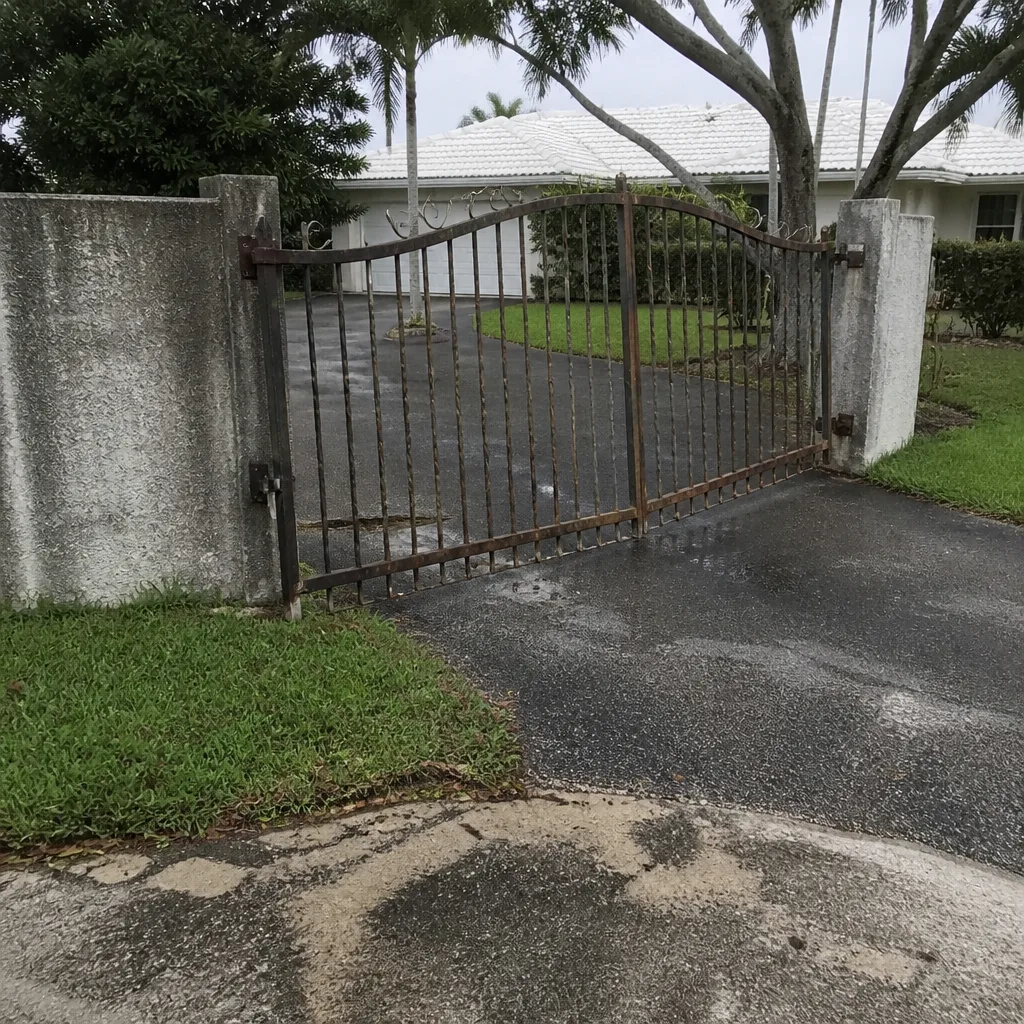 Before
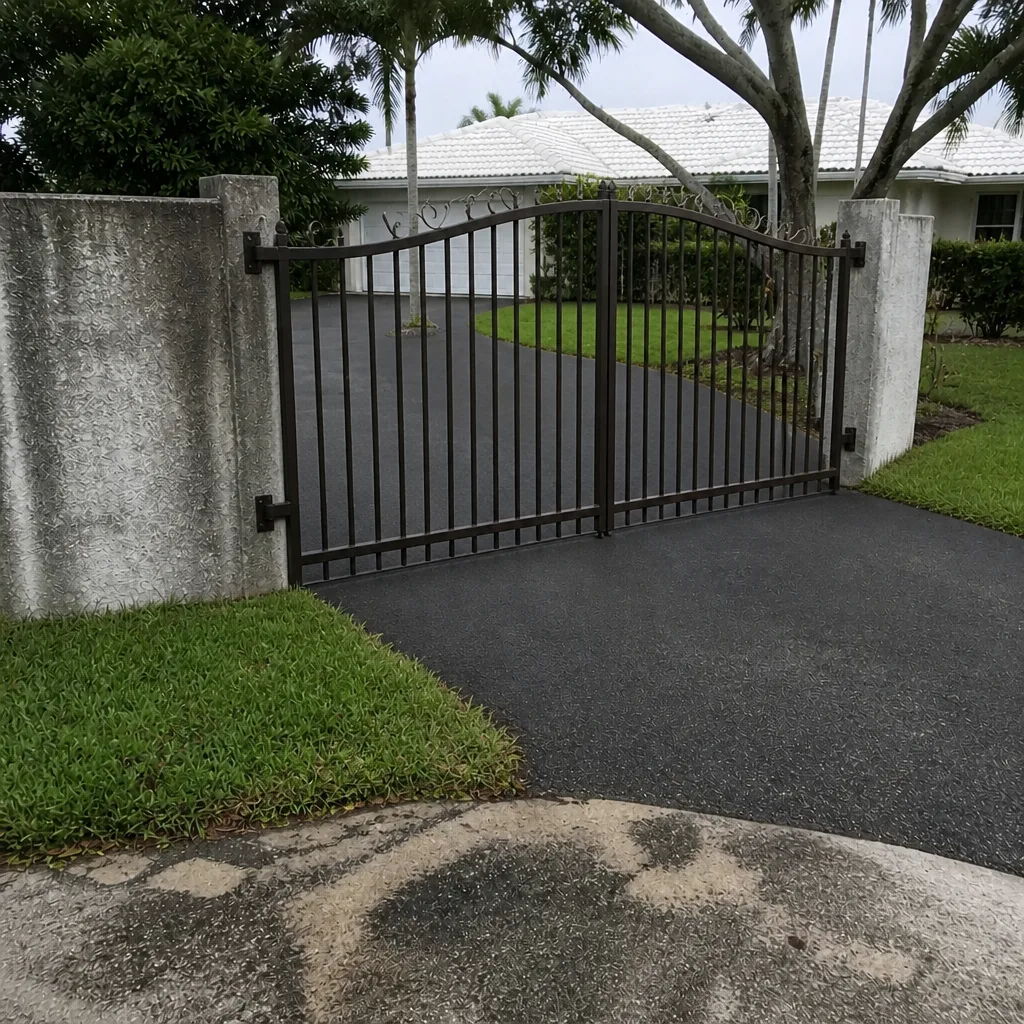 After
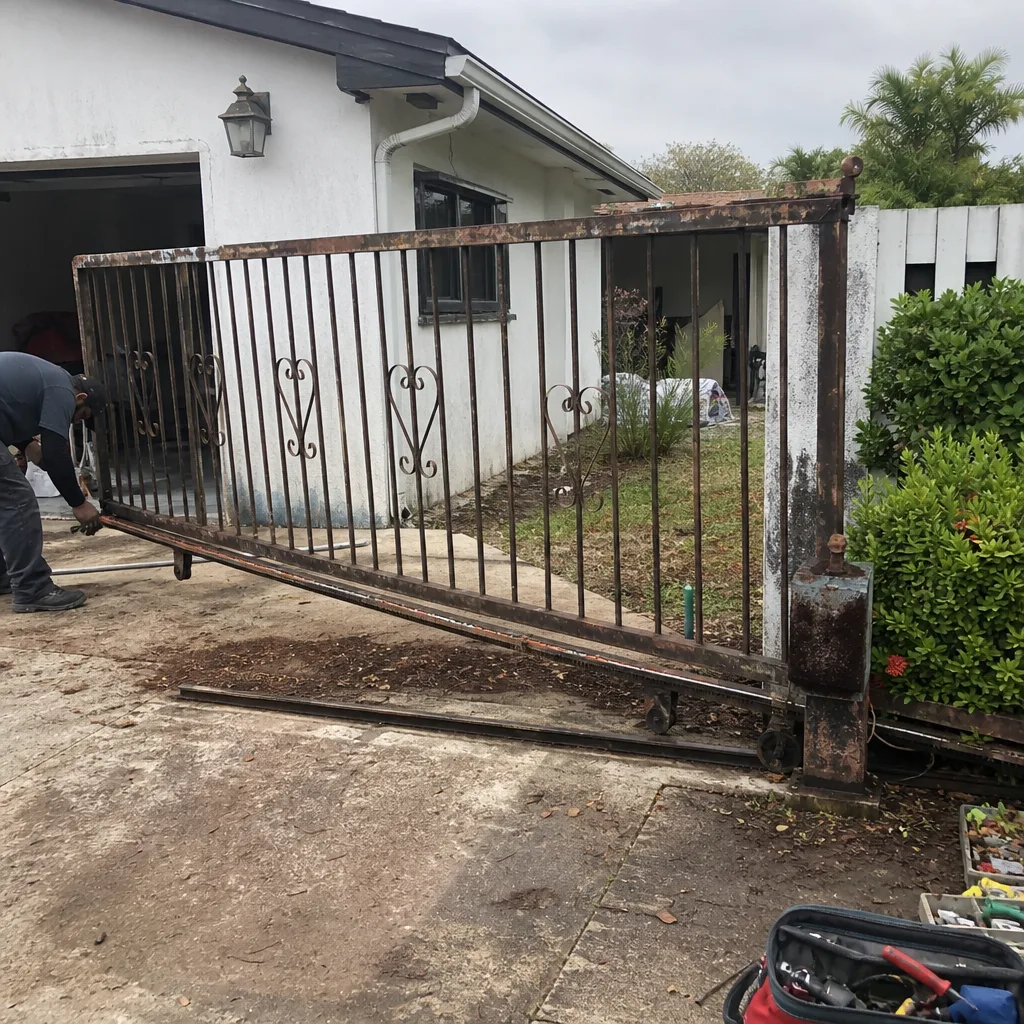 Before
 After
 Before
 After